Have you ever opened your refrigerator, looked at a carton of milk or a package of chicken, and wondered whether it was still safe to eat? You’re not alone. Millions of people throw away perfectly edible food every day because they misunderstand expiration labels, while others unknowingly consume spoiled food that can cause foodborne illness. Knowing how long food actually lasts is essential for protecting your health, saving money, and reducing unnecessary food waste.
Many people assume that every printed date on food packaging means the product becomes unsafe after that day. In reality, terms like “Best Before,” “Use By,” “Sell By,” and “Freeze By” all have different meanings. Understanding these labels, along with proper food storage techniques, can help you make smarter decisions in your kitchen.
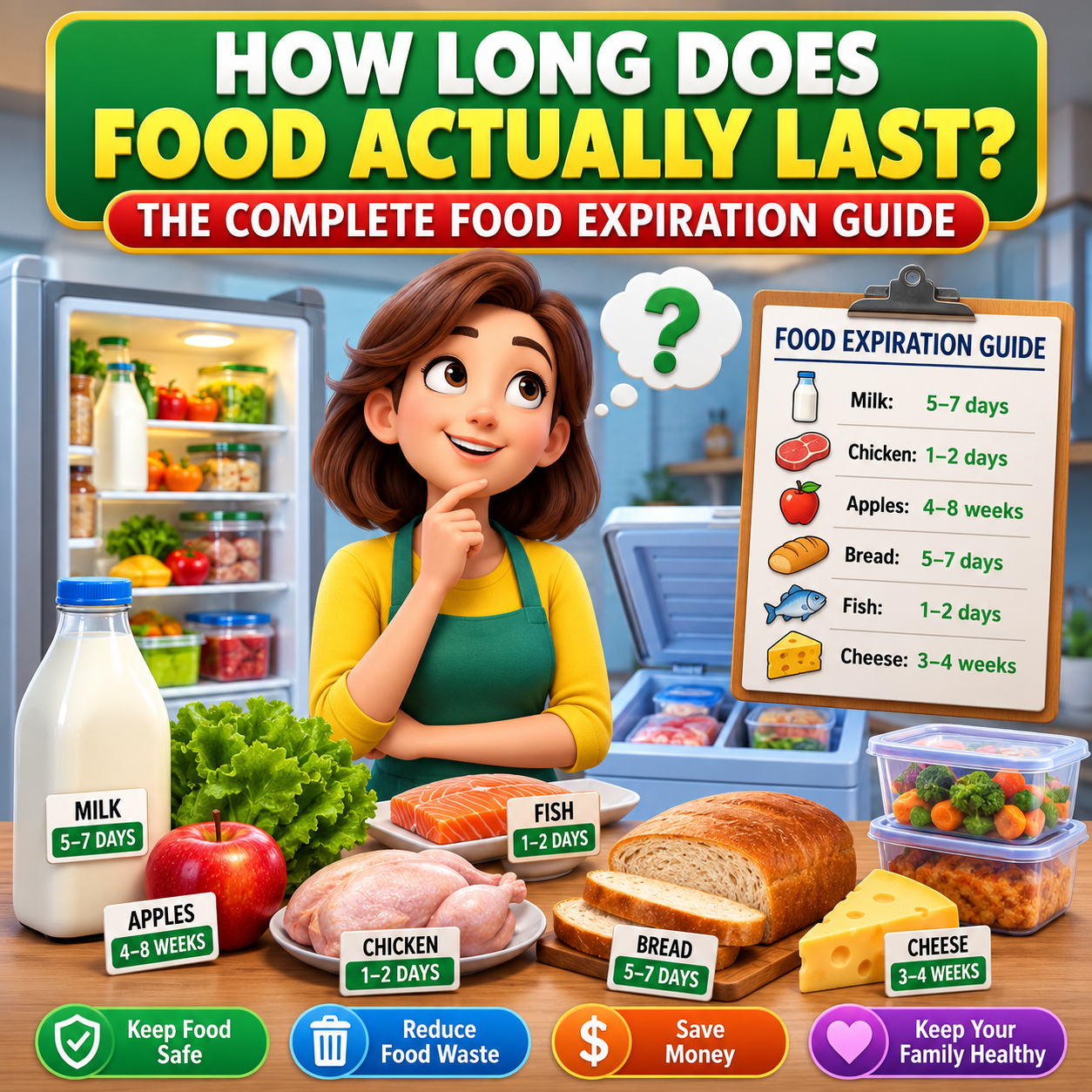
This Complete Food Expiration Guide explains how long common foods last in the pantry, refrigerator, and freezer. You’ll learn how to recognize signs of spoilage, understand expiration dates, store food safely, and avoid common mistakes that lead to waste or food poisoning. Whether you’re meal planning, grocery shopping, or simply trying to keep your family safe, this guide provides practical, science-backed information to help you confidently decide when food is still good to eat—and when it’s time to throw it away.
What Does Food Expiration Actually Mean?
Food expiration refers to the period during which a food product is expected to maintain its best quality, flavor, texture, and nutritional value when stored correctly. Contrary to popular belief, an expiration date does not always indicate that food instantly becomes unsafe after that specific day. In many countries, only certain highly perishable foods require strict safety-based dates, while many packaged foods simply include quality-related labels. Understanding this distinction can help consumers reduce unnecessary food waste without compromising food safety. Learning the difference between food quality and food safety is one of the most important steps toward making informed decisions about the foods you buy, store, and consume.
Understanding Food Date Labels
Many shoppers mistakenly believe every date printed on food packaging has the same meaning. However, manufacturers use different labels to communicate different information. Understanding these labels helps consumers determine whether food is still safe to eat or simply past its peak quality. Knowing what each label means can prevent both unnecessary waste and accidental consumption of spoiled food.
| Label | Meaning | Safety Concern |
| Best Before | Best flavor and quality before this date | Usually safe afterward if properly stored |
| Use By | Recommended final date for safe consumption | Follow carefully for highly perishable foods |
| Sell By | Helps retailers manage inventory | Consumers can often use food afterward if stored properly |
| Freeze By | Freeze before this date for best quality | Not a safety deadline |
Why Food Shelf Life Varies
Not all foods spoil at the same rate because each food has a unique combination of moisture, acidity, fat content, protein, and natural preservatives. Highly perishable foods such as fresh meat, seafood, milk, and cooked leftovers contain conditions that allow bacteria to multiply quickly if not refrigerated. On the other hand, dry foods like rice, beans, pasta, and flour have much lower moisture levels, allowing them to remain safe for much longer when stored correctly.
Manufacturing methods also influence shelf life. Pasteurization, vacuum sealing, freezing, dehydration, and canning significantly extend how long foods remain safe and maintain quality. Storage temperature, humidity, exposure to air, and packaging integrity all play critical roles in determining how long a product lasts after purchase.
Factors That Affect Food Freshness
Several environmental and handling factors determine whether food stays fresh or spoils quickly. Even foods with long shelf lives can become unsafe if they are stored improperly or exposed to contamination. Understanding these factors allows you to maximize freshness while minimizing the risk of foodborne illness.
Major factors include:
- Storage temperature
- Moisture levels
- Air exposure
- Light exposure
- Cross-contamination
- Packaging quality
- Handling practices
- Power outages
- Refrigerator efficiency
- Frequent opening of storage containers
Maintaining refrigerators at or below 4°C (40°F) and freezers at −18°C (0°F) significantly slows bacterial growth and helps preserve food quality.
Complete Food Expiration Chart
Dairy Products
Dairy products are among the most commonly discarded foods because consumers often misunderstand their shelf life. While milk, yogurt, and cheese are perishable, many remain safe for several days beyond their printed dates if continuously refrigerated. Always check for unusual odors, mold, separation, or sour taste before consuming dairy products.
| Dairy Food | Refrigerator | Freezer |
| Milk | 5–7 days | 3 months |
| Yogurt | 1–2 weeks | 2 months |
| Butter | 1–3 months | 6–9 months |
| Cream Cheese | 2 weeks | Not recommended |
| Hard Cheese | 3–4 weeks | 6 months |
| Cottage Cheese | 7–10 days | Not recommended |
| Sour Cream | 2–3 weeks | Texture changes |
Meat and Poultry
Fresh meat and poultry require careful handling because harmful bacteria can grow rapidly when these foods remain above safe refrigeration temperatures. Never leave raw meat at room temperature for more than two hours, or one hour in very hot weather. Freezing extends shelf life considerably, although quality may gradually decline over time.
| Product | Refrigerator | Freezer |
| Chicken | 1–2 days | 9–12 months |
| Ground Beef | 1–2 days | 3–4 months |
| Beef Steak | 3–5 days | 6–12 months |
| Pork Chops | 3–5 days | 4–6 months |
| Bacon | 1 week | 1 month |
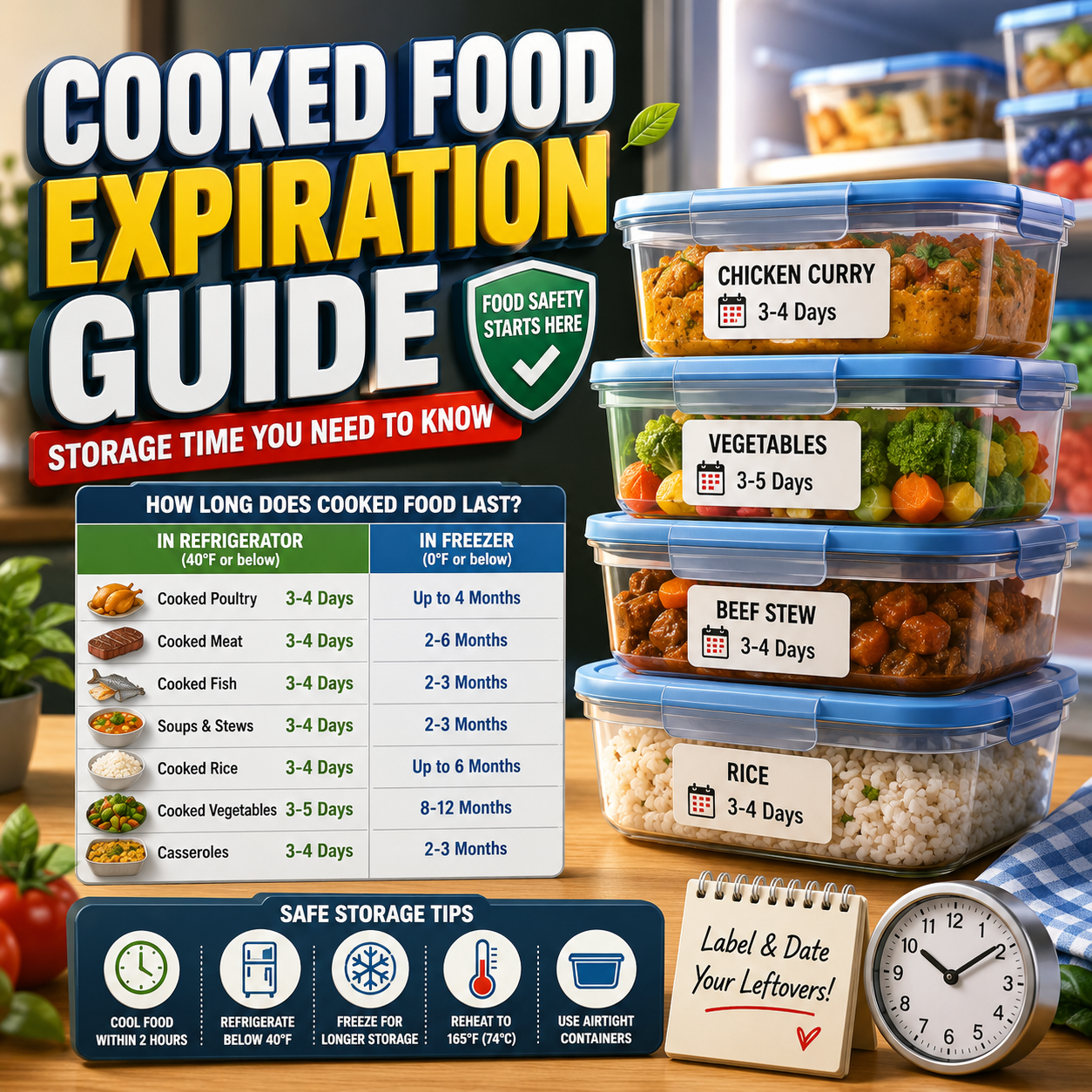
| Cooked Meat | 3–4 days | 2–6 months |
Seafood
Seafood is one of the most perishable food categories because of its high moisture and protein content. Fresh fish and shellfish should be refrigerated immediately after purchase and cooked within one to two days. If you do not plan to use seafood quickly, freezing it immediately helps preserve both safety and quality.
| Seafood | Refrigerator | Freezer |
| Fresh Fish | 1–2 days | 6–8 months |
| Shrimp | 1–2 days | 6 months |
| Crab | 3–5 days cooked | 2–4 months |
| Salmon | 1–2 days | 3 months |
| Tuna | 1–2 days | 3 months |
Eggs
Eggs generally remain safe much longer than many people expect when stored correctly in their original carton inside the refrigerator. The carton protects eggs from absorbing odors and helps reduce moisture loss. Although many consumers rely solely on the printed date, refrigeration and proper handling are far more important indicators of egg safety.
| Egg Product | Refrigerator | Freezer |
| Whole Eggs | 3–5 weeks | Not recommended |
| Egg Whites | 2–4 days | 12 months |
| Hard-Boiled Eggs | 1 week | Not recommended |
| Liquid Eggs | 2–6 days | 12 months |
Fruits
Fresh fruits vary greatly in shelf life depending on their natural sugar content, acidity, and moisture levels. Berries generally spoil much faster than apples or citrus fruits. Proper refrigeration and avoiding excess moisture can significantly extend freshness while maintaining nutritional value and flavor.
| Fruit | Refrigerator |
| Apples | 4–8 weeks |
| Grapes | 1–2 weeks |
| Strawberries | 3–7 days |
| Blueberries | 1–2 weeks |
| Oranges | 2–4 weeks |
| Bananas | 2–7 days (room temperature) |
Vegetables
Leafy greens, herbs, and mushrooms tend to spoil more quickly than root vegetables because they contain higher moisture levels. Refrigeration slows deterioration, but vegetables should still be inspected regularly for signs of wilting, mold, or sliminess. Proper storage containers and moisture control can greatly extend freshness.
| Vegetable | Refrigerator |
| Lettuce | 7–10 days |
| Spinach | 5–7 days |
| Broccoli | 3–5 days |
| Carrots | 3–4 weeks |
| Potatoes | 2–3 months (cool pantry) |
| Onions | 1–2 months (pantry) |
Bread and Bakery Products
Bread and baked goods are staples in many households, but they have relatively short shelf lives because they contain moisture that encourages mold growth. Commercial breads often last longer than homemade varieties because they contain approved preservatives. Refrigeration can actually make bread stale faster, so most bread should be stored at room temperature in a cool, dry place if you plan to eat it within a few days. For longer storage, freezing is the best option because it preserves texture and flavor much better than refrigeration.
| Bakery Product | Pantry | Refrigerator | Freezer |
| White Bread | 5–7 days | 7–14 days | 3 months |
| Whole Wheat Bread | 5–7 days | 7–14 days | 3 months |
| Bagels | 3–5 days | 7–10 days | 3 months |
| Muffins | 2–4 days | 1 week | 3 months |
| Cakes (Unfrosted) | 3–4 days | 1 week | 4 months |
| Cookies | 2–3 weeks | 1 month | 6 months |
Pantry Foods
Dry Pantry Staples
Dry pantry foods have some of the longest shelf lives because they contain very little moisture, making it difficult for bacteria to grow. However, improper storage can expose these foods to humidity, insects, or mold. Store pantry items in airtight containers in a cool, dry location away from direct sunlight to maximize freshness and maintain nutritional quality.
| Pantry Food | Shelf Life |
| White Rice | 2–5 years |
| Brown Rice | 6–12 months |
| Pasta | 2 years |
| Flour | 6–12 months |
| Sugar | Indefinite if dry |
| Salt | Indefinite |
| Dried Beans | 2–3 years |
| Oats | 1–2 years |
| Breakfast Cereal | 6–12 months unopened |
Canned Foods
Commercially canned foods are designed for long-term storage and remain safe for years if the cans stay intact and are stored properly. While quality may gradually decline over time, many canned products remain edible well beyond their “Best Before” dates. Never consume food from cans that are bulging, leaking, rusted, deeply dented, or emitting unusual odors after opening.
| Canned Food | Pantry Shelf Life |
| Vegetables | 2–5 years |
| Fruits | 1–2 years |
| Beans | 2–5 years |
| Soup | 2–5 years |
| Tuna | 3–5 years |
| Tomato Products | 12–18 months |
Frozen Foods
How Long Does Frozen Food Last?
Freezing dramatically slows bacterial growth, making frozen foods safe for extended periods. However, freezing does not completely stop quality changes. Foods stored too long may develop freezer burn, lose moisture, or experience texture and flavor changes. Packaging foods tightly and removing excess air helps maintain quality for the recommended storage periods.
How to Tell If Food Has Gone Bad
Expiration dates are only one indicator of food quality. Learning to recognize spoilage signs is equally important because food may become unsafe before its printed date if stored incorrectly. Likewise, many foods remain perfectly safe after the date if they have been handled and stored properly. Always inspect food carefully before consuming it.
Common Signs of Spoilage
- Sour or unpleasant odor
- Mold growth
- Slimy texture
- Unusual discoloration
- Gas bubbles in packaged foods
- Swollen or leaking containers
- Rancid smell from oils or nuts
- Excessive separation in dairy products
- Sticky or tacky surfaces on meat
- Off flavors after cooking
If you notice any of these warning signs, discard the food immediately. When in doubt, it’s safer to throw it out.
Food Storage Best Practices
Refrigeration Tips
Proper refrigeration is one of the most effective ways to prevent foodborne illness and extend shelf life. Your refrigerator should maintain a temperature of 4°C (40°F) or below, while the freezer should remain at −18°C (0°F). Avoid overloading the refrigerator, as proper air circulation helps keep foods evenly chilled.
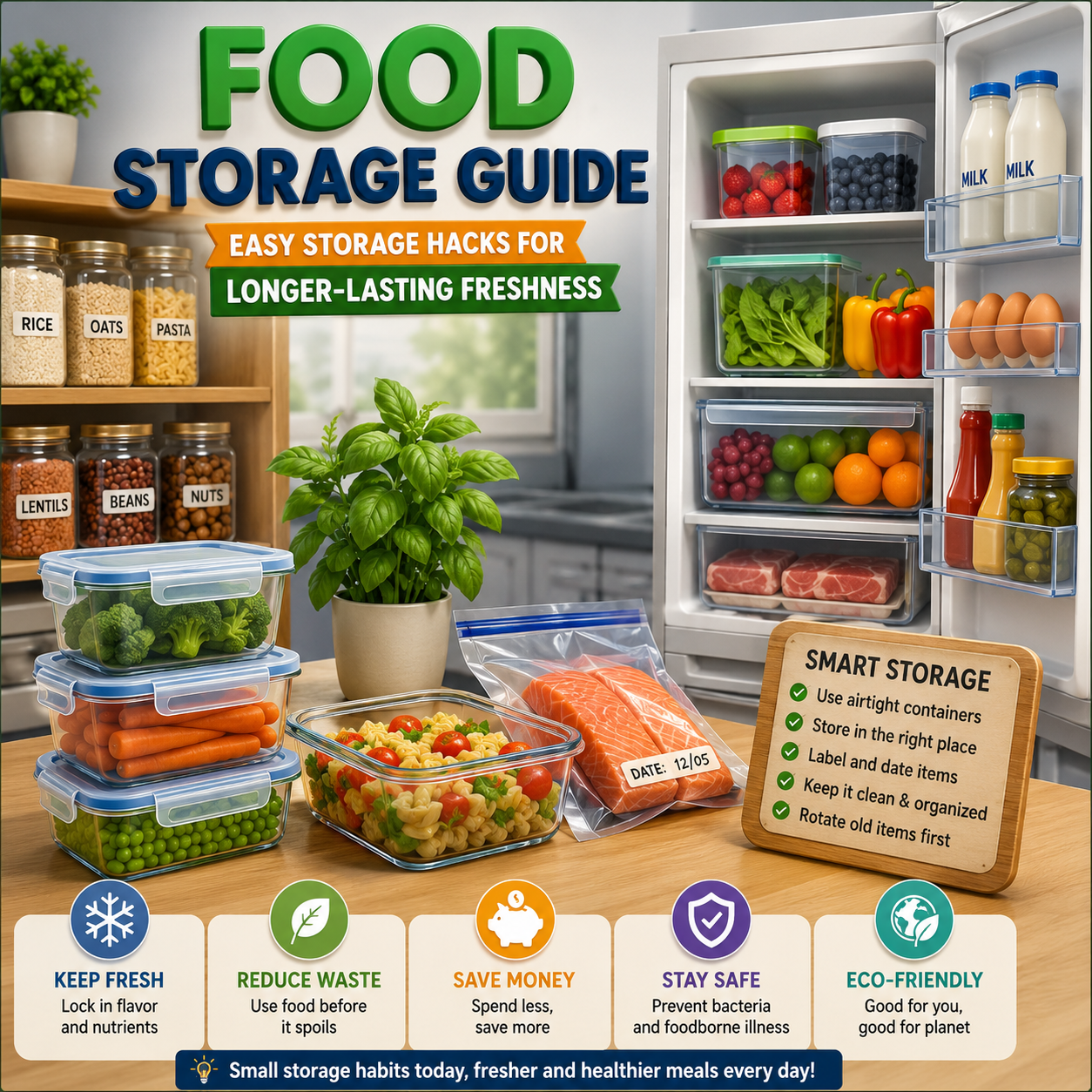
Best practices include:
- Refrigerate groceries within two hours of purchase.
- Store raw meat on the lowest shelf to prevent drips.
- Keep dairy products toward the back where temperatures are most stable.
- Use airtight containers for leftovers.
- Label leftovers with the preparation date.
- Avoid overcrowding shelves.
- Clean spills promptly to prevent bacterial growth.
Pantry Storage Tips
A well-organized pantry helps maintain food quality and reduces waste. Store dry goods away from heat, sunlight, and humidity. Transfer opened products into airtight containers to keep out moisture and pests. Rotate older products to the front and place newly purchased items behind them using the “first in, first out” (FIFO) method.
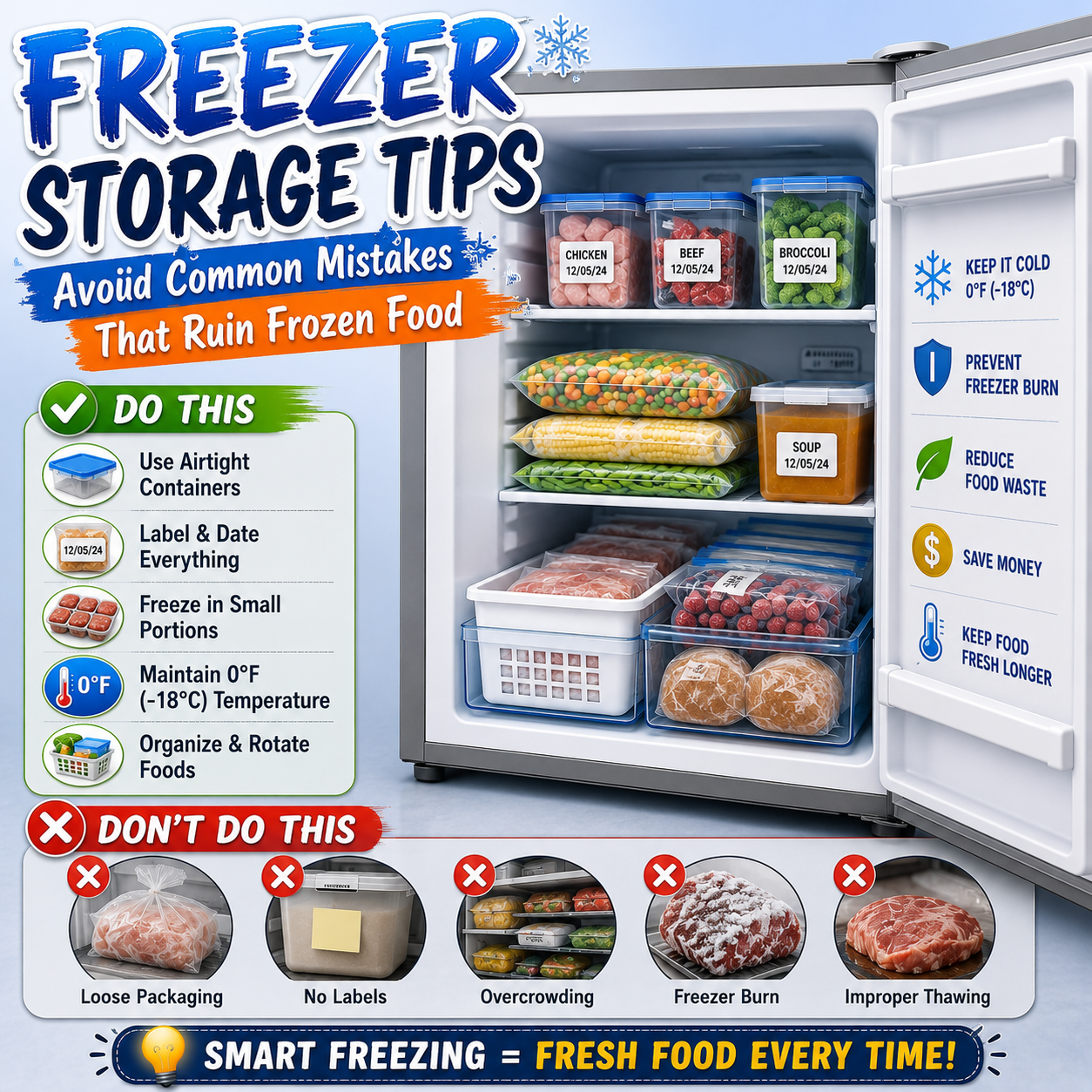
Freezer Storage Tips
Freezing food correctly preserves quality and minimizes freezer burn. Wrap foods tightly using freezer-safe bags, containers, or heavy-duty foil. Remove as much air as possible before sealing. Label each package with the food name and freezing date so you know when it should be used.
Checklist:
- Freeze food before it spoils.
- Cool cooked foods before freezing.
- Divide large portions into meal-sized packages.
- Avoid repeatedly thawing and refreezing food.
- Keep the freezer full but not overcrowded.
Foods That Never Really Expire
Some foods have exceptionally long shelf lives because they naturally resist bacterial growth or contain very little moisture. Although these foods may lose flavor, aroma, or texture over time, they often remain safe indefinitely when stored correctly in sealed containers.
Examples include:
- Pure honey
- White sugar
- Salt
- White vinegar
- Pure maple syrup (unopened)
- Cornstarch
- Dried beans
- Hard liquor (unopened)
- Vanilla extract
- Pure baking soda
Important: Even foods with extremely long shelf lives should be discarded if they become contaminated by moisture, pests, mold, or damaged packaging.
Common Food Storage Mistakes
Many cases of food spoilage result from simple storage mistakes rather than expired products. Correcting these habits can significantly reduce food waste and improve kitchen safety.
1. Ignoring Refrigerator Temperature
Many home refrigerators operate above the recommended 4°C (40°F) because the temperature is never checked. Use a refrigerator thermometer to ensure food stays at a safe temperature.
2. Leaving Food Out Too Long
Perishable foods should not remain at room temperature for more than two hours, or one hour if the temperature exceeds 32°C (90°F). Bacteria multiply rapidly within this “danger zone.”
3. Overfilling the Refrigerator
An overcrowded refrigerator blocks airflow, creating warm spots where bacteria can grow faster. Leave enough space between items for proper circulation.
4. Not Labeling Leftovers
Without labels, it’s easy to forget when leftovers were prepared. Mark containers with the cooking or storage date and consume most refrigerated leftovers within 3–4 days.
5. Washing Produce Too Early
Washing fruits and vegetables before storage adds moisture that encourages mold growth. Wash produce just before eating or cooking unless the product specifically requires prewashing.
6. Storing Foods in the Wrong Location
Items like potatoes, onions, garlic, and tomatoes are best kept in a cool, dry pantry rather than the refrigerator. Incorrect storage can reduce flavor, texture, and shelf life.
7. Refreezing Improperly
Food thawed at room temperature should not be refrozen because bacteria may have multiplied. Foods thawed safely in the refrigerator can usually be refrozen, although some quality loss may occur.
8. Trusting Dates Without Inspecting Food
Printed dates are useful guides, but they do not replace your senses. Always inspect food for signs of spoilage before consuming it.
Frequently Asked Questions (FAQs)
1. Do expiration dates mean food becomes unsafe immediately?
No. Many expiration dates, especially “Best Before” dates, indicate peak quality rather than safety. Foods may still be safe if stored correctly and show no signs of spoilage. However, always follow “Use By” dates for highly perishable foods and inspect products before consuming them.
2. How long can leftovers stay in the refrigerator?
Most leftovers remain safe for 3–4 days when refrigerated promptly in airtight containers. If you are unsure whether you will eat them within that period, freeze them to extend their shelf life.
3. Is it safe to eat food with freezer burn?
Yes. Freezer-burned food is generally safe to eat if it has remained frozen continuously. However, it may have a dry texture, off flavor, or reduced quality. Trimming freezer-burned areas can improve the eating experience.
4. Should eggs be stored in the refrigerator?
Yes. Refrigeration slows bacterial growth and helps maintain freshness. Store eggs in their original carton on an interior shelf rather than the refrigerator door, where temperatures fluctuate more frequently.
5. Can I refreeze thawed food?
Food thawed safely in the refrigerator can usually be refrozen, although some quality may be lost. Food thawed at room temperature should not be refrozen because harmful bacteria may have multiplied.
6. Why do canned foods last so long?
Commercial canning uses heat to destroy harmful microorganisms and seals food in airtight containers. This process greatly extends shelf life while protecting food from contamination until the can is opened.
7. Which foods should never be eaten after showing signs of spoilage?
Discard any food with mold (except certain aged cheeses), foul odors, slimy textures, swollen packaging, leaking containers, or unusual discoloration. Consuming spoiled food can lead to foodborne illness.
8. Does freezing kill bacteria?
No. Freezing slows or stops bacterial growth but does not kill all bacteria. Once food thaws, bacteria can begin multiplying again, making proper thawing and cooking essential.
9. How can I make fresh produce last longer?
Store fruits and vegetables according to their specific requirements, remove damaged items promptly, maintain proper humidity, and avoid washing produce until you are ready to use it unless otherwise recommended.
10. What is the best way to organize a refrigerator?
Store raw meat on the bottom shelf, ready-to-eat foods on upper shelves, dairy products toward the back where temperatures are most consistent, and keep fruits and vegetables in designated crisper drawers.
Key Takeaways
- Understand the difference between “Best Before,” “Use By,” “Sell By,” and “Freeze By” dates.
- Refrigerate perishable foods at or below 4°C (40°F).
- Keep frozen foods at −18°C (0°F) or below.
- Inspect food for spoilage instead of relying only on printed dates.
- Label leftovers and consume them within 3–4 days.
- Freeze foods before they spoil to reduce waste.
- Store pantry staples in airtight containers away from heat and moisture.
- Discard foods with mold, foul odors, or damaged packaging.
- Practice proper food handling to reduce the risk of foodborne illness.
- Smart storage habits save money and reduce household food waste.
Conclusion
Understanding how long food actually lasts is one of the easiest ways to protect your health, reduce food waste, and save money. Expiration dates are valuable guidelines, but they should always be considered alongside proper storage practices and visible signs of spoilage. By learning the differences between “Best Before,” “Use By,” and other food labels, you can make informed decisions about what is safe to eat and what should be discarded.
Maintaining the correct refrigerator and freezer temperatures, storing foods appropriately, rotating older items, and using leftovers promptly are simple habits that significantly improve food safety. These practices not only help prevent foodborne illness but also ensure you get the most value from every grocery trip.
Whether you’re stocking your pantry, organizing your refrigerator, or planning meals for the week, applying the tips in this Complete Food Expiration Guide will help you keep food fresher for longer and minimize unnecessary waste.
Read Our Latest Blog:Food Safety and Storage Explained: Best Practices for Fresh, Healthy Food