Dry Fruits Benefits for Kids
Dry fruits are nutrient-dense foods that provide essential vitamins, minerals, healthy fats, protein, fibre, and antioxidants. When included as part of a balanced diet and served in age-appropriate forms, dry fruits can support healthy growth, brain development, strong bones, better digestion, and a healthy immune system in children.
Although dry fruits are highly nutritious, they should be eaten in moderation because they are energy-dense. Whole nuts should not be given to very young children due to the risk of choking. Instead, they can be served as finely ground powders, smooth nut butters (where appropriate), or chopped into age-safe pieces for older children.
Why Are Dry Fruits Good for Kids?
Dry fruits provide many important nutrients that growing children need every day.
Health Benefits of Dry Fruits
- Support healthy brain development
- Help strengthen the immune system
- Provide healthy fats for growth
- Support bone development
- Improve digestion
- Help maintain healthy energy levels
- Supply vitamins and minerals
- Encourage healthy eating habits
Including a variety of dry fruits can help children receive a broad range of nutrients.
Nutrients Found in Dry Fruits
Healthy Fats
Healthy fats support brain development and normal nervous system function.
Good Sources
- Almonds
- Walnuts
- Pistachios
- Cashews
Protein
Protein supports muscle growth, tissue repair, and overall development.
Rich Sources
- Almonds
- Cashews
- Pistachios
- Peanuts (where appropriate and allergy-free)
Fibre
Fibre supports healthy digestion and helps prevent constipation.
High-Fibre Dry Fruits
- Raisins
- Dates
- Figs
- Apricots
- Almonds
Iron
Iron supports healthy blood production and brain development.
Iron-Rich Choices
- Raisins
- Dates
- Dried apricots
- Figs
Calcium
Calcium is essential for strong bones and healthy teeth.
Good Sources
- Almonds
- Figs
- Sesame seeds (often included with dry fruit mixes)
Best Dry Fruits for Kids
1. Almonds
Almonds are one of the most nutritious dry fruits for growing children.
Benefits
- Support brain development
- Strengthen bones
- Provide vitamin E
- Supply healthy fats and protein
For younger children, serve almonds as almond powder or finely chopped pieces.
2. Walnuts
Walnuts contain plant-based omega-3 fatty acids that support brain health.
Benefits
- Support memory and learning
- Promote healthy brain development
- Provide healthy fats
- Support heart health
Walnuts can be added to oatmeal, yogurt, or smoothies.
3. Raisins
Raisins are naturally sweet and provide iron, fibre, and antioxidants.
Benefits
- Support digestion
- Provide natural energy
- Help maintain healthy iron levels
- Make a healthy snack
Serve raisins in moderation because they are high in natural sugars.
4. Dates
Dates provide fibre, potassium, and natural carbohydrates.
Benefits
- Provide quick energy
- Support healthy digestion
- Supply important minerals
- Naturally sweeten snacks and desserts
Dates can be blended into smoothies or chopped into oatmeal.
5. Pistachios
Pistachios contain protein, healthy fats, fibre, and several vitamins and minerals.
Benefits
- Support growth and development
- Help maintain energy levels
- Provide plant protein
- Support healthy eyesight
Always remove shells before serving and offer age-appropriate portions.
6. Cashews
Cashews are rich in healthy fats, protein, magnesium, zinc, and iron that support children’s growth and development.
Benefits
- Support healthy bone development
- Provide energy for active children
- Help maintain healthy muscles
- Supply essential minerals
Serve cashews unsalted and in age-appropriate forms.
7. Dried Figs
Dried figs are naturally sweet and packed with fibre, calcium, and iron.
Benefits
- Support healthy digestion
- Strengthen bones and teeth
- Help maintain healthy iron levels
- Provide natural energy
Chop dried figs into small pieces before serving to younger children.
8. Dried Apricots
Dried apricots are an excellent source of vitamin A, potassium, and fibre.
Benefits
- Support healthy eyesight
- Promote healthy digestion
- Strengthen the immune system
- Provide antioxidants
Choose unsweetened dried apricots whenever possible.
9. Prunes
Prunes are well known for supporting digestive health.
Benefits
- Help prevent constipation
- Support gut health
- Provide fibre
- Supply potassium and antioxidants
Prunes can be served as chopped fruit or blended into smoothies.
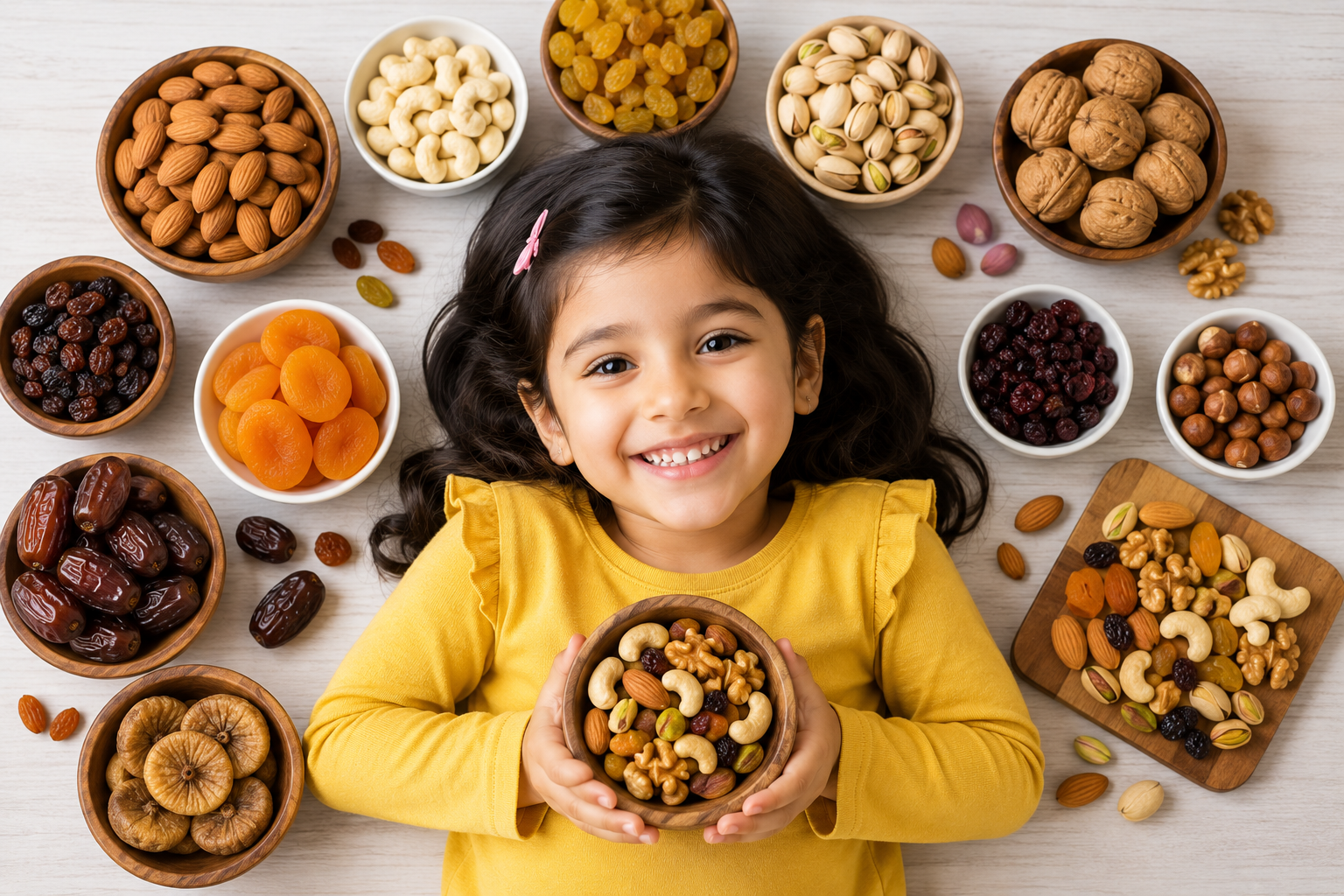
10. Mixed Dry Fruits
A combination of different dry fruits provides a wider variety of nutrients.
Healthy Mix Ideas
- Almonds
- Walnuts
- Pistachios
- Cashews
- Raisins
- Dates
- Figs
- Dried apricots
Rotate different dry fruits throughout the week to provide balanced nutrition.
How Much Dry Fruit Can Kids Eat?
The right amount depends on a child’s age, appetite, and nutritional needs.
General Serving Suggestions
- Toddlers (1–3 years): Small amounts served in safe forms such as finely ground nuts or smooth nut butters (if appropriate).
- Children (4–8 years): A small handful of mixed dry fruits as part of a balanced diet.
- Older children: Moderate portions based on age, activity level, and overall dietary needs.
Dry fruits should complement a balanced diet rather than replace fresh fruits, vegetables, or regular meals.
Safety Tips and Allergy Precautions
Prevent Choking
Whole nuts can be a choking hazard for young children.
Safer Ways to Serve
- Finely ground almonds or walnuts
- Smooth nut butters (where appropriate)
- Finely chopped nuts for older children
- Mixed into oatmeal, yogurt, or smoothies
Always supervise young children while eating.
Watch for Nut Allergies
Some children may have allergies to tree nuts or peanuts.
Seek Medical Advice If Your Child Develops
- Skin rash or hives
- Swelling of the lips, face, or tongue
- Difficulty breathing
- Persistent vomiting after eating nuts
If a nut allergy is suspected, seek immediate medical attention and avoid giving nuts until evaluated by a healthcare professional.
Choose Unsalted and Unsweetened Varieties
Avoid dry fruits with:
- Added sugar
- Excess salt
- Artificial flavourings
- Chocolate coatings
Plain dry fruits are the healthiest option for children.
Foods to Avoid Pairing Too Often with Dry Fruits
To promote balanced nutrition, limit combinations with:
- Sugary candies
- Chocolate-coated nuts
- Sweetened breakfast cereals
- Sugary drinks
- Highly processed snack foods
- Deep-fried snacks
Instead, pair dry fruits with:
- Fresh fruits
- Plain yogurt
- Oatmeal
- Whole-grain cereals
- Homemade trail mixes
Healthy Daily Habits for Kids
Offer a Variety of Nutritious Foods
Include:
- Fresh fruits
- Vegetables
- Whole grains
- Lean proteins
- Dairy products
- Dry fruits in moderation
A balanced diet supports healthy growth and development.
Encourage Physical Activity
Children should aim for at least 60 minutes of moderate-to-vigorous physical activity every day, such as:
- Running
- Cycling
- Swimming
- Football
- Dancing
- Outdoor play
Keep Kids Hydrated
Encourage children to drink water regularly throughout the day instead of sugary beverages.
Ensure Adequate Sleep
Good sleep supports healthy growth, learning, memory, and overall well-being.
Make Healthy Snacking Easy
Keep healthy snacks readily available, such as:
- Fresh fruit
- Plain yogurt
- Vegetable sticks
- Small portions of dry fruits
- Whole-grain crackers
Frequently Asked Questions
Are dry fruits good for children’s brain development?
Yes. Dry fruits such as walnuts and almonds provide healthy fats, vitamin E, and other nutrients that support normal brain development as part of a balanced diet.
Can children eat dry fruits every day?
Yes. Most healthy children can enjoy moderate portions of plain, unsalted dry fruits daily as part of a varied diet, provided they are served in age-appropriate forms.
Which dry fruit is best for immunity?
There is no single “best” dry fruit. Almonds, pistachios, raisins, and dried apricots all provide vitamins, minerals, and antioxidants that support overall health and normal immune function.
Are raisins healthy for kids?
Yes. Raisins provide fibre, iron, and natural carbohydrates. Because they are naturally high in sugar, they should be enjoyed in moderation.
At what age can children start eating nuts?
This depends on the child’s development and allergy risk. Whole nuts should not be given to young children because of the choking hazard. Discuss the safe introduction of nuts and nut products with your paediatrician, especially if there is a family history of food allergies.
Key Takeaways
- Dry fruits are rich in healthy fats, protein, fibre, vitamins, and minerals.
- Almonds, walnuts, pistachios, raisins, dates, figs, and apricots are nutritious choices for children.
- Serve dry fruits in age-appropriate forms to reduce the risk of choking.
- Choose plain, unsalted, and unsweetened varieties whenever possible.
- Include dry fruits as part of a balanced diet alongside fresh fruits, vegetables, whole grains, and lean proteins.
- Encourage healthy lifestyle habits, including regular physical activity and adequate sleep.
Conclusion
Dry fruits are a nutritious addition to a child’s diet and can help support healthy growth, brain development, digestion, and immunity when eaten in moderation. Offering a variety of plain, unsalted dry fruits alongside other wholesome foods ensures children receive a wide range of important nutrients.
Parents should also pay close attention to serving dry fruits safely by choosing age-appropriate forms and being aware of potential food allergies. Combined with regular physical activity, enough sleep, and a balanced diet, dry fruits can be part of healthy eating habits that benefit children throughout their lives.