Eating healthy doesn’t have to mean spending a fortune. Many people assume that nutritious foods are expensive, but with the right planning and smart shopping habits, it’s possible to build an Affordable Healthy Diet Plan that supports your overall well-being without stretching your budget. Whether you’re feeding yourself, your family, or trying to lose weight while saving money, affordable nutrition is achievable with simple, wholesome ingredients.
A healthy diet focuses on balance rather than perfection. It includes plenty of fruits, vegetables, whole grains, lean proteins, healthy fats, and proper portion sizes. Choosing seasonal produce, buying pantry staples in bulk, preparing meals at home, and reducing food waste can significantly lower grocery costs while improving the quality of your meals.
This comprehensive guide explains how to create a budget-friendly meal plan, select affordable nutrient-rich foods, understand healthy serving sizes, and prepare delicious meals that support long-term health. You’ll also discover practical shopping strategies, meal-planning techniques, and everyday tips to help you enjoy nutritious eating without overspending.
What Is an Affordable Healthy Diet Plan?
An affordable healthy diet plan is a practical approach to eating that combines balanced nutrition with cost-conscious food choices. Instead of relying on expensive specialty products or restrictive diets, it emphasizes everyday ingredients that are nutritious, widely available, and budget-friendly. The goal is to meet your body’s nutritional needs while keeping grocery expenses under control.
A well-designed affordable diet includes foods from all major food groups, such as whole grains, fruits, vegetables, lean proteins, dairy or fortified alternatives, and healthy fats. Planning meals in advance, cooking at home, and understanding portion sizes are key strategies that help reduce food costs while improving overall health.
Unlike fad diets, an affordable healthy eating plan is sustainable. It encourages long-term habits that promote better energy, weight management, and disease prevention without sacrificing flavor or variety.
Why Healthy Eating Doesn’t Have to Be Expensive
Many people believe healthy foods always cost more than processed or fast foods, but this misconception often comes from comparing convenience products rather than whole ingredients. Staples like oats, beans, lentils, rice, eggs, seasonal vegetables, and frozen fruits offer exceptional nutritional value at a low cost.
Preparing meals at home also saves money compared to dining out or ordering takeout. Cooking in batches, freezing leftovers, and using ingredients across multiple meals can significantly reduce waste and maximize every grocery purchase.
By focusing on nutrient density instead of brand names or trendy health foods, you can create meals that nourish your body while staying within your budget.
Benefits of Following an Affordable Healthy Diet
A budget-friendly healthy diet provides more than financial savings. It supports physical health, mental well-being, and long-term lifestyle improvements.
Some of the key benefits include:
- Better heart health
- Improved digestion
- Stable blood sugar levels
- Increased daily energy
- Healthier body weight
- Lower grocery bills
- Reduced food waste
- Stronger immune function
- Better concentration
- Sustainable eating habits
Because affordable healthy eating relies on whole, minimally processed foods, it naturally increases your intake of vitamins, minerals, fiber, and antioxidants while reducing added sugars and unhealthy fats.
Essential Food Groups for Balanced Nutrition
A balanced diet includes foods from several important groups, each contributing unique nutrients essential for maintaining good health.
Fruits and Vegetables
Fresh, frozen, or canned fruits and vegetables provide vitamins, minerals, antioxidants, and dietary fiber. Choosing seasonal produce often reduces costs while improving freshness and flavor. Frozen vegetables are another economical option because they retain most of their nutrients and have a longer shelf life.
Aim to fill half your plate with colorful produce at every meal to maximize nutrient intake and support overall health.
Whole Grains
Whole grains supply complex carbohydrates, fiber, and B vitamins that provide sustained energy throughout the day.
Affordable whole grain options include:
- Brown rice
- Oats
- Whole wheat bread
- Whole grain pasta
- Barley
- Popcorn
- Quinoa (when purchased in bulk)
These foods help improve digestion and keep you feeling full for longer periods.
Lean Protein
Protein supports muscle repair, immune health, and satiety. Fortunately, many protein-rich foods are inexpensive.
Excellent budget-friendly protein sources include:
- Eggs
- Lentils
- Chickpeas
- Black beans
- Peanut butter
- Canned tuna
- Chicken thighs
- Greek yogurt
- Cottage cheese
- Tofu
Including protein in each meal helps maintain steady energy levels and reduces unnecessary snacking.
Healthy Fats
Healthy fats play an important role in brain health, hormone production, and nutrient absorption.
Affordable healthy fat sources include:
- Peanut butter
- Sunflower seeds
- Pumpkin seeds
- Olive oil
- Avocados (when in season)
- Ground flaxseed
Moderate portions of healthy fats make meals more satisfying while supporting overall wellness.
Understanding Healthy Serving Sizes
Eating nutritious foods is important, but portion control also plays a significant role in maintaining good health. Oversized servings can lead to excessive calorie intake, even when meals are made from wholesome ingredients.
General serving guidelines include:
| Food Group | Recommended Serving |
| Vegetables | 2–3 cups daily |
| Fruits | 1.5–2 cups daily |
| Whole Grains | 5–8 servings daily |
| Protein | 5–6 ounces daily |
| Dairy | 2–3 servings daily |
| Healthy Fats | Small portions throughout the day |
Using smaller plates, measuring ingredients occasionally, and eating slowly can help prevent overeating while making groceries last longer.
Smart Grocery Shopping Tips
Shopping strategically is one of the easiest ways to build an affordable healthy diet plan.
Make a Weekly Meal Plan
Planning meals before shopping helps you purchase only what you need. It reduces impulse buying and minimizes food waste.
Create a Shopping List
A detailed grocery list keeps spending under control and ensures you buy nutritious ingredients instead of processed convenience foods.
Buy Seasonal Produce
Seasonal fruits and vegetables are often fresher, tastier, and significantly less expensive than out-of-season options.
Choose Store Brands
Generic or store-brand products often contain the same ingredients as national brands but cost much less.
Purchase Dry Goods in Bulk
Buying rice, oats, beans, lentils, and whole grains in larger quantities can reduce the cost per serving and provide pantry staples for weeks.
Compare Unit Prices
Looking at the price per ounce or kilogram rather than the package price helps identify the best value.
Avoid Shopping Hungry
Shopping on an empty stomach increases the likelihood of buying unnecessary snacks and processed foods, which can quickly increase your grocery bill.
Affordable Foods That Deliver Maximum Nutrition
Some foods offer exceptional nutritional value while remaining inexpensive throughout the year.
| Food | Main Nutrients | Budget Benefit |
| Oats | Fiber | Very inexpensive breakfast |
| Eggs | Protein | High-quality protein at low cost |
| Lentils | Protein, Fiber | Extremely affordable |
| Brown Rice | Complex Carbohydrates | Long shelf life |
| Frozen Vegetables | Vitamins | Less waste |
| Bananas | Potassium | Affordable year-round |
| Sweet Potatoes | Vitamin A | Filling and nutritious |
| Canned Beans | Protein | Ready to use |
| Peanut Butter | Healthy Fats | Budget-friendly snack |
| Plain Yogurt | Protein, Calcium | Versatile ingredient |
These foods can be combined into dozens of healthy meals while keeping grocery expenses low.
Weekly Budget-Friendly Meal Planning
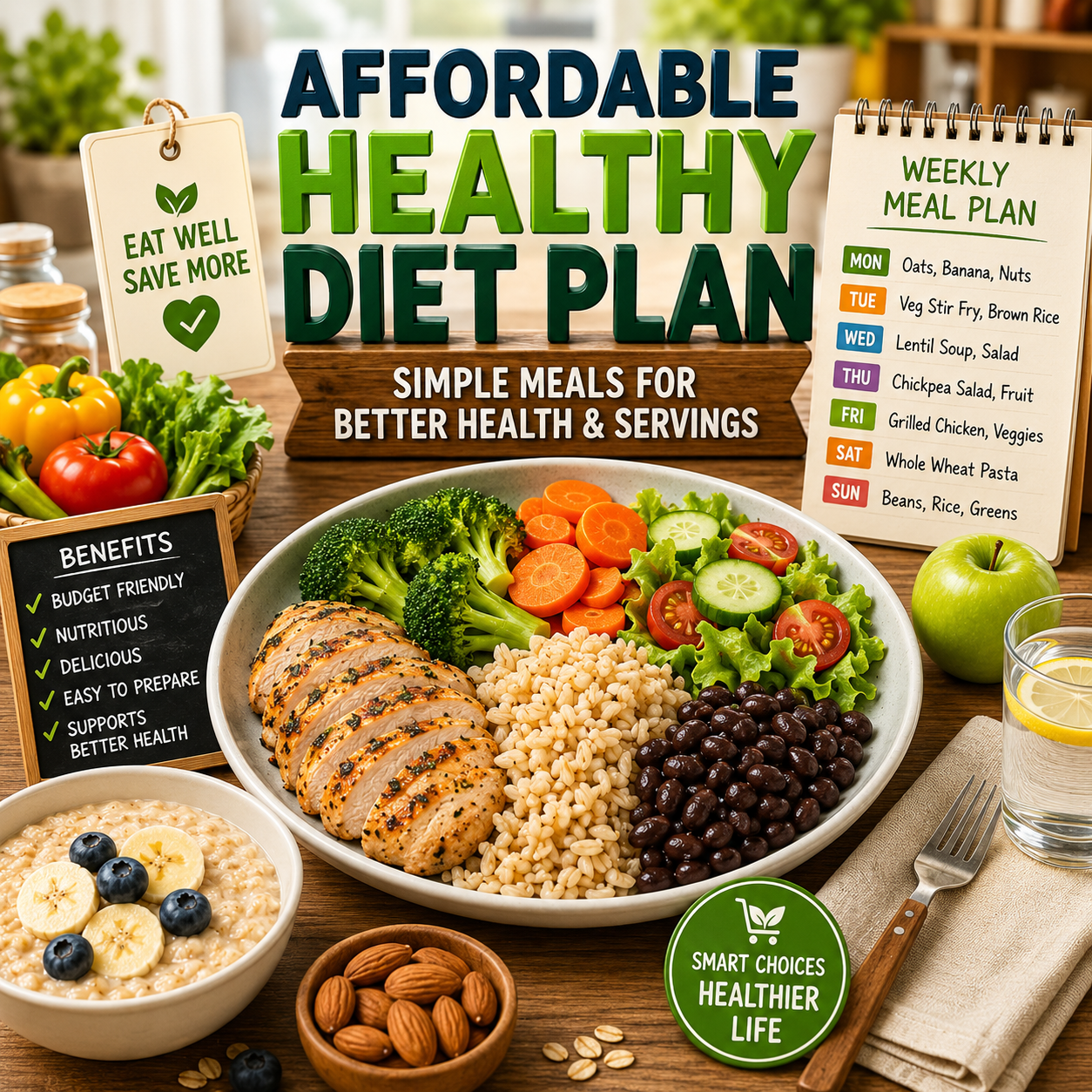
One of the easiest ways to maintain an affordable healthy diet plan is by creating a weekly meal plan. Planning meals before shopping helps you stay organized, reduce impulse purchases, minimize food waste, and make the most of every ingredient you buy. Instead of deciding what to eat each day, you’ll already have nutritious, budget-friendly meals prepared or planned, saving both time and money.
Start by checking your pantry, refrigerator, and freezer before making your shopping list. Build meals around ingredients you already have, then purchase only what is needed to complete the week’s menu. Preparing meals in batches also makes healthy eating easier during busy weekdays.
Example of a Budget-Friendly Weekly Meal Plan
| Day | Breakfast | Lunch | Dinner | Snack |
| Monday | Oatmeal with banana | Lentil soup | Grilled chicken with brown rice and vegetables | Apple |
| Tuesday | Scrambled eggs on whole wheat toast | Chickpea salad | Vegetable stir-fry with rice | Yogurt |
| Wednesday | Greek yogurt with berries | Leftover stir-fry | Baked sweet potato with black beans | Carrot sticks |
| Thursday | Overnight oats | Tuna sandwich | Lentil curry with brown rice | Orange |
| Friday | Peanut butter toast | Vegetable soup | Whole wheat pasta with tomato sauce | Mixed nuts |
| Saturday | Fruit smoothie | Chicken salad | Homemade vegetable pizza | Popcorn |
| Sunday | Vegetable omelet | Rice and beans | Baked chicken with roasted vegetables | Banana |
Planning meals this way reduces grocery costs, encourages balanced nutrition, and prevents the temptation to order expensive takeout.
Simple Affordable Healthy Breakfast Ideas
Breakfast provides the energy needed to begin the day and helps improve concentration, productivity, and appetite control. A healthy breakfast doesn’t need expensive ingredients. By combining whole grains, fruit, and protein, you can create satisfying meals that keep you full for hours.
Easy breakfasts made from affordable pantry staples are also quick to prepare, making them perfect for busy mornings. Choosing homemade breakfasts over packaged cereals or fast food can significantly reduce your weekly food expenses.
Budget-Friendly Breakfast Ideas
- Oatmeal with sliced banana and cinnamon
- Whole wheat toast with peanut butter
- Vegetable omelet with whole grain toast
- Greek yogurt with homemade granola
- Overnight oats with berries
- Smoothie made with frozen fruit and yogurt
- Cottage cheese with fresh fruit
- Boiled eggs and whole wheat toast
These meals provide protein, fiber, vitamins, and healthy carbohydrates while remaining inexpensive.
Healthy Budget Lunch Ideas
Lunch should provide enough nutrients to maintain energy throughout the afternoon without leaving you feeling sluggish. Preparing lunch at home is considerably cheaper than eating at restaurants or purchasing packaged meals.
Using leftovers from dinner is one of the most effective strategies for saving both time and money. Combining lean proteins with vegetables and whole grains creates balanced lunches that are filling and nutritious.
Affordable Lunch Options
- Lentil soup with whole grain bread
- Chicken and vegetable wrap
- Brown rice with black beans
- Chickpea salad
- Tuna salad sandwich
- Quinoa and roasted vegetables
- Homemade vegetable soup
- Turkey sandwich on whole wheat bread
Packing lunch also gives you greater control over ingredients, sodium levels, and portion sizes.
Easy and Affordable Healthy Dinner Recipes
Dinner is an excellent opportunity to include a variety of vegetables, lean proteins, and whole grains. Preparing meals at home allows you to enjoy healthier ingredients while keeping costs low.
Simple recipes made with pantry staples can often be prepared in less than 30 minutes. Cooking larger portions also creates leftovers for lunch the next day, reducing both waste and meal preparation time.
Simple Dinner Ideas
1. Chicken and Brown Rice Bowl
Ingredients:
- Brown rice
- Grilled chicken
- Broccoli
- Carrots
- Olive oil
- Garlic
This balanced meal provides protein, fiber, vitamins, and complex carbohydrates.
2. Lentil Curry
Ingredients:
- Lentils
- Onion
- Garlic
- Tomatoes
- Curry powder
- Brown rice
Lentils are one of the most affordable protein sources and are rich in fiber and essential minerals.
3. Vegetable Stir-Fry
Ingredients:
- Frozen mixed vegetables
- Brown rice
- Soy sauce (low sodium)
- Garlic
- Ginger
- Tofu or chicken
Frozen vegetables reduce waste while providing nearly the same nutritional value as fresh produce.
4. Black Bean Chili
Ingredients:
- Black beans
- Tomatoes
- Bell peppers
- Onion
- Chili powder
- Corn
Serve with brown rice or whole wheat bread for a complete, filling meal.
5. Whole Wheat Pasta Primavera
Ingredients:
- Whole wheat pasta
- Mixed vegetables
- Olive oil
- Garlic
- Parmesan cheese
This recipe is inexpensive, colorful, and packed with vitamins and fiber.
Affordable Healthy Snack Ideas
Healthy snacks help maintain steady energy levels between meals and reduce overeating during lunch or dinner. The best snacks combine protein, healthy fats, and fiber to keep you satisfied.
Instead of buying expensive packaged snack foods, prepare simple options at home using affordable ingredients.
Nutritious Budget Snacks
- Fresh apples
- Bananas
- Oranges
- Homemade popcorn
- Carrot sticks
- Celery with peanut butter
- Greek yogurt
- Cottage cheese
- Roasted chickpeas
- Mixed nuts (small portions)
- Hard-boiled eggs
- Whole grain crackers with hummus
Preparing snacks in advance makes healthy choices more convenient and helps avoid impulse purchases.
Meal Prep Tips to Save Time and Money
Meal preparation is one of the most effective habits for maintaining an affordable healthy diet. Spending a few hours each week preparing ingredients or complete meals reduces daily cooking stress and makes healthy eating much easier.
Batch cooking also prevents food spoilage because ingredients are used efficiently before they expire.
Practical Meal Prep Strategies
- Cook grains in large batches.
- Prepare vegetables ahead of time.
- Portion meals into reusable containers.
- Freeze leftovers for busy days.
- Marinate proteins in advance.
- Wash and chop fresh produce after shopping.
- Prepare overnight oats for several mornings.
- Cook soups and stews in large quantities.
These habits reduce food waste while helping you stick to your nutrition goals.
Common Budget Diet Mistakes to Avoid
Even with good intentions, certain habits can increase grocery costs or reduce the nutritional quality of your meals. Recognizing these mistakes allows you to make smarter food choices and maximize your budget.
Buying Too Much Fresh Produce
Fresh fruits and vegetables are healthy, but purchasing more than you can eat often leads to waste. Mix fresh produce with frozen or canned varieties to extend shelf life.
Ignoring Store Brands
Store-brand products frequently offer the same quality as name brands at a lower price. Comparing labels can help you save without sacrificing nutrition.
Shopping Without a List
Entering the grocery store without a plan often results in unnecessary purchases and forgotten essentials. A detailed list helps keep spending under control.
Buying Convenience Foods
Pre-cut vegetables, ready-made meals, and packaged snacks are convenient but usually cost much more than preparing the same foods at home.
Skipping Meal Planning
Without a weekly meal plan, it’s easy to rely on takeout or fast food. Planning ahead reduces stress and supports healthier eating habits.
Overlooking Frozen Foods
Frozen fruits and vegetables are nutritious, affordable, and last much longer than fresh produce. They are an excellent option for reducing waste.
Frequently Asked Questions (FAQs)
1. What is an affordable healthy diet plan?
An affordable healthy diet plan is a balanced approach to eating that emphasizes nutritious, budget-friendly foods such as whole grains, fruits, vegetables, beans, lentils, eggs, lean proteins, and healthy fats. By planning meals, buying seasonal produce, cooking at home, and reducing food waste, you can meet your nutritional needs without overspending. The goal is to create sustainable eating habits that support long-term health while staying within your grocery budget.
2. How can I eat healthy on a small budget?
Start by creating a weekly meal plan and shopping list to avoid impulse purchases. Buy staple foods like oats, rice, beans, and frozen vegetables in bulk when possible. Choose store-brand products, cook meals at home, and use leftovers creatively. Focusing on simple recipes made with whole foods allows you to enjoy nutritious meals while keeping food costs under control.
3. What are the cheapest healthy foods to buy?
Some of the most affordable healthy foods include oats, brown rice, lentils, beans, eggs, bananas, sweet potatoes, carrots, cabbage, frozen vegetables, canned tuna, yogurt, and peanut butter. These foods are rich in essential nutrients, have a long shelf life, and can be used in a wide variety of recipes, making them excellent choices for budget-conscious households.
4. Is meal planning really effective for saving money?
Yes. Meal planning helps you purchase only the ingredients you need, reducing food waste and preventing unnecessary spending. It also encourages cooking at home instead of relying on restaurant meals or takeout. Preparing meals in advance saves time during busy weeks and makes it easier to maintain healthy eating habits consistently.
5. Are frozen fruits and vegetables as healthy as fresh ones?
Frozen fruits and vegetables are often harvested at peak ripeness and frozen quickly to preserve their nutrients. They are an excellent alternative when fresh produce is expensive or out of season. Choosing plain frozen options without added sauces, sugar, or salt allows you to enjoy convenient, nutritious foods while reducing waste and saving money.
6. How important are portion sizes in a healthy diet?
Portion sizes play a major role in maintaining a healthy weight and preventing overeating. Even nutritious foods can contribute to excess calorie intake if eaten in very large amounts. Using smaller plates, measuring servings occasionally, and paying attention to hunger and fullness cues can help you enjoy balanced meals while making your groceries last longer.
7. Can an affordable healthy diet help with weight management?
Yes. Eating a diet rich in vegetables, fruits, lean proteins, whole grains, and healthy fats can help you feel full longer, reduce cravings, and support a balanced calorie intake. When combined with regular physical activity and mindful eating, an affordable healthy diet can contribute to gradual, sustainable weight management without relying on expensive diet products.
8. How often should I prepare meals each week?
Many people find success by meal prepping once or twice a week. Preparing larger batches of grains, proteins, soups, or vegetables allows you to assemble meals quickly throughout the week. This approach reduces daily cooking time, minimizes food waste, and makes it easier to stick to healthy eating goals.
9. What should I avoid when shopping for healthy foods?
Avoid shopping when you are hungry, purchasing large quantities of perishable foods you may not use, and relying heavily on processed convenience items. Reading nutrition labels, comparing unit prices, and sticking to your shopping list can help you make healthier and more economical choices.
10. Can families follow an affordable healthy diet?
Absolutely. Families can save money by preparing meals at home, buying ingredients in bulk, choosing seasonal produce, and involving everyone in meal planning. Family-friendly dishes such as soups, stir-fries, pasta, bean-based meals, and baked chicken are nutritious, cost-effective, and easy to customize for different tastes.
Conclusion
Following an affordable healthy diet plan is one of the most practical ways to improve your overall health while managing your grocery budget. Nutritious eating does not require expensive superfoods or complicated recipes. By focusing on whole, minimally processed foods, planning meals in advance, buying seasonal produce, and preparing meals at home, you can enjoy balanced nutrition without overspending.
Remember that healthy eating is built on consistency rather than perfection. Every small step—whether it’s replacing sugary snacks with fruit, cooking one extra meal at home each week, or adding more vegetables to your plate—moves you closer to better health. Sustainable habits developed over time are far more effective than short-term dieting.
Start with simple changes, experiment with affordable recipes, and adjust your meal plan to suit your family’s preferences and budget. With thoughtful planning and mindful food choices, eating well can become both enjoyable and affordable.
Read Our Latest Blog:Affordable Healthy Dinner Recipes: Easy Meals for Every Night