Best Anti-Inflammatory Foods
Inflammation is the body’s natural response to injury, infection, or harmful substances. Acute inflammation is a normal part of healing, but long-term (chronic) inflammation may contribute to the development of certain health conditions such as heart disease, type 2 diabetes, arthritis, and some autoimmune disorders.
Although no single food can eliminate inflammation, following a balanced diet rich in nutrient-dense foods may help support normal body functions and overall health. Including foods naturally high in antioxidants, fiber, healthy fats, vitamins, and minerals can be an important part of a healthy lifestyle.
What Is Inflammation?
Inflammation is your immune system’s natural defense mechanism.
Acute Inflammation
This short-term response helps the body recover from:
- Cuts
- Infections
- Minor injuries
- Burns
It usually resolves as healing occurs.
Chronic Inflammation
Long-lasting inflammation may develop due to a combination of factors such as:
- Poor diet
- Smoking
- Physical inactivity
- Obesity
- Chronic stress
- Certain medical conditions
Managing lifestyle habits may help support overall health.
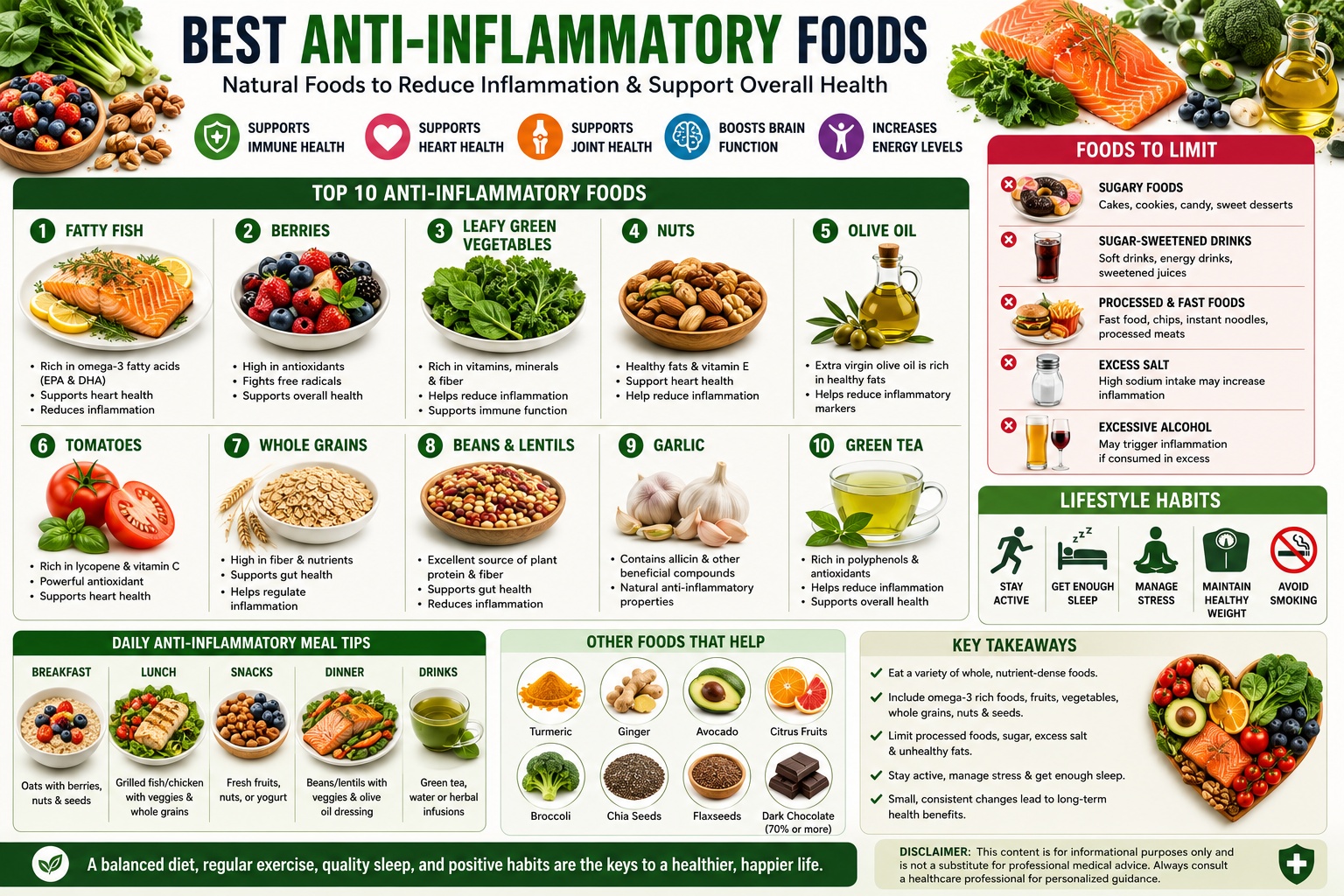
Best Anti-Inflammatory Foods
1. Fatty Fish
Fatty fish are rich in omega-3 fatty acids.
Healthy Choices
- Salmon
- Sardines
- Mackerel
- Trout
Benefits
- Supports heart health
- Provides high-quality protein
- Rich in healthy fats
Aim to include fish in your diet according to local dietary recommendations.
2. Berries
Berries contain antioxidants and dietary fiber.
Best Options
- Blueberries
- Strawberries
- Raspberries
- Blackberries
These fruits make nutritious snacks and breakfast additions.
3. Leafy Green Vegetables
Dark green vegetables provide important vitamins and minerals.
Healthy Choices
- Spinach
- Kale
- Broccoli
- Swiss chard
They are rich in fiber and support a balanced diet.
4. Nuts
Nuts provide healthy fats, vitamin E, magnesium, and plant protein.
Best Choices
- Almonds
- Walnuts
- Pistachios
Enjoy moderate portions as part of a healthy eating pattern.
5. Olive Oil
Extra virgin olive oil is a healthy source of monounsaturated fats.
Use it for:
- Salad dressings
- Roasted vegetables
- Home-cooked meals
6. Tomatoes
Tomatoes contain vitamin C and the antioxidant lycopene.
They can be enjoyed:
- Fresh
- Roasted
- In soups
- In homemade sauces
7. Whole Grains
Whole grains provide fiber and important nutrients.
Good Choices
- Oats
- Brown rice
- Whole wheat
- Quinoa
Choose whole grains instead of refined grains whenever possible.
8. Beans and Lentils
Legumes are excellent sources of plant protein and fiber.
Examples include:
- Chickpeas
- Kidney beans
- Lentils
- Black beans
They are filling and nutritious.
9. Garlic
Garlic contains natural plant compounds and adds flavor to meals without increasing salt intake.
It can be included in soups, curries, vegetables, and sauces.
10. Green Tea
Unsweetened green tea provides natural plant compounds called polyphenols.
It can be enjoyed hot or cold as part of a balanced diet.
Other Foods That Support a Healthy Diet
Include a variety of:
Fruits
- Oranges
- Apples
- Kiwi
- Pomegranate
- Grapes
Vegetables
- Bell peppers
- Carrots
- Sweet potatoes
- Cabbage
- Cauliflower
Healthy Proteins
- Eggs
- Skinless chicken
- Tofu
- Yogurt
- Cottage cheese
Healthy Seeds
- Chia seeds
- Flaxseeds
- Pumpkin seeds
- Sunflower seeds
These foods provide fiber, healthy fats, protein, and essential nutrients.
Foods to Limit
While no single food causes chronic inflammation on its own, regularly eating large amounts of highly processed foods may negatively affect overall health. A balanced diet that limits these foods is recommended.
Sugary Foods
Limit foods high in added sugars, such as:
- Cakes
- Cookies
- Doughnuts
- Candy
- Sweet desserts
Choose fresh fruit or plain yogurt as healthier alternatives.
Sugar-Sweetened Drinks
Reduce intake of:
- Soft drinks
- Energy drinks
- Sweetened fruit beverages
- Sweetened iced teas
Choose water, milk, or unsweetened beverages instead.
Highly Processed Foods
Examples include:
- Fast food
- Processed meats
- Chips
- Instant noodles
- Packaged snack foods
These foods are often high in sodium, saturated fat, and added sugars.
Excess Salt
Too much sodium may contribute to high blood pressure in some people.
Instead of adding extra salt, season meals with:
- Garlic
- Herbs
- Black pepper
- Lemon juice
- Fresh spices
Excessive Alcohol
If you drink alcohol, do so in moderation according to your local health authority’s recommendations.
Healthy Lifestyle Habits
A nutritious diet works best when combined with healthy daily habits.
Stay Physically Active
Regular exercise supports overall health and helps maintain a healthy body weight.
Aim for:
- At least 150 minutes of moderate-intensity physical activity each week for adults.
- Muscle-strengthening activities on two or more days per week.
Examples include:
- Walking
- Cycling
- Swimming
- Yoga
- Strength training
Maintain a Healthy Weight
Excess body weight is associated with a higher risk of several chronic diseases.
Healthy eating and regular physical activity can help maintain a healthy weight over time.
Get Enough Sleep
Sleep plays an important role in overall health.
Recommended Sleep
- Adults: 7–9 hours
- Teenagers: 8–10 hours
- Children: 9–12 hours (depending on age)
Manage Stress
Long-term stress can affect overall well-being.
Healthy stress management techniques include:
- Meditation
- Deep breathing
- Yoga
- Reading
- Spending time outdoors
- Talking with family and friends
Avoid Smoking
Smoking increases the risk of many chronic diseases.
Quitting smoking benefits your heart, lungs, and overall health.
Daily Anti-Inflammatory Meal Tips
Simple changes can help make your meals more nutritious.
Breakfast
- Oatmeal topped with berries and walnuts
- Plain Greek yogurt with chia seeds
- Whole grain toast with avocado
Lunch
- Grilled salmon with brown rice and steamed vegetables
- Lentil soup with whole grain bread
- Mixed bean salad with olive oil dressing
Snacks
- Fresh fruit
- Unsalted nuts
- Carrot and cucumber sticks with hummus
- Plain yogurt
Dinner
- Grilled chicken with roasted vegetables
- Stir-fried tofu and broccoli
- Whole grain pasta with tomato and vegetable sauce
Drinks
- Water
- Unsweetened green tea
- Low-fat milk
- Homemade fruit-infused water
Frequently Asked Questions
Can food reduce inflammation?
A balanced diet rich in fruits, vegetables, whole grains, healthy fats, and lean proteins supports overall health. While no single food can eliminate inflammation, healthy eating patterns may help support normal body functions.
Which foods contain omega-3 fats?
Foods rich in omega-3 fatty acids include:
- Salmon
- Sardines
- Mackerel
- Walnuts
- Chia seeds
- Flaxseeds
Is olive oil healthy?
Yes. Extra virgin olive oil is a source of monounsaturated fats and can be part of a healthy eating pattern.
Can I eat anti-inflammatory foods every day?
Yes. Fruits, vegetables, whole grains, legumes, nuts, seeds, and healthy proteins can be included regularly as part of a balanced diet.
Are supplements better than food?
Most people can meet their nutritional needs through a varied, balanced diet. Supplements should only be taken if recommended by a qualified healthcare professional.
Key Takeaways
- Include a variety of fruits, vegetables, whole grains, legumes, nuts, seeds, and healthy fats in your diet.
- Eat fatty fish such as salmon according to dietary recommendations.
- Limit sugary foods, processed foods, excess salt, and sugar-sweetened beverages.
- Stay physically active, sleep well, manage stress, and avoid smoking.
- Focus on long-term healthy eating habits rather than relying on individual “superfoods.”
Conclusion
A healthy diet rich in nutrient-dense foods is one of the best ways to support overall wellness. Although no single food can cure or prevent chronic inflammation, regularly eating fruits, vegetables, whole grains, healthy fats, legumes, nuts, seeds, and lean proteins can help provide the nutrients your body needs to function normally.
Combined with regular physical activity, quality sleep, stress management, and maintaining a healthy weight, these eating habits contribute to better long-term health. Making small, sustainable changes to your daily meals is often more effective than following restrictive diets or relying on individual foods for health benefits.