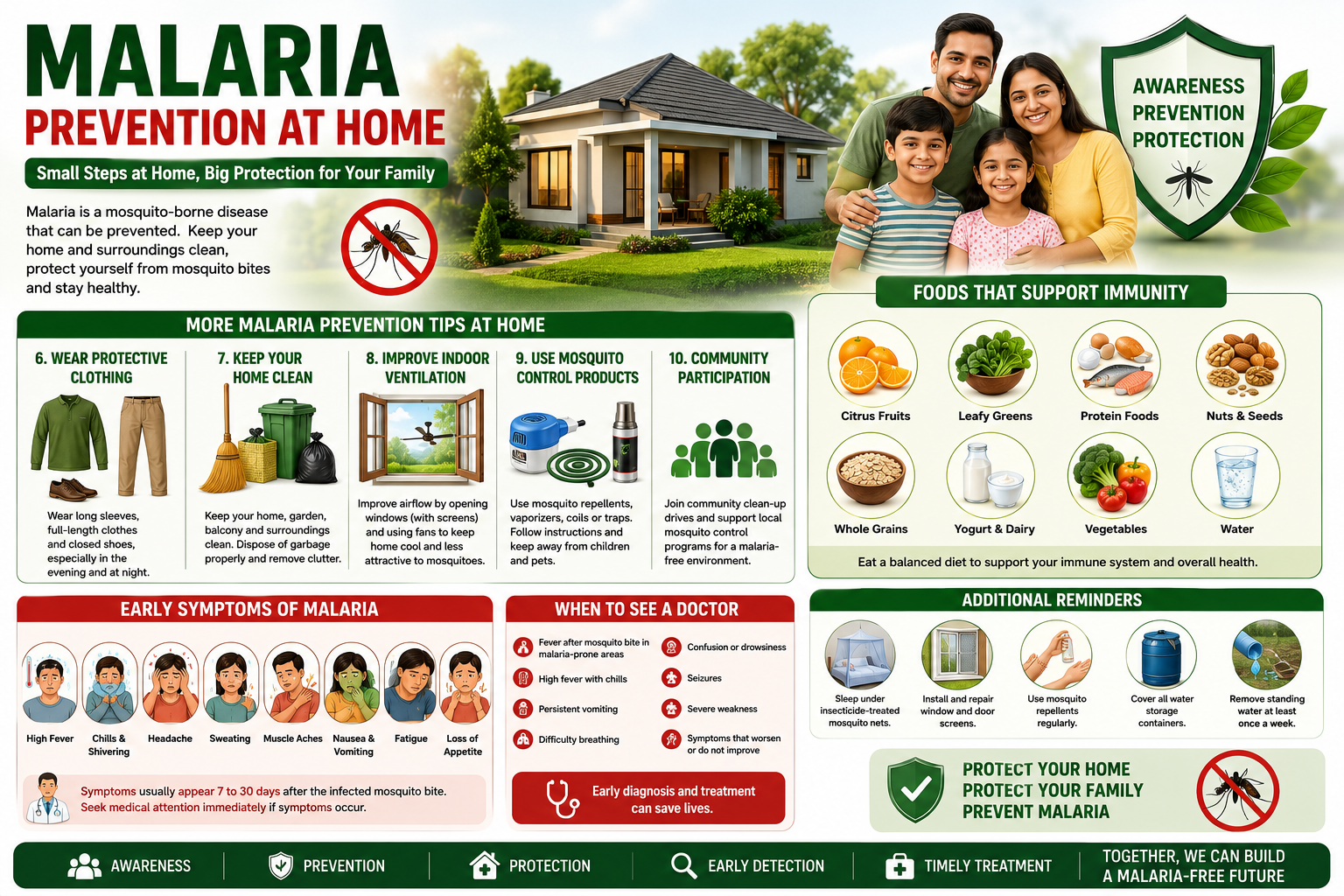
Malaria Prevention at Home
Malaria is a mosquito-borne disease caused by Plasmodium parasites and transmitted through the bite of an infected female Anopheles mosquito. It remains a significant public health concern in many tropical and subtropical regions. Fortunately, malaria is largely preventable through proper mosquito control, personal protection, and early medical care.
Preventing malaria begins at home. By eliminating mosquito breeding sites, maintaining a clean environment, and protecting yourself from mosquito bites, you can significantly reduce the risk of malaria for your family.
What Is Malaria?
Malaria is an infectious disease that primarily affects the liver and red blood cells after a person is bitten by an infected mosquito. If not diagnosed and treated promptly, malaria can lead to serious health complications.
Unlike viral infections, malaria is caused by parasites and requires specific antimalarial medications for treatment.
How Does Malaria Spread?
Malaria spreads through the bite of an infected female Anopheles mosquito.
When the mosquito bites a person, it injects malaria parasites into the bloodstream. These parasites first travel to the liver, where they multiply before infecting red blood cells.
Malaria Does Not Spread Through
- Casual contact
- Hugging or shaking hands
- Sharing food or drinks
- Coughing or sneezing
- Touching contaminated surfaces
In rare cases, malaria may spread through blood transfusions, organ transplantation, or from mother to baby during pregnancy.
Why Is Home Prevention Important?
Mosquitoes often breed in and around homes where stagnant water is present. Preventing mosquito breeding near your house is one of the most effective ways to reduce malaria risk.
Home prevention helps to:
- Reduce mosquito populations
- Prevent mosquito bites
- Protect children and older adults
- Lower the risk of malaria transmission
- Create a healthier living environment
Best Malaria Prevention Tips at Home
1. Remove Standing Water
Standing water is the ideal breeding place for mosquitoes.
Check These Areas Regularly
- Buckets
- Flower pots
- Coolers
- Water tanks
- Bird baths
- Roof gutters
- Old tires
- Bottles and containers
- Construction sites
Empty, clean, or cover these containers at least once a week to prevent mosquito breeding.
2. Cover Water Storage Containers
Many households store water for daily use.
Always Keep These Covered
- Water tanks
- Drums
- Buckets
- Barrels
- Overhead tanks
Properly sealed containers prevent mosquitoes from laying eggs.
3. Install Window and Door Screens
Mosquito screens act as a physical barrier against insects.
Benefits of Window Screens
- Improve ventilation
- Keep mosquitoes outside
- Reduce indoor mosquito bites
- Provide long-term protection
Repair damaged screens immediately for maximum effectiveness.
4. Sleep Under Mosquito Nets
Sleeping under an insecticide-treated mosquito net is one of the most effective ways to prevent mosquito bites, especially in areas where malaria is common.
Mosquito Nets Are Especially Important For
- Infants
- Young children
- Pregnant women
- Older adults
- People living in malaria-endemic regions
5. Use Mosquito Repellents
Apply mosquito repellents according to the manufacturer’s instructions.
Common Repellent Options
- Mosquito creams
- Repellent sprays
- Roll-ons
- Electric vaporizers
- Mosquito coils (used with proper ventilation)
Repellents provide additional protection, particularly during the evening and nighttime when Anopheles mosquitoes are most active.
6. Wear Protective Clothing
Mosquito bites are more common during the evening and nighttime when Anopheles mosquitoes are most active.
Choose Clothing That Covers Your Skin
Wear:
- Long-sleeved shirts
- Full-length trousers
- Socks
- Closed shoes when outdoors at night
Light-colored clothing is often easier for spotting mosquitoes and may be more comfortable in warm weather.
7. Keep Your Home Clean
A clean environment helps reduce mosquito hiding places.
Areas to Clean Regularly
- Gardens
- Balconies
- Rooftops
- Drains
- Garbage bins
- Backyard areas
Trim bushes, remove unnecessary clutter, and dispose of waste properly to discourage mosquito breeding.
8. Improve Indoor Ventilation
Mosquitoes tend to thrive in dark, humid environments.
Improve Airflow By
- Opening windows during safe hours (with screens installed)
- Using ceiling or pedestal fans
- Keeping rooms dry and well-ventilated
Good ventilation can make indoor spaces less favorable for mosquitoes.
9. Use Mosquito Control Products Safely
Various mosquito control methods can help reduce mosquito populations around your home.
Common Options Include
- Electric mosquito vaporizers
- Indoor insecticide sprays
- Mosquito traps
- Larvicides for stagnant water (where recommended by local authorities)
Always follow the manufacturer’s instructions and keep such products away from children and pets.
10. Participate in Community Mosquito Control
Mosquitoes can breed beyond your property, making community efforts important.
Support Local Prevention Programs By
- Reporting stagnant water in public areas
- Participating in neighborhood clean-up drives
- Following public health advisories
- Supporting local mosquito control initiatives
Community participation helps reduce malaria transmission across entire neighborhoods.
Foods That Support a Healthy Immune System
While no food can prevent malaria, a nutritious diet helps support normal immune function and overall health.
Fruits Rich in Vitamin C
Vitamin C contributes to normal immune function.
Examples include:
- Oranges
- Guava
- Kiwi
- Papaya
- Strawberries
- Lemons
Green Leafy Vegetables
Leafy greens provide vitamins, minerals, and antioxidants.
Choose:
- Spinach
- Kale
- Fenugreek leaves
- Broccoli
- Cabbage
Protein-Rich Foods
Protein supports tissue repair and immune function.
Healthy options include:
- Eggs
- Fish
- Chicken
- Lentils
- Beans
- Chickpeas
- Tofu
- Low-fat dairy products
Whole Grains
Whole grains provide sustained energy and essential nutrients.
Examples include:
- Brown rice
- Oats
- Whole wheat
- Quinoa
- Barley
Healthy Fats
Healthy fats support overall health.
Good choices include:
- Walnuts
- Almonds
- Chia seeds
- Flaxseeds
- Olive oil
- Avocados
Early Symptoms of Malaria
Recognizing malaria early can help ensure prompt treatment and reduce the risk of complications.
Common Symptoms
- High fever
- Chills and shivering
- Sweating
- Headache
- Muscle aches
- Fatigue
- Nausea and vomiting
- Loss of appetite
- Abdominal discomfort
Symptoms usually develop 7 to 30 days after being bitten by an infected mosquito, depending on the type of malaria parasite.
When Should You See a Doctor?
Seek immediate medical attention if you or a family member experiences:
- Fever after mosquito bites in a malaria-prone area
- High fever with chills
- Persistent vomiting
- Difficulty breathing
- Confusion or drowsiness
- Seizures
- Severe weakness
- Symptoms that worsen or do not improve
Early diagnosis and treatment are essential to prevent serious complications.
Frequently Asked Questions
Can malaria be prevented at home?
Yes. Preventing mosquito breeding, using mosquito nets, applying repellents, covering stored water, and keeping your surroundings clean are effective ways to reduce the risk of malaria.
Which mosquito spreads malaria?
Malaria is transmitted through the bite of an infected female Anopheles mosquito.
Does malaria spread from person to person?
No. Malaria does not spread through casual contact, hugging, coughing, sneezing, or sharing food. It is primarily transmitted through infected mosquito bites.
Is malaria curable?
Yes. Malaria can usually be treated successfully with appropriate antimalarial medications when diagnosed early. Treatment should always be guided by a qualified healthcare professional.
Who is at higher risk of severe malaria?
Young children, pregnant women, older adults, travelers to malaria-endemic areas, and people with weakened immune systems are at greater risk of developing severe malaria.
Key Takeaways
- Malaria is a mosquito-borne disease caused by Plasmodium parasites.
- Prevent mosquito breeding by eliminating stagnant water around your home.
- Use mosquito nets, window screens, repellents, and protective clothing to avoid mosquito bites.
- Maintain a clean home and participate in community mosquito control efforts.
- Eat a balanced diet to support overall health and immunity.
- Seek medical care immediately if you develop fever, chills, or other symptoms after possible mosquito exposure.
Conclusion
Preventing malaria begins with simple but consistent actions at home. Eliminating standing water, using mosquito nets, installing window screens, wearing protective clothing, and maintaining a clean environment are among the most effective ways to reduce mosquito breeding and protect your family from malaria.
Although healthy eating supports your immune system, it does not replace proven malaria prevention measures. Combining good household practices with early recognition of symptoms and prompt medical care can significantly reduce the risk of illness and help keep your family safe throughout the year.