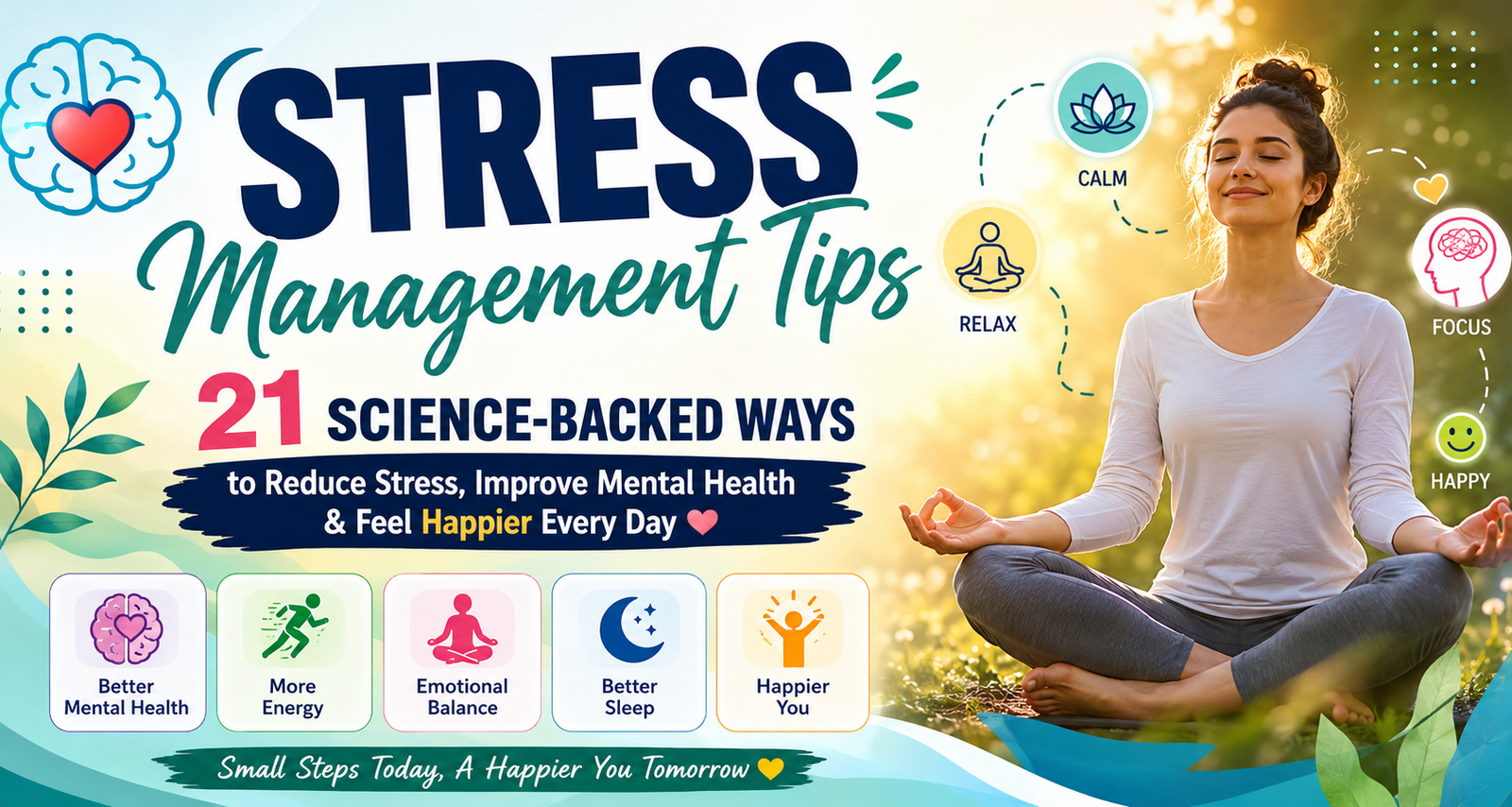
Stress Management Tips: 21 Science-Backed Ways to Reduce Stress, Improve Mental Health & Feel Happier Every Day
Stress is a natural part of life, but when it becomes constant, it can affect nearly every aspect of your physical and mental well-being. Long-term stress may contribute to headaches, poor sleep, anxiety, digestive issues, weakened immunity, reduced productivity, and even an increased risk of chronic conditions such as heart disease. While you can’t eliminate every stressful situation, you can learn healthier ways to respond to life’s challenges.
The good news is that research has identified many practical habits that help lower stress levels and improve emotional resilience. From mindful breathing and regular exercise to healthy nutrition and quality sleep, small daily changes can make a significant difference over time.
In this comprehensive guide, you’ll discover 21 science-backed Stress Management Tips that are easy to incorporate into your routine. Whether you’re dealing with work pressure, family responsibilities, financial concerns, or simply feeling overwhelmed, these evidence-informed strategies can help you regain balance, protect your mental health, and improve your overall quality of life.
At PureWellLife, we believe that sustainable wellness comes from simple, consistent habits—not quick fixes. Let’s explore practical ways to manage stress naturally and build a calmer, healthier, and happier life.
What Is Stress?
Stress is your body’s natural response to challenges, demands, or perceived threats. When you encounter a stressful situation, your brain activates the “fight-or-flight” response, releasing hormones such as cortisol and adrenaline. These hormones prepare your body to react quickly by increasing your heart rate, blood pressure, and alertness. While this response is useful during emergencies, chronic stress can keep your body in a constant state of high alert, negatively affecting your physical health, emotional well-being, relationships, and overall quality of life. Understanding how stress works is the first step toward learning effective stress relief techniques.
Why Managing Stress Matters
Learning how to manage stress is about much more than simply feeling calmer. Chronic stress has been linked to cardiovascular disease, depression, weakened immunity, digestive problems, poor sleep, and reduced cognitive performance. Effective stress management supports healthier relationships, improves productivity, enhances emotional resilience, and promotes better long-term health. Scientific research consistently shows that people who practice healthy coping strategies are better equipped to handle life’s challenges while maintaining both physical and mental well-being.
Signs Your Stress Levels May Be Too High
Stress affects everyone differently, but recognizing common warning signs can help you take action before problems become more serious. Physical symptoms may include headaches, muscle tension, fatigue, digestive discomfort, rapid heartbeat, and difficulty sleeping. Emotional signs often involve irritability, anxiety, sadness, mood swings, or feeling overwhelmed. Behavioral changes such as overeating, social withdrawal, procrastination, or increased alcohol consumption may also indicate unhealthy stress levels. Identifying these signs early allows you to begin implementing effective ways to reduce stress before chronic stress impacts your health.
21 Science-Backed Stress Management Tips
1. Practice Deep Breathing Every Day
Deep breathing is one of the fastest and most effective stress relief techniques. Slow, controlled breathing activates the parasympathetic nervous system, helping lower heart rate and reduce cortisol levels. Even spending five minutes focusing on slow inhales and longer exhales can calm your nervous system. Box breathing, diaphragmatic breathing, and the 4-7-8 breathing method are excellent options that require no equipment and can be practiced almost anywhere.
2. Exercise Regularly
Physical activity is among the most well-researched science-backed stress relief methods available. Exercise stimulates the release of endorphins, improves sleep quality, enhances mood, and lowers stress hormone levels. You don’t need intense workouts to experience benefits. Walking, cycling, swimming, yoga, dancing, or strength training performed consistently throughout the week can significantly improve both mental and physical health.
3. Prioritize High-Quality Sleep
Sleep and stress have a two-way relationship. Poor sleep increases stress, while chronic stress often disrupts sleep quality. Adults generally benefit from seven to nine hours of sleep each night. Maintaining a consistent bedtime, limiting caffeine late in the day, reducing evening screen time, and creating a relaxing bedtime routine can help improve sleep and reduce stress naturally.
4. Practice Mindfulness Meditation
Mindfulness teaches you to focus on the present moment without judgment. Research shows that regular meditation can reduce anxiety, improve emotional regulation, decrease cortisol levels, and strengthen resilience. You can begin with just five to ten minutes each day using guided meditation apps, breathing exercises, or simply paying attention to your thoughts and surroundings without reacting to them.
5. Eat a Balanced, Nutrient-Rich Diet
Nutrition plays a surprisingly important role in mental health. Whole foods rich in vitamins, minerals, fiber, healthy fats, and lean protein help stabilize energy and support healthy brain function. Foods such as berries, leafy greens, nuts, seeds, fatty fish, legumes, and whole grains provide nutrients that may support your body’s ability to cope with stress more effectively.
6. Limit Excessive Caffeine
While moderate caffeine intake is safe for most healthy adults, consuming excessive amounts may increase anxiety, nervousness, rapid heartbeat, and sleep disturbances. If you notice feeling jittery or more anxious after coffee or energy drinks, gradually reducing your intake may improve your ability to manage stress throughout the day without experiencing withdrawal symptoms.
7. Stay Hydrated
Even mild dehydration may contribute to fatigue, headaches, reduced concentration, and irritability. Drinking enough water throughout the day supports healthy brain function and overall well-being. Carrying a reusable water bottle and consuming water-rich foods such as fruits and vegetables are simple habits that can support better stress management and energy levels.
8. Spend Time in Nature
Research suggests that spending time outdoors may reduce cortisol levels, improve mood, lower blood pressure, and enhance overall mental well-being. Whether it’s walking through a park, hiking in the woods, gardening, or simply sitting under trees, regular exposure to natural environments provides a calming effect that supports emotional resilience and relaxation.
9. Strengthen Social Connections
Humans are naturally social beings, and meaningful relationships play an important role in stress management. Talking with trusted friends, family members, or supportive colleagues can provide emotional comfort, practical advice, and reassurance during challenging times. Even brief positive interactions can boost mood and reduce feelings of isolation.
10. Learn to Say No
Many people experience chronic stress because they take on too many responsibilities. Setting healthy boundaries protects your time, energy, and emotional well-being. Politely declining commitments that exceed your capacity isn’t selfish—it’s an important part of maintaining balance and preventing burnout while allowing you to focus on your highest priorities.
11. Keep a Gratitude Journal
Practicing gratitude is one of the simplest science-backed stress relief habits you can adopt. Studies suggest that regularly reflecting on positive experiences can improve mood, reduce symptoms of anxiety, and increase overall life satisfaction. Gratitude shifts your attention away from constant worries and toward the positive aspects of your life, helping build emotional resilience over time.
Start by writing down three things you’re grateful for each day. They don’t have to be major achievements. Appreciating a supportive friend, a healthy meal, or a beautiful sunset can gradually change your mindset. Consistency matters more than perfection, making this an easy daily habit for long-term stress management.
12. Reduce Screen Time and Digital Overload
Constant notifications, endless scrolling, and excessive exposure to negative news can contribute to mental fatigue and chronic stress. Digital overload often makes it difficult for the brain to fully relax, even during leisure time. Creating intentional boundaries around technology helps reduce overstimulation and improves focus.
Consider scheduling screen-free periods during meals, before bedtime, or while spending time with loved ones. Turning off non-essential notifications and limiting social media use can significantly improve mental clarity, sleep quality, and emotional well-being.
Tips to Reduce Digital Stress
- Turn off unnecessary notifications.
- Avoid screens at least one hour before bedtime.
- Schedule social media breaks.
- Use “Do Not Disturb” mode during work.
- Replace scrolling with reading or outdoor activities.
13. Practice Progressive Muscle Relaxation (PMR)
Progressive Muscle Relaxation is a proven relaxation technique that involves tightening and then slowly relaxing different muscle groups throughout the body. This method helps reduce physical tension that often accompanies emotional stress.
Many people unconsciously carry stress in their shoulders, jaw, neck, and back. Practicing PMR for just 10 to 15 minutes each day can reduce muscle tension, promote relaxation, improve sleep quality, and increase body awareness. Guided audio sessions make it easy for beginners to learn this valuable technique.
14. Listen to Relaxing Music
Music has a powerful effect on the brain and nervous system. Research indicates that calming music may lower heart rate, reduce cortisol levels, decrease blood pressure, and promote feelings of relaxation. Instrumental music, classical compositions, soft jazz, or nature sounds are commonly associated with stress reduction.
Creating personalized playlists for work, relaxation, or bedtime can help establish calming routines. Music also provides a healthy distraction during stressful situations and supports emotional regulation without requiring significant time or effort.
15. Spend Time on a Meaningful Hobby
Engaging in enjoyable hobbies provides a healthy mental break from everyday responsibilities. Activities such as painting, gardening, photography, knitting, cooking, reading, or playing a musical instrument encourage creativity while reducing stress.
Hobbies create opportunities for “flow,” a mental state where you’re fully engaged in an activity. During flow, the brain temporarily shifts attention away from worries, improving mood and increasing life satisfaction. Even dedicating 20 to 30 minutes a few times each week can provide noticeable mental health benefits.
16. Manage Your Time More Effectively
Poor time management often creates unnecessary stress through missed deadlines, rushed decisions, and constant multitasking. Developing better organizational habits helps reduce feelings of overwhelm while increasing productivity.
Useful time management strategies include:
- Prioritize important tasks first.
- Break large projects into smaller steps.
- Use calendars and planners.
- Schedule regular breaks.
- Avoid multitasking whenever possible.
- Leave buffer time between appointments.
Learning to organize your day more effectively is one of the most practical ways to reduce stress while improving work-life balance.
17. Practice Self-Compassion
Many people are far kinder to others than they are to themselves. Self-criticism increases stress and makes setbacks feel even more overwhelming. Self-compassion involves treating yourself with understanding, patience, and kindness during difficult moments.
Instead of dwelling on mistakes, acknowledge that everyone experiences challenges. Replacing harsh self-talk with supportive internal dialogue promotes emotional resilience and reduces anxiety. Self-compassion does not lower standards—it encourages healthier responses to life’s inevitable difficulties.
18. Laugh More Often
Laughter truly can be powerful medicine. Scientific studies suggest that laughter reduces stress hormones, improves immune function, relaxes muscles, and boosts mood by increasing endorphin release.
Watch a favorite comedy, spend time with humorous friends, play with children or pets, or simply find opportunities to smile more often throughout your day. While laughter won’t eliminate life’s problems, it can make difficult situations feel much more manageable.
19. Seek Professional Support When Needed
Sometimes stress becomes too difficult to manage alone. Persistent anxiety, burnout, depression, or overwhelming emotional distress may benefit from professional guidance. Mental health professionals can teach personalized coping strategies based on your individual needs.
Seeking therapy or counseling is a sign of strength, not weakness. Cognitive Behavioral Therapy (CBT), mindfulness-based therapies, and stress management coaching have strong scientific support for improving mental health and resilience.
When to Seek Help
Consider speaking with a healthcare professional if you experience:
- Constant feelings of anxiety.
- Panic attacks.
- Ongoing sleep problems.
- Loss of interest in daily activities.
- Difficulty functioning at work or school.
- Persistent sadness lasting several weeks.
- Stress affecting your relationships.
Early intervention often leads to better long-term outcomes.
20. Practice Daily Mindful Movement
Mindful movement combines gentle physical activity with focused attention on the present moment. Yoga, tai chi, stretching, and slow walking meditation encourage relaxation while improving flexibility, balance, and body awareness.
Unlike intense exercise, mindful movement emphasizes breathing, posture, and intentional motion rather than performance. Practicing these activities regularly helps calm the nervous system while reducing physical tension accumulated during stressful days.
Comparison Table: Exercise vs. Mindful Movement
| Feature | Regular Exercise | Mindful Movement |
| Primary Goal | Fitness & Strength | Relaxation & Awareness |
| Intensity | Moderate to High | Low to Moderate |
| Stress Reduction | Excellent | Excellent |
| Improves Flexibility | Moderate | High |
| Beginner Friendly | Yes | Yes |
| Focus | Physical Performance | Mind-Body Connection |
21. Build a Daily Stress Management Routine
The most effective Stress Management Tips become part of your daily lifestyle rather than occasional solutions. Building small, sustainable habits creates long-term resilience and helps your body recover more efficiently from everyday challenges.
A healthy routine doesn’t need to be complicated. Combining several evidence-based strategies—such as quality sleep, regular movement, balanced nutrition, mindfulness, hydration, and meaningful social connections—creates a powerful foundation for better mental health. Start with one or two habits and gradually expand your routine as they become part of your daily life.
Sample Daily Stress Management Routine
| Time | Habit |
| Morning | Deep breathing and hydration |
| Breakfast | Balanced, nutritious meal |
| Mid-Morning | Short walk or stretching |
| Afternoon | Healthy lunch and hydration |
| Evening | Exercise or yoga |
| Night | Gratitude journaling and reading |
| Before Bed | Screen-free relaxation and consistent bedtime |
Common Mistakes People Make When Managing Stress
Even with the best intentions, some habits can unintentionally make stress worse. Recognizing these common mistakes helps you avoid setbacks and develop healthier coping strategies. Many people rely on quick fixes that provide temporary relief but fail to address the underlying causes of stress.
Common mistakes include:
- Ignoring early warning signs.
- Sleeping too little.
- Skipping meals.
- Excessive caffeine consumption.
- Emotional eating.
- Avoiding physical activity.
- Spending excessive time on social media.
- Trying to solve every problem alone.
- Refusing to ask for help.
- Expecting instant results.
Remember that healthy stress management is a long-term process rather than a one-time solution. Small, consistent improvements often produce the greatest benefits.
Best Practices for Long-Term Stress Management
Developing sustainable habits is far more effective than relying on occasional relaxation techniques. Long-term success comes from creating a lifestyle that supports both physical and mental well-being while preparing you to handle future challenges more effectively.
Healthy Daily Checklist
A. Sleep 7–9 hours
B. Drink enough water
C. Exercise regularly
D. Practice mindfulness
E. Eat whole, balanced meals
F. Spend time outdoors
G. Connect with loved ones
H. Limit unnecessary screen time
I. Keep a gratitude journal
J. Take breaks throughout the day
Following these habits consistently can dramatically improve resilience while reducing chronic stress over time.
Frequently Asked Questions (FAQs)
1. What causes chronic stress?
Chronic stress can result from ongoing work pressure, financial concerns, family responsibilities, health conditions, relationship problems, or major life changes. Unlike short-term stress, chronic stress persists for long periods and may negatively affect both physical and mental health. Identifying the root cause is the first step toward developing healthier coping strategies.
2. Are stress management techniques supported by science?
Yes. Numerous scientific studies support techniques such as exercise, mindfulness meditation, deep breathing, quality sleep, and healthy nutrition for reducing stress and improving emotional resilience. While individual results vary, these habits consistently demonstrate positive effects on overall mental and physical well-being.
3. Can children and teenagers benefit from stress management?
Absolutely. Young people experience stress from school, social relationships, extracurricular activities, and family responsibilities. Age-appropriate stress management strategies such as physical activity, structured routines, healthy sleep, open communication, and mindfulness exercises can support emotional well-being and resilience during childhood and adolescence.
4. Is stress always harmful?
No. Short-term stress can be beneficial by improving focus, motivation, and performance during challenging situations. Problems arise when stress becomes chronic and the body remains in a prolonged state of heightened alertness. Effective stress management helps maintain a healthy balance between challenge and recovery.
5. Does drinking water help reduce stress?
Proper hydration supports healthy brain function, energy levels, and mood. Although drinking water alone won’t eliminate stress, preventing dehydration can reduce fatigue, headaches, and irritability, making it easier to cope with daily challenges and maintain emotional balance.
Key Takeaways
- Stress is a normal biological response, but chronic stress can harm your health.
- Recognizing early warning signs allows you to take action sooner.
- Exercise remains one of the most effective science-backed stress management strategies.
- Quality sleep plays a critical role in emotional resilience.
- Deep breathing and mindfulness can provide immediate stress relief.
- Healthy nutrition and proper hydration support brain function.
- Strong social relationships improve emotional well-being.
- Time management and healthy boundaries help prevent burnout.
- Consistency matters more than perfection.
- Seeking professional help is appropriate when stress becomes overwhelming.
Conclusion
Managing stress isn’t about eliminating every challenge from your life—it’s about building the skills and habits that help you respond in healthier, more balanced ways. By incorporating these 21 science-backed Stress Management Tips into your daily routine, you can reduce stress, improve your mental health, strengthen emotional resilience, and enhance your overall quality of life.
Remember that meaningful change happens gradually. Start with one or two strategies that feel realistic, such as practicing deep breathing, taking a daily walk, improving your sleep routine, or spending more time with supportive friends and family. As these habits become part of your lifestyle, you’ll likely notice improvements in your energy, mood, productivity, and overall well-being.
At PureWellLife, our mission is to provide trustworthy, evidence-informed wellness information that helps you make healthier choices every day. If you found this guide helpful, explore our other health and lifestyle articles, share this resource with someone who may benefit from it, and continue building habits that support a healthier, happier future.