Food Safety and Storage are essential parts of maintaining a healthy lifestyle. Every year, millions of people experience foodborne illnesses caused by improper food handling, poor storage practices, or consuming contaminated food. Fortunately, many of these illnesses are preventable with the right knowledge and habits. Whether you’re preparing meals for your family, storing weekly groceries, or organizing leftovers, following proven food safety guidelines can protect your health while saving money by reducing unnecessary food waste.
Proper food storage isn’t just about keeping food fresh—it also helps preserve nutrients, flavor, and texture. Understanding the correct temperatures for refrigeration and freezing, knowing how to separate raw and cooked foods, and recognizing when food has spoiled are all important skills for every home cook. Small mistakes, such as leaving food at room temperature for too long or storing raw meat above ready-to-eat foods, can increase the risk of bacterial growth and cross-contamination.
This comprehensive guide explains food safety and storage in simple, practical terms. You’ll learn the best ways to store different food groups, avoid common kitchen mistakes, understand food expiration labels, and build healthy food handling habits that keep your kitchen safe. By following these expert-backed practices, you can enjoy fresher meals, reduce waste, and protect your family from foodborne illnesses.
Understanding Food Safety and Storage
Food safety and storage refer to the practices used to keep food free from harmful bacteria, viruses, parasites, and other contaminants while maintaining its freshness and nutritional value. These practices begin when groceries are purchased and continue through preparation, cooking, serving, and storing leftovers. Every step plays an important role in reducing the risk of foodborne illness.
Proper food safety includes maintaining clean preparation areas, washing hands before handling food, storing foods at safe temperatures, avoiding cross-contamination, and cooking foods thoroughly. Storage practices focus on preserving food quality by using refrigerators, freezers, and pantries correctly while keeping foods in suitable containers and monitoring expiration dates. Together, these habits create a safer kitchen environment and help households minimize food waste.
Why Food Safety Matters
Food safety is far more than a recommendation—it is a vital part of protecting public health. Harmful microorganisms such as bacteria, viruses, and molds can multiply rapidly when food is stored or handled incorrectly. Consuming contaminated food may lead to symptoms ranging from mild stomach discomfort to severe dehydration, hospitalization, or life-threatening complications, especially for children, older adults, pregnant women, and individuals with weakened immune systems.
Beyond health concerns, proper food safety practices also provide economic and environmental benefits. Throwing away spoiled food contributes to unnecessary household expenses and increases food waste. Correct storage techniques help extend the shelf life of groceries, allowing families to enjoy fresh ingredients for longer while making the most of their food budget. Developing safe kitchen habits is one of the easiest ways to improve both personal health and sustainability.
Common Causes of Foodborne Illness
Foodborne illnesses often result from everyday mistakes that are easy to prevent with greater awareness. Bacteria such as Salmonella, Escherichia coli (E. coli), Listeria monocytogenes, and Campylobacter are among the most common causes of food poisoning. These microorganisms can contaminate food during production, transportation, preparation, or storage.
Several common practices increase the risk of contamination:
- Leaving perishable foods at room temperature for more than two hours.
- Storing raw meat above ready-to-eat foods, allowing juices to drip.
- Using the same cutting board for raw meat and fresh vegetables without washing it.
- Cooking foods below their recommended internal temperatures.
- Ignoring refrigerator temperature settings or overcrowding shelves, which reduces proper air circulation.
Recognizing these risks is the first step toward creating a safer kitchen and preventing avoidable illnesses.
Essential Principles of Safe Food Handling
Safe food handling begins with simple daily habits that significantly reduce the likelihood of contamination. Washing hands thoroughly with soap and warm water before and after handling food is one of the most effective ways to stop the spread of harmful microorganisms. Cleaning countertops, utensils, cutting boards, and kitchen equipment after each use further limits bacterial growth.
Equally important is keeping raw and cooked foods separate throughout meal preparation. Raw meat, poultry, seafood, and eggs should never come into contact with foods that will be eaten without further cooking. Using separate cutting boards and utensils for raw proteins and fresh produce helps prevent cross-contamination. Proper storage temperatures, prompt refrigeration of leftovers, and careful attention to cooking guidelines complete the foundation of safe food handling.
The Four Core Food Safety Steps
Food safety experts recommend four simple yet powerful steps that form the basis of safe food preparation in every kitchen. Following these steps consistently reduces the risk of foodborne illness and keeps meals safe for everyone.
1. Clean
Cleanliness is the first defense against harmful germs. Wash hands for at least 20 seconds with soap and water before preparing food and after handling raw meat, poultry, seafood, or eggs. Clean countertops, utensils, cutting boards, and reusable shopping bags regularly. Fresh fruits and vegetables should be rinsed under running water before eating or cooking, even if they will be peeled.
2. Separate
Keeping foods separate prevents cross-contamination. Store raw meats in sealed containers or leak-proof bags on the lowest refrigerator shelf so juices cannot drip onto other foods. Use dedicated cutting boards and knives for raw proteins and another set for vegetables, fruits, and ready-to-eat items.
3. Cook
Cooking food to the correct internal temperature destroys harmful bacteria that may be present. A food thermometer is the most reliable way to confirm doneness because color alone is not always an accurate indicator. Different foods require different safe temperatures, making proper cooking an essential part of food safety.
4. Chill
Prompt refrigeration slows bacterial growth and preserves food quality. Refrigerate perishable foods within two hours of cooking or purchasing—or within one hour if the surrounding temperature exceeds 32°C (90°F). Keep your refrigerator at or below 4°C (40°F) and your freezer at −18°C (0°F) to ensure safe storage conditions.
Preventing Cross-Contamination
Cross-contamination occurs when harmful microorganisms are transferred from one food, surface, or utensil to another. This often happens when raw meat juices come into contact with fresh produce or ready-to-eat foods. Even clean-looking kitchen tools can spread bacteria if they are not washed and sanitized properly between uses.
Preventing cross-contamination requires consistent organization and hygiene. Store raw proteins separately from cooked foods, use color-coded cutting boards if possible, wash hands after touching raw ingredients, and sanitize kitchen surfaces frequently. Disposable paper towels or clean cloths changed regularly are better choices than repeatedly using damp sponges, which can harbor bacteria. By making these practices part of your daily routine, you create a safer cooking environment and greatly reduce the risk of foodborne illness.
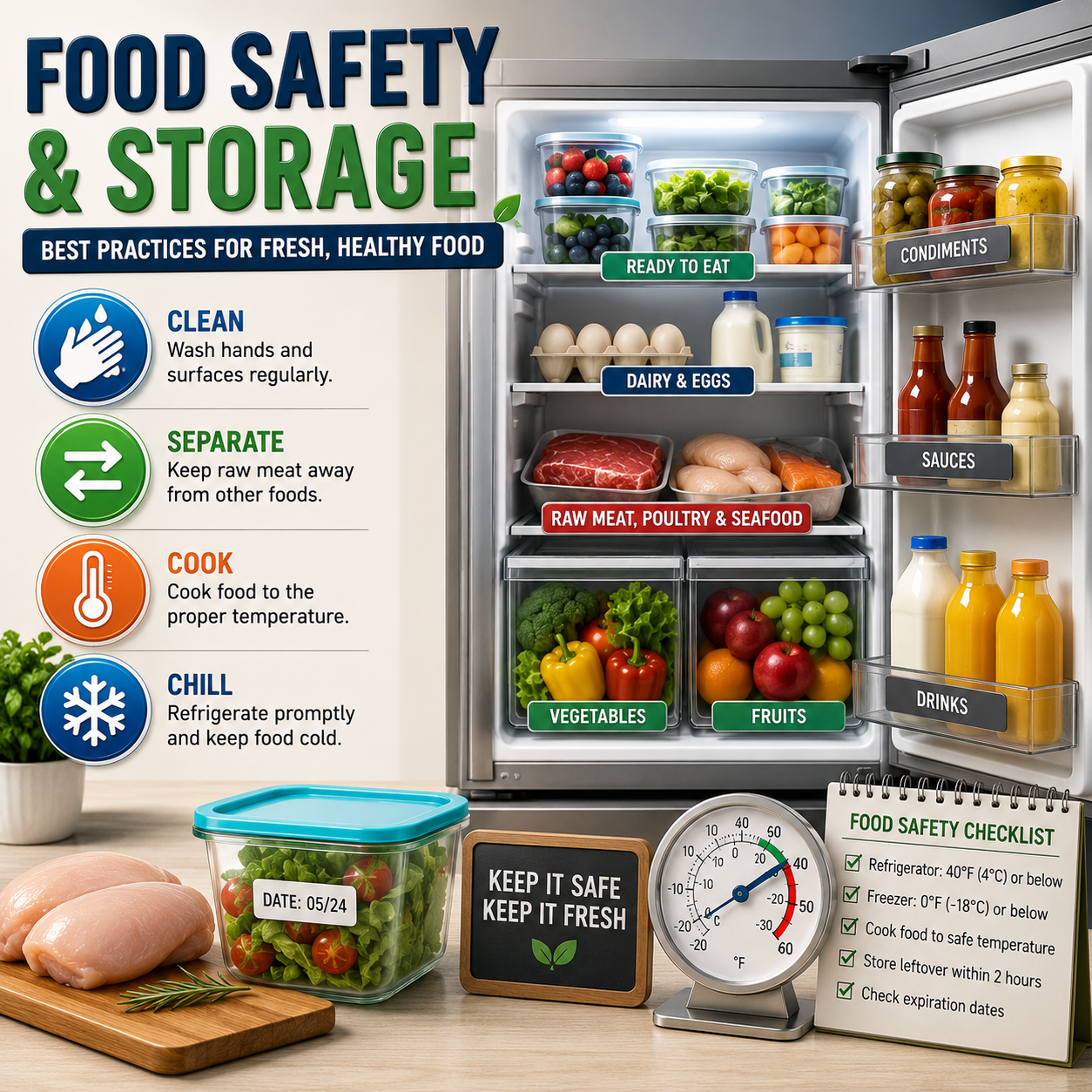
Safe Refrigerator Storage Practices
Your refrigerator is one of the most important tools for maintaining food safety and preserving freshness. However, simply placing food in the refrigerator is not enough. Proper organization, temperature control, and storage techniques help slow bacterial growth, extend shelf life, and reduce food waste. Keeping your refrigerator clean and avoiding overcrowding also allows cold air to circulate evenly, ensuring all foods remain at a safe temperature.
Set your refrigerator to 4°C (40°F) or below and use a refrigerator thermometer to verify the temperature regularly. Store foods in airtight containers, label leftovers with the storage date, and clean spills immediately to prevent contamination. Rotate older items to the front so they are used before newer purchases.
Recommended Refrigerator Storage Layout
| Shelf | Foods to Store | Why It Matters |
| Top Shelf | Leftovers, drinks, ready-to-eat foods | Stable temperature and easy access |
| Middle Shelf | Dairy products, eggs (in original carton) | Consistent cooling |
| Bottom Shelf | Raw meat, poultry, seafood (sealed containers) | Prevents juices from dripping onto other foods |
| Crisper Drawers | Fruits and vegetables (stored separately) | Maintains ideal humidity levels |
| Door Shelves | Condiments, sauces, beverages | Warmest part of the refrigerator, not suitable for highly perishable foods |
Proper organization reduces the risk of cross-contamination and makes it easier to monitor food freshness.
Freezer Storage Guidelines
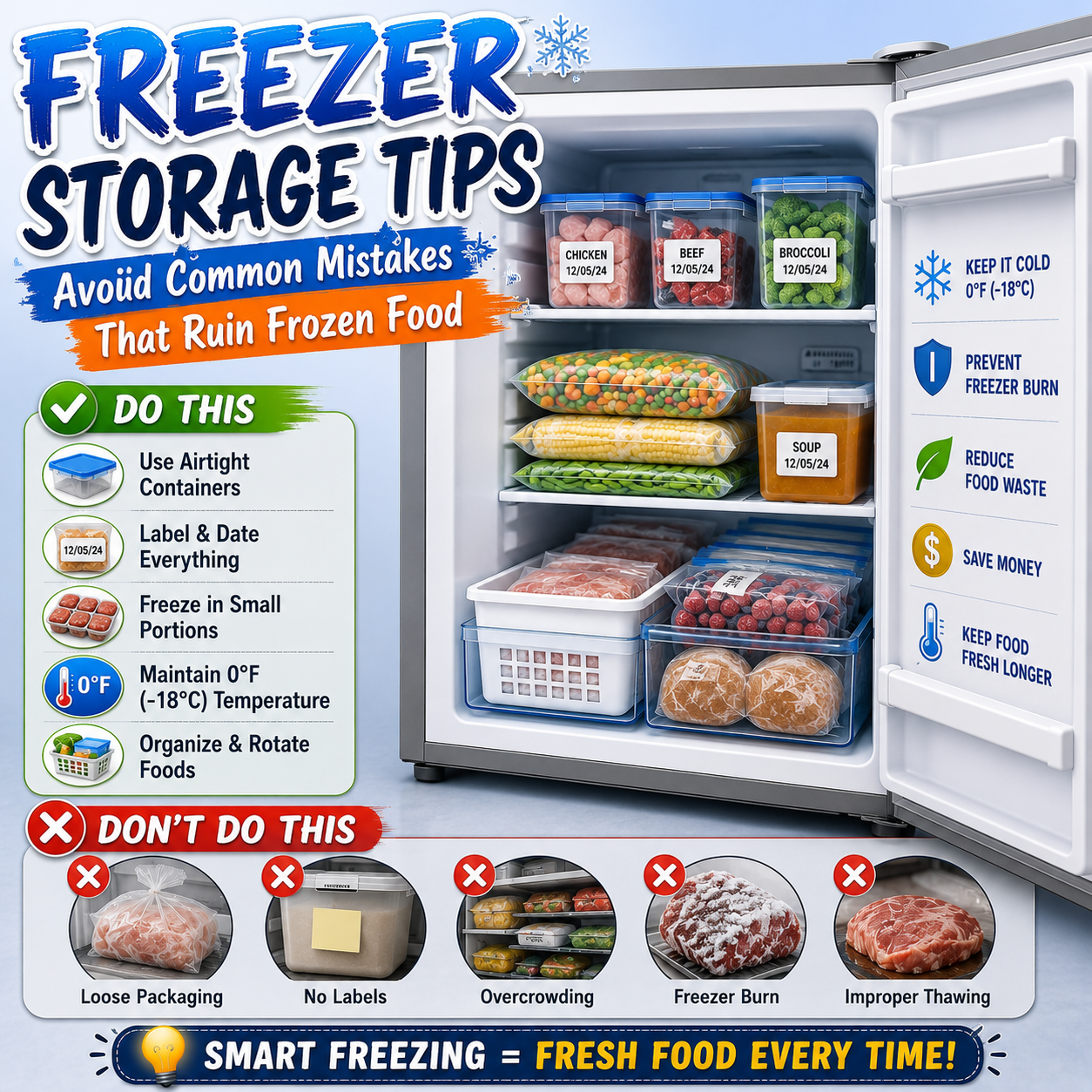
Freezing food preserves quality by slowing bacterial growth, but it does not kill all microorganisms. Foods should be frozen while they are still fresh and stored in freezer-safe containers or heavy-duty freezer bags to prevent freezer burn. Removing excess air before sealing packages helps maintain flavor and texture during long-term storage.
Maintain your freezer at −18°C (0°F) or lower. Label every package with the contents and freezing date so older foods are used first. Avoid repeatedly thawing and refreezing foods, as this can affect both quality and safety.
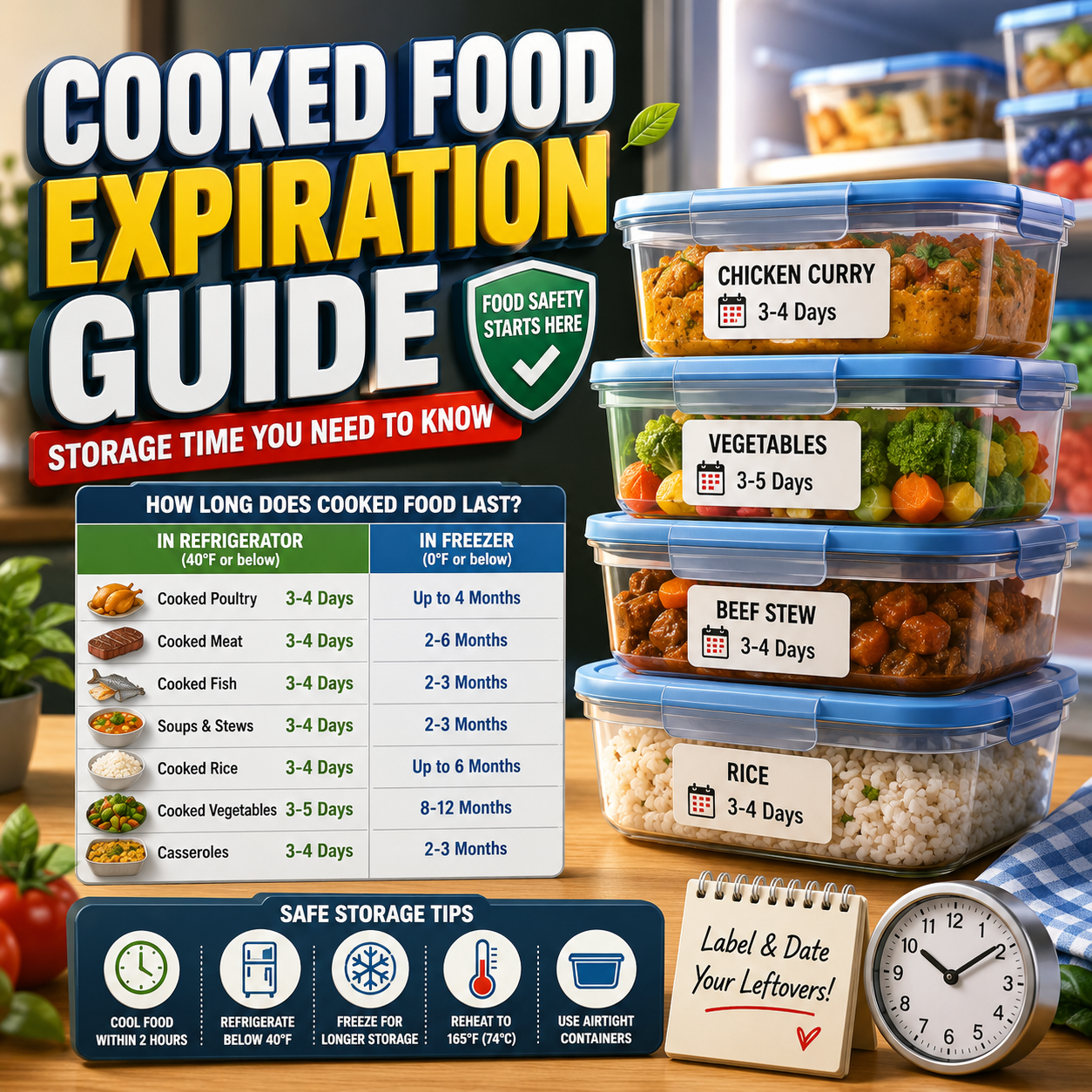
Approximate Freezer Storage Times
| Food | Recommended Storage Time |
| Raw chicken | Up to 12 months |
| Ground meat | 3–4 months |
| Beef steaks | 6–12 months |
| Fish | 2–6 months |
| Cooked meals | 2–3 months |
| Bread | Up to 3 months |
| Vegetables | 8–12 months |
Freezing extends shelf life significantly, but for the best flavor and texture, foods should be consumed within these recommended periods.
Pantry Storage Best Practices
A well-organized pantry protects dry goods from moisture, pests, and spoilage while making meal planning easier. Store pantry items in a cool, dry, and dark location away from direct sunlight and heat-producing appliances. Excessive heat and humidity can reduce shelf life and encourage mold or insect infestations.
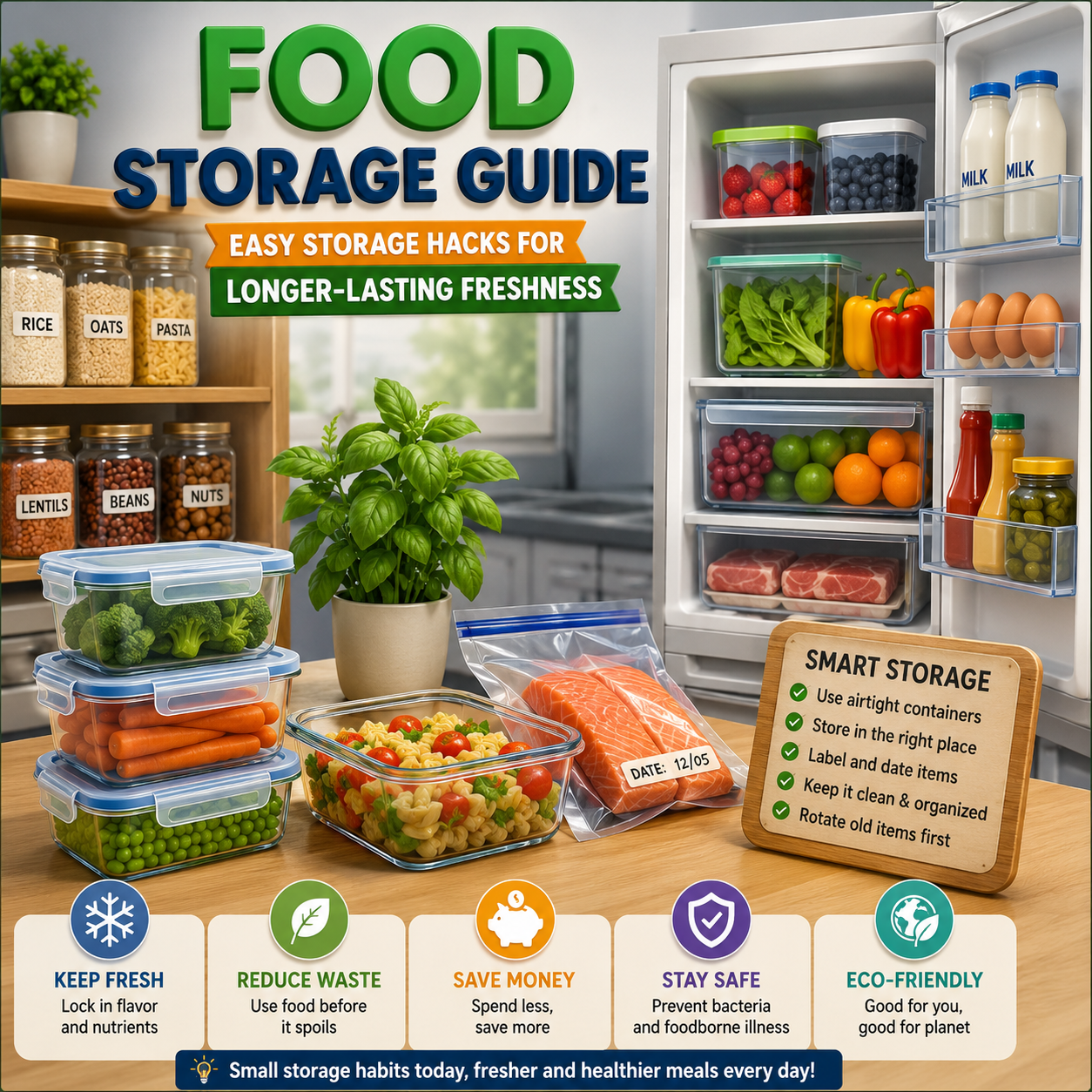
Transfer grains, flour, pasta, cereal, and dried beans into airtight containers after opening. Label containers with purchase dates and practice the First In, First Out (FIFO) method by using older products before newly purchased ones.
Foods Ideal for Pantry Storage
- Rice
- Pasta
- Flour
- Oats
- Dry beans
- Lentils
- Nuts
- Peanut butter
- Canned vegetables
- Canned fruits
- Cooking oils
- Herbs and spices
Regularly inspect pantry shelves for expired products and signs of pests to maintain food quality.
Safe Storage for Fruits and Vegetables
Fresh produce remains nutritious longer when stored correctly. Different fruits and vegetables have unique storage needs, and understanding these differences helps reduce spoilage while preserving flavor and texture.
Leafy greens should be washed only before use because excess moisture can encourage mold growth. Root vegetables such as potatoes, onions, and garlic should be stored in a cool, dry place rather than the refrigerator. Many fruits, including apples and berries, stay fresh longer when refrigerated.
Refrigerate
- Strawberries
- Blueberries
- Grapes
- Apples
- Carrots
- Broccoli
- Lettuce
- Spinach
- Cucumbers
Store at Room Temperature
- Bananas
- Tomatoes
- Potatoes
- Sweet potatoes
- Onions
- Garlic
- Pumpkins
Keep fruits that produce ethylene gas—such as apples, bananas, and avocados—away from ethylene-sensitive vegetables like broccoli, lettuce, and cucumbers to prevent premature ripening.
Proper Meat, Poultry, and Seafood Storage
Raw animal products require extra care because they are among the most common sources of foodborne bacteria. Always transport these items home promptly after shopping and refrigerate them immediately. Place raw meats in leak-proof containers or trays to prevent juices from contaminating other foods.
Cook or freeze raw poultry within one to two days of purchase, while beef and pork can generally be refrigerated for three to five days. Seafood is highly perishable and should ideally be cooked within one to two days. When thawing frozen meats, use the refrigerator, cold water, or the microwave—not the kitchen counter.
Dairy and Egg Storage Tips
Milk, cheese, yogurt, butter, and eggs should be stored in the coldest part of the refrigerator rather than the door, where temperatures fluctuate each time the refrigerator is opened. Keep dairy products in their original packaging whenever possible to maintain freshness and protect them from absorbing odors.
Eggs should remain in their original carton because it helps reduce moisture loss and protects them from absorbing strong smells. Discard dairy products that develop unusual odors, mold, or changes in texture. Never consume milk that has spoiled, even if it is only slightly past its expiration date.
Leftover Food Safety
Leftovers provide convenient meals and reduce food waste when handled properly. After cooking, allow hot foods to cool slightly, then refrigerate them within two hours. Divide large quantities into shallow containers so they cool quickly and evenly.
Most leftovers remain safe for three to four days when refrigerated. Reheat leftovers to an internal temperature of 74°C (165°F) before eating. If leftovers have been sitting at room temperature for more than two hours, they should be discarded rather than refrigerated.
Leftover Safety Checklist
- Cool food promptly.
- Store in shallow airtight containers.
- Label with the preparation date.
- Refrigerate within two hours.
- Reheat thoroughly before serving.
- Discard leftovers after four days if unused.
Following these habits helps prevent bacterial growth while making meal prep safer and more efficient.
Understanding Food Expiration Dates
Food labels can be confusing because different terms indicate different meanings. Many consumers throw away perfectly safe food due to misunderstanding these dates, contributing to unnecessary food waste.
Common Food Label Terms
| Label | Meaning |
| Best Before | Indicates peak quality, not safety |
| Use By | Last recommended date for safe consumption |
| Sell By | Helps retailers manage inventory |
| Freeze By | Suggests the best time to freeze for maximum quality |
Always inspect food for unusual odors, mold, discoloration, or damaged packaging in addition to checking the label date. Safe storage practices often allow foods to remain usable beyond their “Best Before” date, provided they have been handled correctly.
Common Food Storage Mistakes to Avoid
Many cases of food spoilage occur because of simple storage errors that can easily be prevented. Understanding these mistakes helps protect your family’s health while reducing unnecessary waste.
Common mistakes include:
- Leaving groceries in a hot car for extended periods.
- Overcrowding the refrigerator and blocking airflow.
- Forgetting to refrigerate leftovers promptly.
- Storing raw meat above ready-to-eat foods.
- Keeping milk in the refrigerator door.
- Using damaged food containers.
- Refreezing thawed food without cooking it first.
- Ignoring refrigerator and freezer temperature settings.
- Failing to clean shelves and drawers regularly.
- Not labeling stored foods with dates.
Avoiding these habits makes food storage safer and more efficient.
Food Safety Best Practices Checklist
Use this checklist as a daily reminder for maintaining a safe kitchen:
✅ Wash hands before preparing food.
✅ Clean countertops and utensils after each use.
✅ Separate raw and cooked foods.
✅ Cook foods to safe internal temperatures.
✅ Refrigerate perishables within two hours.
✅ Keep refrigerators at 4°C (40°F) or below.
✅ Keep freezers at −18°C (0°F) or below.
✅ Store leftovers in airtight containers.
✅ Label foods with storage dates.
✅ Check expiration dates regularly.
✅ Wash fresh produce before eating or cooking.
✅ Throw away spoiled or questionable foods.
By following these best practices consistently, you can significantly reduce the risk of foodborne illness, keep food fresher for longer, and make your kitchen a healthier place for everyone.
Frequently Asked Questions (FAQs)
1. What is the best way to store fresh food?
Store fresh food according to its type. Refrigerate perishable items promptly, keep fruits and vegetables in appropriate humidity drawers, and use airtight containers for leftovers. Maintain recommended refrigerator and freezer temperatures to preserve freshness and prevent bacterial growth.
2. How often should I clean my refrigerator?
Clean your refrigerator at least once every month and immediately wipe up spills to prevent bacterial growth and unpleasant odors. Regular cleaning also helps identify expired foods before they become a safety concern.
3. Is frozen food safe indefinitely?
Frozen food remains safe indefinitely if kept continuously frozen at −18°C (0°F), but its quality gradually decreases over time. Following recommended storage times ensures the best flavor, texture, and nutritional value.
4. Can food be left out overnight?
No. Perishable food left at room temperature overnight should be discarded. Harmful bacteria can multiply rapidly after two hours, making the food unsafe even if it looks or smells normal.
5. Why shouldn’t raw meat touch other foods?
Raw meat may contain harmful bacteria that can spread through juices or direct contact. Separating raw meat from ready-to-eat foods helps prevent cross-contamination and reduces the risk of foodborne illness.
6. What’s the safest way to reheat leftovers?
Reheat leftovers until they reach an internal temperature of 74°C (165°F). Stir food during reheating to ensure even heating and consume reheated leftovers promptly.
7. Should eggs be stored in the refrigerator door?
No. Eggs are best stored on an interior shelf where temperatures remain more stable. The refrigerator door experiences frequent temperature fluctuations that can reduce freshness.
8. How can I tell if food has spoiled?
Signs include unpleasant odors, mold, slimy texture, discoloration, leaking packaging, or unusual taste. If you are uncertain about a food’s safety, discard it rather than risk food poisoning.
9. Do airtight containers improve food safety?
Yes. Airtight containers reduce moisture loss, limit exposure to contaminants, help organize food, and preserve freshness. They are especially useful for leftovers, dry goods, and meal preparation.
10. What is the easiest food safety habit to develop?
Consistent handwashing before and after handling food is one of the simplest and most effective habits. Combined with cleaning kitchen surfaces and refrigerating food promptly, it greatly reduces contamination risks.
Key Takeaways
- Food safety starts with proper handling, cooking, and storage.
- Keep refrigerators at 4°C (40°F) or below.
- Maintain freezers at −18°C (0°F) or below.
- Prevent cross-contamination by separating raw and cooked foods.
- Refrigerate leftovers within two hours.
- Cook foods to safe internal temperatures.
- Store foods according to their specific requirements.
- Understand the difference between “Best Before” and “Use By” dates.
- Clean your kitchen and refrigerator regularly.
- Good food safety habits protect health and reduce food waste.
Conclusion
Food safety and proper storage are essential for protecting your health, preserving food quality, and reducing unnecessary waste. By following simple yet effective practices—such as washing your hands, preventing cross-contamination, storing foods at the correct temperatures, and understanding expiration labels—you can significantly lower the risk of foodborne illnesses while keeping ingredients fresh for longer.
Building safe kitchen habits doesn’t require expensive equipment or complicated techniques. Small daily actions, like organizing your refrigerator correctly, labeling leftovers, cleaning food preparation surfaces, and using food within recommended storage times, make a meaningful difference. These habits not only improve food safety but also help families save money by minimizing spoilage and making better use of groceries.
Whether you’re an experienced home cook or just beginning your cooking journey, applying the best practices outlined in this guide will help you create a healthier and more efficient kitchen. Make food safety a part of your everyday routine, share these tips with family members, and revisit this guide whenever you need a quick reminder. A safer kitchen starts with informed choices—and every safe choice contributes to healthier, fresher meals for everyone.
Read Our Latest Blog:25 Low-Cost Superfoods That Support a Healthy Lifestyle