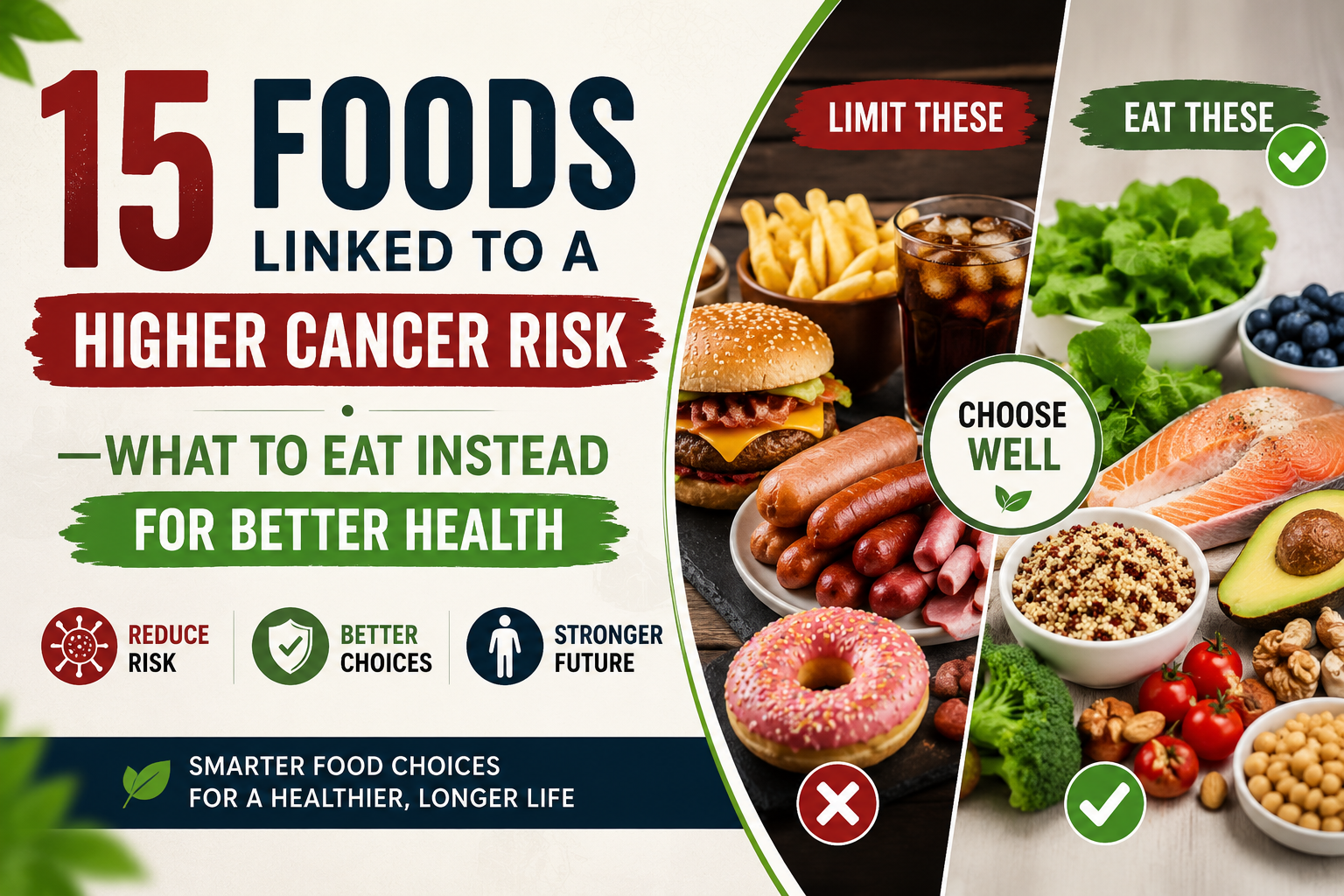
15 Foods Linked to a Higher Cancer Risk—What to Eat Instead for Better Health
Food alone does not determine whether someone develops cancer, but research shows that long-term dietary habits can influence overall cancer risk. While no single food directly causes cancer by itself, regularly eating certain highly processed, heavily salted, smoked, or charred foods may contribute to a higher risk when combined with other lifestyle and genetic factors. Understanding foods linked to cancer risk can help you make more informed decisions without unnecessary fear or confusion.
Many headlines use alarming language about “cancer-causing foods,” but the reality is more nuanced. Scientific organizations such as the World Health Organization (WHO), the American Cancer Society (ACS), and the World Cancer Research Fund (WCRF) emphasize that an overall healthy eating pattern matters far more than avoiding one specific ingredient. Replacing processed foods with nutrient-rich alternatives can support better health while reducing exposure to dietary factors associated with certain cancers.
In this guide from PureWellLife, you’ll learn about 15 foods linked to higher cancer risk, why researchers recommend limiting them, and healthier substitutes that fit into a balanced lifestyle. The goal isn’t perfection—it’s making smarter food choices over time for better long-term health.
Understanding the Relationship Between Diet and Cancer Risk
Diet plays an important role in overall health, including cancer prevention, but it is only one piece of a much larger picture. Factors such as age, genetics, physical activity, smoking, alcohol consumption, body weight, and environmental exposures also influence cancer risk. Scientific evidence suggests that consistently eating a diet rich in fruits, vegetables, legumes, whole grains, and healthy fats while limiting heavily processed foods may help reduce the likelihood of certain cancers. Instead of focusing on individual foods, experts recommend building long-term healthy eating habits that support your entire body.
Can Foods Really Cause Cancer?
This is one of the most common health questions online. The short answer is not directly. Most foods do not “cause” cancer on their own. However, certain dietary patterns and food preparation methods are associated with an increased risk of developing some cancers over many years. Organizations including WHO and the International Agency for Research on Cancer (IARC) classify some foods, such as processed meats, based on the strength of evidence linking them with cancer—not because eating them occasionally guarantees disease. Moderation and overall dietary quality remain the most important factors.
15 Foods Linked to a Higher Cancer Risk
1. Processed Meats
Processed meats—including bacon, sausages, hot dogs, salami, pepperoni, and deli meats—are among the most researched foods associated with cancer risk. The World Health Organization has classified processed meat as a Group 1 carcinogen because sufficient evidence links regular consumption with colorectal cancer. Preservatives such as nitrates and nitrites can form potentially harmful compounds during processing or cooking. This doesn’t mean you must never eat processed meat, but limiting intake and choosing fresh poultry, fish, beans, or lentils more often is a healthier long-term strategy.
Healthier Alternatives
- Grilled chicken
- Fresh turkey
- Lentils
- Beans
- Chickpeas
- Tofu
- Eggs
2. Charred or Burnt Meat
Cooking meat over very high temperatures—especially grilling until it becomes blackened or burnt—can produce compounds called heterocyclic amines (HCAs) and polycyclic aromatic hydrocarbons (PAHs). Research suggests these chemicals may damage DNA in laboratory studies, although real-world cancer risk depends on many factors including cooking frequency and overall diet. Rather than avoiding grilled foods completely, cook meat to safe temperatures without excessive charring, marinate before grilling, and include vegetables alongside your meal.
Healthier Alternatives
- Baked chicken
- Oven-roasted fish
- Steamed vegetables
- Slow-cooked lean meats
3. Deep-Fried Foods
French fries, fried chicken, onion rings, and other deep-fried foods may contribute to poorer health when eaten frequently. Frying foods at very high temperatures can produce acrylamide in some starchy foods, while repeated use of cooking oil may create additional harmful compounds. Deep-fried meals are also often high in calories, unhealthy fats, and sodium, which may contribute to obesity—a significant risk factor for several cancers. Choosing baked, roasted, or air-fried versions can reduce these concerns while still providing satisfying flavor.
Healthier Alternatives
- Air-fried potatoes
- Roasted vegetables
- Baked sweet potatoes
- Homemade oven fries
4. Sugary Soft Drinks
Sugar-sweetened beverages are not directly linked to cancer by themselves, but frequent consumption may contribute to obesity and type 2 diabetes, both of which increase the risk of several cancers. These drinks provide large amounts of added sugar with little nutritional value. Replacing soda with water, sparkling water, or unsweetened tea supports healthier body weight and better overall wellness.
Healthier Alternatives
- Water
- Sparkling water
- Unsweetened iced tea
- Fruit-infused water
5. Ultra-Processed Snacks
Potato chips, cheese puffs, packaged crackers, instant noodles, and many packaged snack foods are often high in refined starches, sodium, unhealthy fats, and additives while being low in fiber and essential nutrients. A diet heavily based on ultra-processed foods has been associated in observational studies with poorer health outcomes. While occasional snacks are unlikely to cause harm, replacing them with whole-food options supports better nutrition.
Healthier Alternatives
- Nuts
- Seeds
- Fresh fruit
- Roasted chickpeas
- Plain popcorn
6. Refined White Bread and Pastries
Highly refined grains digest quickly and may contribute to blood sugar spikes when consumed frequently. White bread, pastries, donuts, and similar baked goods are typically low in fiber and often contain added sugars and unhealthy fats. Replacing refined grains with whole-grain options increases fiber intake, which supports digestive health and may help lower colorectal cancer risk as part of an overall healthy diet.
Healthier Alternatives
- Whole-grain bread
- Oats
- Brown rice
- Quinoa
7. Alcohol
Alcohol consumption is a well-established risk factor for several cancers, including cancers of the mouth, throat, liver, breast, and colon. Even moderate drinking has been associated with increased risk in some studies. The safest approach for cancer prevention is to limit alcohol intake or avoid it altogether. Choosing sparkling water with citrus or herbal beverages offers refreshing alternatives without the associated health concerns.
Healthier Alternatives
- Sparkling water
- Herbal tea
- Kombucha (low sugar)
- Fresh fruit water
8. Salt-Preserved Foods
Foods preserved with large amounts of salt—including certain pickled vegetables, salted fish, and preserved meats—have been linked to a higher risk of stomach cancer in populations where they are consumed frequently. Excessive sodium may damage the stomach lining and increase vulnerability to harmful bacteria such as Helicobacter pylori. Fresh foods and low-sodium alternatives are healthier everyday choices.
Healthier Alternatives
- Fresh vegetables
- Frozen vegetables without added salt
- Fresh fish
- Herbs and spices for seasoning
9. Smoked Foods
Smoked foods such as smoked fish, smoked sausages, smoked cheese, and heavily smoked meats are popular in many cuisines because of their distinctive flavor and longer shelf life. However, traditional smoking methods can produce compounds known as polycyclic aromatic hydrocarbons (PAHs), which may be deposited on the surface of food during the smoking process. High and frequent consumption of heavily smoked foods has been associated with an increased cancer risk in some studies, particularly when combined with other unhealthy dietary habits. Enjoy smoked foods occasionally rather than as daily staples, and prioritize fresh, minimally processed protein sources whenever possible.
Healthier Alternatives
- Fresh grilled salmon
- Baked chicken breast
- Steamed fish
- Fresh herbs for flavor instead of smoke
10. Fast-Food Burgers and Highly Processed Red Meat
Fast-food burgers and heavily processed red meat products often contain large amounts of saturated fat, sodium, preservatives, and refined carbohydrates when served with white buns and sugary sauces. While lean, unprocessed red meat can fit into a balanced diet in moderation, frequent intake of processed and heavily cooked red meats has been associated with a higher risk of colorectal cancer. Preparing homemade burgers using lean meat or plant-based ingredients allows better control over ingredients and portion sizes.
Healthier Alternatives
- Homemade lean turkey burgers
- Black bean burgers
- Lentil patties
- Grilled chicken sandwiches on whole-grain bread
11. Packaged Cakes, Cookies, and Doughnuts
Commercial baked goods often contain refined flour, added sugars, saturated fats, and calories while offering little nutritional value. Eating these foods regularly may contribute to excess calorie intake, weight gain, and obesity, which is an established risk factor for several types of cancer. Enjoying homemade desserts made with whole-grain flour, fruit, or oats can satisfy sweet cravings while providing more nutrients and fiber.
Healthier Alternatives
- Homemade oatmeal cookies
- Fresh fruit salad
- Greek yogurt with berries
- Banana oat muffins
12. Burnt Toast and Overcooked Starchy Foods
When bread, potatoes, or other starchy foods are cooked until heavily browned or burnt, they may form acrylamide, a chemical created during high-temperature cooking. Laboratory studies have shown that high doses of acrylamide can cause cancer in animals, but evidence in humans remains less certain. Health experts generally recommend avoiding excessive browning or burning of foods as a simple precaution while maintaining an overall healthy diet.
Healthier Alternatives
- Lightly toasted whole-grain bread
- Baked potatoes cooked until golden
- Steamed sweet potatoes
- Whole-grain cereals
13. Processed Breakfast Meats
Breakfast favorites such as bacon, sausage links, ham slices, and processed breakfast sandwiches often combine processed meats with refined grains and high sodium levels. Regularly eating these foods may increase exposure to preservatives linked with colorectal cancer while also contributing to excess sodium and saturated fat intake. Building breakfasts around whole foods provides better nutrition and longer-lasting energy.
Healthier Alternatives
- Scrambled eggs with vegetables
- Greek yogurt with berries
- Oatmeal with nuts
- Whole-grain avocado toast
14. Highly Sugary Desserts and Sweet Treats
Ice cream, candy bars, pastries, and sugar-loaded desserts do not directly cause cancer, but consistently consuming excessive added sugars may contribute to obesity and metabolic disorders. Maintaining a healthy weight is one of the most effective lifestyle strategies for reducing the risk of several cancers. Choosing naturally sweet foods more often can help reduce overall sugar intake without giving up enjoyable treats.
Healthier Alternatives
- Fresh berries
- Apple slices with peanut butter
- Chia pudding
- Homemade fruit smoothies without added sugar
15. Highly Processed Fast-Food Meals
Complete fast-food meals—including burgers, fries, sugary drinks, and desserts—often combine several dietary factors associated with poorer long-term health. These meals tend to be high in calories, sodium, saturated fats, refined carbohydrates, and added sugars while lacking fiber, vitamins, and minerals. Eating fast food occasionally is unlikely to have a major impact, but making it a daily habit may contribute to obesity, heart disease, type 2 diabetes, and increased cancer risk through overall dietary patterns.
Healthier Alternatives
- Grilled chicken bowls
- Homemade vegetable wraps
- Brown rice with grilled fish
- Mixed salads with lean protein
Comparison Table: Foods to Limit vs Healthier Alternatives
| Foods to Limit | Why Limit Them | Better Choice |
| Processed meats | Linked to colorectal cancer | Fresh chicken, fish, beans |
| Charred meat | May produce HCAs and PAHs | Baked or roasted meat |
| Deep-fried foods | High calories and unhealthy fats | Air-fried or baked foods |
| Sugary soft drinks | Promote weight gain | Water or unsweetened tea |
| Ultra-processed snacks | Low nutrients, high sodium | Nuts and fresh fruit |
| Refined bread | Low fiber | Whole-grain bread |
| Alcohol | Linked to several cancers | Sparkling water or herbal tea |
| Salt-preserved foods | High sodium | Fresh vegetables |
| Smoked foods | May contain PAHs | Fresh grilled fish |
| Fast-food burgers | Processed ingredients | Homemade lean burgers |
| Packaged desserts | High sugar and fat | Fresh fruit |
| Burnt toast | May contain acrylamide | Lightly toasted bread |
| Breakfast meats | Processed meat | Eggs and oatmeal |
| Sugary desserts | Excess calories | Yogurt with berries |
| Fast-food meals | Highly processed | Homemade balanced meals |
Foods That May Help Support Cancer Prevention
While there is no single “anti-cancer food,” a diet rich in whole, plant-based foods provides nutrients that support overall health and may help reduce cancer risk as part of a healthy lifestyle. Experts consistently recommend emphasizing variety, fiber, and minimally processed foods rather than relying on supplements or so-called superfoods.
Some of the best foods to include regularly are:
- Colorful vegetables such as broccoli, spinach, kale, carrots, and bell peppers
- Fresh fruits including berries, oranges, apples, and grapes
- Whole grains like oats, brown rice, quinoa, and barley
- Beans, lentils, and chickpeas
- Nuts and seeds
- Fatty fish rich in omega-3 fatty acids
- Olive oil
- Green tea
- Garlic and onions
- Herbs and spices such as turmeric and ginger
Eating a wide variety of these foods helps increase your intake of fiber, vitamins, minerals, antioxidants, and beneficial plant compounds that support overall wellness.
Simple Daily Habits That May Help Lower Cancer Risk
Diet is only one part of cancer prevention. Combining healthy eating with positive lifestyle habits provides greater overall benefits. Small, sustainable changes practiced consistently often have a larger impact than dramatic short-term diets.
Consider these healthy habits:
- Eat at least five servings of fruits and vegetables each day.
- Choose whole grains over refined grains.
- Limit processed meat and alcohol.
- Maintain a healthy body weight.
- Stay physically active for at least 150 minutes each week.
- Avoid smoking and secondhand smoke.
- Protect your skin from excessive sun exposure.
- Attend recommended cancer screening appointments.
- Get adequate sleep each night.
- Manage stress through healthy coping strategies.
Expert Tips for Building a Cancer-Smart Plate
Rather than focusing only on foods to avoid, think about what you can add to your meals. Filling half your plate with colorful vegetables, choosing lean proteins, and replacing refined grains with whole grains creates a balanced eating pattern that supports long-term health. Cooking more meals at home also allows you to control ingredients, reduce sodium, and limit added sugars.
Another helpful strategy is to treat processed foods as occasional conveniences rather than daily staples. Reading food labels, planning meals ahead, and keeping healthy snacks available can make nutritious choices easier and more sustainable. Remember that consistency matters far more than perfection, and every healthier choice contributes to better overall well-being.
Frequently Asked Questions (FAQs)
1. What are foods linked to cancer risk?
Foods linked to cancer risk include processed meats, alcohol, heavily charred meats, salt-preserved foods, and diets high in ultra-processed products. These foods are associated with increased risk when consumed regularly over long periods. No single food causes cancer by itself, but overall dietary habits play an important role in long-term health.
2. Are processed meats worse than fresh meat?
Yes. Research shows that processed meats have stronger evidence linking them to colorectal cancer than fresh, unprocessed meat. Preservatives, smoking, curing, and high-temperature processing contribute to this association. Choosing fresh poultry, fish, beans, or lentils more often is a healthier option.
3. Does eating organic food prevent cancer?
Organic foods may reduce exposure to certain pesticides, but there is no strong evidence that eating organic foods alone prevents cancer. The most important factor is consuming a diet rich in fruits, vegetables, whole grains, and other minimally processed foods, regardless of whether they are organic or conventionally grown.
4. Can healthy cooking methods reduce cancer risk?
Yes. Baking, steaming, boiling, poaching, and roasting generally produce fewer potentially harmful compounds than deep frying or excessive charring. Cooking meat at moderate temperatures and avoiding burnt portions are practical ways to reduce exposure to certain chemicals formed during high-heat cooking.
5. Is occasional fast food acceptable?
Occasional fast food is unlikely to significantly affect cancer risk. Problems arise when fast food becomes a regular part of the diet because it often contains high levels of sodium, unhealthy fats, refined carbohydrates, and added sugars. Balance and moderation are key.
Key Takeaways
- Diet influences cancer risk, but no single food directly causes cancer.
- Processed meats have the strongest evidence linking them to colorectal cancer.
- Limit alcohol to reduce the risk of several cancers.
- Avoid frequently eating heavily charred or burnt foods.
- Replace ultra-processed foods with whole, nutrient-rich alternatives.
- Eat more fruits, vegetables, legumes, and whole grains.
- Maintain a healthy weight through balanced eating and regular exercise.
- Healthy cooking methods such as baking and steaming are better than deep frying.
- Consistency in healthy eating habits matters more than perfection.
- Regular health screenings and avoiding tobacco are essential parts of cancer prevention.
Conclusion
Making healthier food choices does not require giving up every favorite meal. Instead, it involves creating a balanced eating pattern that emphasizes whole, nutrient-dense foods while limiting items that research has linked to a higher cancer risk. Processed meats, excessive alcohol, heavily charred foods, and ultra-processed products are best enjoyed sparingly rather than as everyday staples. Replacing them with vegetables, fruits, whole grains, legumes, lean proteins, and healthy fats can support your overall well-being and contribute to a healthier lifestyle.
Remember that foods linked to cancer risk are only one part of the bigger picture. Regular physical activity, maintaining a healthy weight, avoiding tobacco, protecting yourself from excessive sun exposure, getting enough sleep, and following recommended cancer screening guidelines all play important roles in reducing long-term cancer risk.
At PureWellLife, our mission is to provide practical, science-based wellness information that empowers you to make informed choices. If you found this guide helpful, explore more of our nutrition, disease prevention, and healthy lifestyle articles at purewelllife.com to continue building habits that support lifelong health.