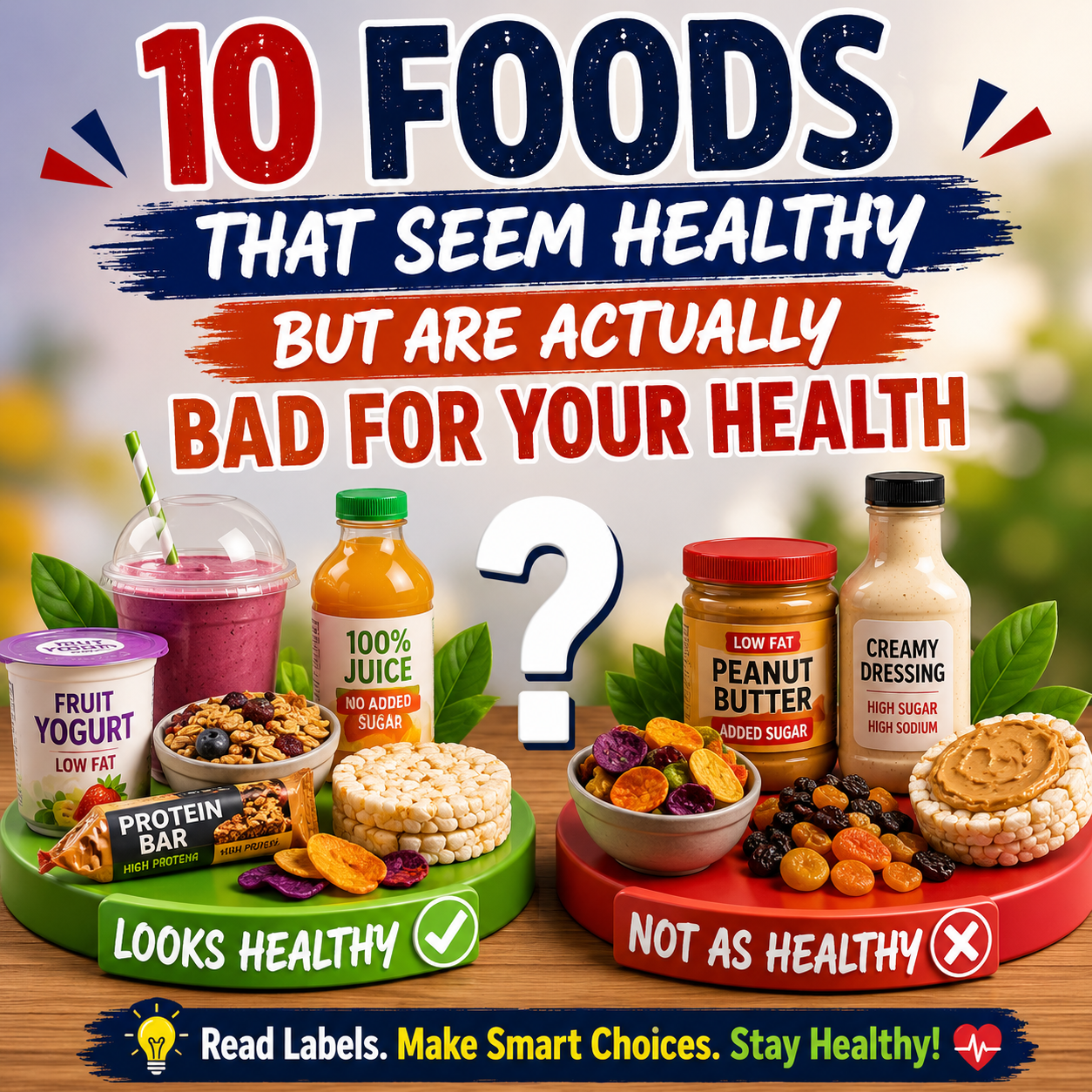
Many foods are marketed as healthy, nutritious, or diet-friendly, but appearances can be deceiving. Clever packaging, health claims, and social media trends often convince people that certain foods are good for them when they may actually contain excessive amounts of sugar, sodium, unhealthy fats, or highly processed ingredients. As a result, many individuals unknowingly consume foods that can contribute to weight gain, blood sugar spikes, heart disease, digestive issues, and other long-term health problems.
Understanding the difference between genuinely nutritious foods and products that simply appear healthy is essential for making informed dietary choices. Reading ingredient labels, recognizing misleading marketing terms, and choosing minimally processed foods can significantly improve your overall health and well-being.
In this comprehensive guide, we’ll explore 10 foods that seem healthy but are actually bad for your health, explain why they may not be as nutritious as they appear, and provide healthier alternatives that support a balanced lifestyle. Whether your goal is weight loss, better heart health, improved digestion, or simply eating smarter, this article will help you make more informed decisions every time you shop for groceries.
Why Healthy-Looking Foods Can Be Misleading
The modern food industry is filled with products labeled as “natural,” “low-fat,” “organic,” “gluten-free,” or “high-protein.” While these labels may sound healthy, they do not always reflect the overall nutritional quality of a product. Many processed foods contain hidden sugars, artificial sweeteners, preservatives, refined grains, and unhealthy oils that reduce their nutritional value despite attractive marketing claims.
Consumers often associate buzzwords with health benefits without checking nutrition facts or ingredient lists. Learning to look beyond the front of the package can help you identify genuinely nutritious foods and avoid products designed more for marketing than for promoting health.
1. Flavored Yogurt
Flavored yogurt is commonly viewed as one of the healthiest breakfast or snack options because it contains calcium, protein, and probiotics. However, many commercially available flavored yogurts contain surprisingly high amounts of added sugar, artificial flavors, and sweeteners. A single serving can sometimes contain as much sugar as a dessert, making it less beneficial than many people realize.
Excess sugar intake has been linked to obesity, type 2 diabetes, inflammation, and an increased risk of heart disease. Although probiotics support gut health, excessive added sugar may counteract many of these benefits over time. Additionally, some low-fat flavored yogurts compensate for reduced fat by increasing sugar content to improve taste.
Why It Can Be Unhealthy
- High in added sugar
- Artificial flavorings
- Sweetened fruit syrups
- Extra calories
- Can cause blood sugar spikes
Healthier Alternative
Choose plain Greek yogurt and add fresh berries, sliced bananas, apples, chia seeds, walnuts, or a small drizzle of natural honey if desired. This provides more protein, less sugar, and greater nutritional value.
2. Granola
Granola has earned a reputation as a wholesome breakfast food thanks to its oats, nuts, and seeds. While these ingredients can certainly be healthy, many packaged granolas are heavily processed and loaded with sugar, vegetable oils, chocolate chips, dried fruit coated in sugar, and calorie-dense syrups.
A small serving of granola often contains more calories than expected, making portion control difficult. Eating large portions regularly may contribute to weight gain despite the food’s healthy image.
Why It Can Be Unhealthy
- High calorie density
- Added sugars
- Refined oils
- Large serving sizes
- Hidden sweeteners
Healthier Alternative
Prepare homemade granola using rolled oats, unsalted nuts, pumpkin seeds, flaxseeds, cinnamon, and minimal natural sweeteners. Alternatively, choose plain rolled oats topped with fresh fruit.
3. Fruit Juice
Many people believe fruit juice is just as healthy as eating whole fruit because it contains vitamins and minerals. Unfortunately, most fruit juices lack the fiber naturally found in whole fruits and contain concentrated natural sugars or added sugars that can rapidly increase blood glucose levels.
Without fiber to slow digestion, fruit juice is absorbed quickly, leading to sugar spikes and increased hunger shortly afterward. Drinking juice regularly has also been associated with higher calorie intake compared to eating whole fruits.
Why It Can Be Unhealthy
- Low fiber
- High natural sugar concentration
- Rapid blood sugar spikes
- Easy to overconsume
- Lower satiety
Healthier Alternative
Eat fresh whole fruits instead of drinking juice. If you enjoy juice occasionally, limit portions and choose 100% fruit juice without added sugar.
4. Protein Bars
Protein bars are marketed as convenient nutrition for busy lifestyles, athletes, and fitness enthusiasts. While some are nutritionally balanced, many resemble candy bars more than health foods. They often contain sugar syrups, artificial sweeteners, refined oils, preservatives, chocolate coatings, and highly processed ingredients.
Some bars contain over 300 calories while providing only moderate protein. If consumed regularly without considering total calorie intake, protein bars may contribute to unwanted weight gain rather than improved fitness.
Why It Can Be Unhealthy
- Added sugars
- Artificial ingredients
- High calorie content
- Low fiber
- Highly processed
Healthier Alternative
Choose minimally processed protein bars with simple ingredients, or snack on boiled eggs, Greek yogurt, cottage cheese, roasted chickpeas, or mixed nuts.
5. Veggie Chips
Veggie chips often appear healthier than traditional potato chips because they include vegetables like spinach, carrots, beets, or sweet potatoes. However, many commercial veggie chips are deep-fried and contain refined starches, unhealthy oils, excess sodium, and only small amounts of actual vegetables.
Despite their colorful appearance, they usually lack the fiber, vitamins, and antioxidants found in fresh vegetables. Eating them regularly can provide nearly the same calories and fat as regular chips while offering fewer nutritional benefits than expected.
Why It Can Be Unhealthy
- Deep-fried
- High sodium
- Refined starch
- Low vegetable content
- High fat
Healthier Alternative
Bake your own vegetable slices using zucchini, carrots, kale, or sweet potatoes with olive oil and herbs for a nutritious homemade snack.
6. Smoothies from Cafés and Juice Bars
Smoothies are often promoted as one of the healthiest meal or snack options because they typically contain fruits, vegetables, yogurt, and other nutritious ingredients. However, many commercially prepared smoothies are far from healthy. Large servings often include flavored syrups, fruit concentrates, frozen yogurt, sweetened nut butters, ice cream, or added sugar to improve taste. These additions can turn a seemingly healthy drink into a high-calorie beverage containing more sugar than a soft drink.
Unlike homemade smoothies, restaurant versions can also contain oversized portions, making it easy to consume several hundred calories in just one drink. Because liquids are less filling than whole foods, you may still feel hungry soon after drinking a smoothie, increasing your total calorie intake for the day.
Why It Can Be Unhealthy
- High in added sugars
- Oversized serving sizes
- Hidden syrups and sweeteners
- Excess calories
- Less filling than whole fruits
Healthier Alternative
Prepare smoothies at home using unsweetened milk or plant-based milk, fresh fruits, leafy greens, plain Greek yogurt, chia seeds, flaxseeds, and no added sugar. Keeping ingredients simple allows you to enjoy the nutritional benefits without unnecessary calories.
7. Dried Fruits
Dried fruits such as raisins, cranberries, dates, mangoes, and apricots are rich in vitamins, minerals, and antioxidants. However, removing water from fruit concentrates its natural sugars and calories into a much smaller serving. Some packaged dried fruits are also coated with added sugar or preservatives, making them even less healthy.
Because dried fruits are easy to snack on, many people unknowingly eat several servings at once. This can significantly increase sugar and calorie intake, particularly for individuals managing diabetes or trying to lose weight.
Why It Can Be Unhealthy
- Concentrated natural sugars
- Often contains added sugar
- High calorie density
- Easy to overeat
- May contribute to blood sugar spikes
Healthier Alternative
Choose fresh fruit whenever possible. If you enjoy dried fruit, stick to unsweetened varieties and limit your portion to a small handful.
8. Low-Fat Peanut Butter
Many shoppers assume that “low-fat” peanut butter is healthier than regular peanut butter. In reality, when manufacturers remove fat, they often replace it with sugar, corn syrup, or other refined carbohydrates to maintain flavor and texture. This means low-fat versions may contain more processed ingredients than natural peanut butter.
Healthy fats found in peanuts support heart health, brain function, and satiety. Eliminating these beneficial fats can reduce nutritional value while increasing sugar intake.
Why It Can Be Unhealthy
- Added sugars
- More processed ingredients
- Artificial stabilizers
- Reduced healthy fats
- Lower overall nutritional quality
Healthier Alternative
Select natural peanut butter made with only peanuts and a small amount of salt. Stir before use if natural oils separate, and enjoy it in moderation.
9. Rice Cakes
Rice cakes have long been considered a diet-friendly snack because they are low in calories and fat. However, they are made primarily from refined rice, which has a high glycemic index. This means rice cakes can raise blood sugar levels quickly, especially when eaten alone.
They also provide very little protein, fiber, or healthy fat, making them less satisfying than many other snacks. As a result, people often become hungry again shortly after eating them and may consume additional calories.
Why It Can Be Unhealthy
- High glycemic index
- Low fiber
- Low protein
- Minimal nutrients
- Not very filling
Healthier Alternative
Top rice cakes with natural peanut butter, avocado, hummus, cottage cheese, or sliced turkey to create a more balanced snack that includes healthy fats and protein.
10. Store-Bought Salad Dressings
Salads are one of the healthiest meals you can eat, but the dressing you choose can dramatically affect their nutritional value. Many bottled salad dressings contain large amounts of sugar, sodium, refined vegetable oils, preservatives, and artificial flavorings. Even a small serving can add significant calories and unhealthy ingredients to an otherwise nutritious meal.
Creamy dressings such as ranch or sweetened vinaigrettes may also contain saturated fats and hidden sugars that reduce the overall health benefits of your salad.
Why It Can Be Unhealthy
- High sodium
- Added sugars
- Refined oils
- Artificial preservatives
- High calorie content
Healthier Alternative
Make your own dressing using extra virgin olive oil, lemon juice, vinegar, Dijon mustard, garlic, herbs, and black pepper. Homemade dressings are fresher, healthier, and easy to customize.
How to Identify Foods That Only Seem Healthy
Food companies use clever marketing to attract health-conscious consumers. While labels such as “natural,” “multigrain,” “fat-free,” or “made with whole grains” sound reassuring, they don’t always mean the product is nutritious. Understanding how to evaluate food labels is one of the best ways to avoid unhealthy choices disguised as healthy ones.
Here are some practical tips to identify misleading health foods:
| Check This | Why It Matters |
| Ingredient List | Fewer ingredients usually indicate less processing. |
| Added Sugar | Watch for cane sugar, corn syrup, fructose, maltose, and dextrose. |
| Serving Size | Nutrition facts may appear healthy because serving sizes are unrealistically small. |
| Fiber Content | Higher fiber generally means better nutritional quality. |
| Protein | Foods rich in protein help improve fullness and muscle health. |
| Sodium | Excess sodium may contribute to high blood pressure. |
| Healthy Fats | Prefer foods containing nuts, seeds, avocado, and olive oil over hydrogenated oils. |
Reading labels for just a minute can help you make healthier decisions and avoid falling for misleading marketing claims.
Smart Food Swaps for Better Health
Making healthier choices doesn’t mean giving up your favorite foods. In many cases, a simple swap can improve nutrition without sacrificing taste. Replacing highly processed foods with whole or minimally processed alternatives can help lower added sugar intake, increase fiber, improve heart health, and support weight management over time.
| Instead of… | Choose… |
| Flavored yogurt | Plain Greek yogurt with fresh fruit |
| Granola | Oatmeal with nuts and seeds |
| Fruit juice | Whole fresh fruit |
| Protein bars | Greek yogurt, eggs, or mixed nuts |
| Veggie chips | Homemade baked vegetable chips |
| Café smoothies | Homemade smoothies |
| Sweetened dried fruit | Fresh fruit or unsweetened dried fruit |
| Low-fat peanut butter | Natural peanut butter |
| Plain rice cakes | Rice cakes topped with avocado or nut butter |
| Bottled salad dressing | Homemade olive oil vinaigrette |
These simple substitutions can make a meaningful difference in your daily nutrition while helping you avoid hidden sugars, excess sodium, and unnecessary calories.
Frequently Asked Questions (FAQs)
1. What are foods that seem healthy but are actually bad for your health?
Many foods are marketed as healthy but may contain excessive amounts of added sugar, sodium, unhealthy fats, or artificial ingredients. Examples include flavored yogurt, granola, fruit juice, protein bars, veggie chips, dried fruit, low-fat peanut butter, rice cakes, bottled smoothies, and store-bought salad dressings. While these foods can fit into a balanced diet occasionally, they shouldn’t automatically be considered healthy without checking their nutritional content.
2. Why do food companies market unhealthy foods as healthy?
Food manufacturers use attractive packaging and buzzwords like “natural,” “organic,” “low-fat,” “gluten-free,” “high-protein,” or “made with whole grains” because these terms appeal to health-conscious consumers. Although some of these claims may be accurate, they don’t necessarily mean the product is low in sugar, sodium, or calories. Reading the ingredient list and nutrition label is the best way to evaluate a food’s true health value.
3. Is all fruit juice unhealthy?
Not necessarily. 100% fruit juice contains vitamins and minerals, but it lacks the fiber found in whole fruit and is easy to consume in large quantities. Drinking juice occasionally in moderate portions can be part of a healthy diet, but eating whole fruits is generally the better option because they provide fiber, greater fullness, and better blood sugar control.
4. Are protein bars bad for you?
Protein bars are not inherently unhealthy, but many commercial brands contain high amounts of added sugar, artificial ingredients, and saturated fat. Some are nutritionally similar to candy bars. Choose protein bars with simple ingredients, adequate protein, low added sugar, and a good amount of fiber if you need a convenient snack.
5. How can I identify fake healthy foods?
Look beyond the marketing on the front of the package. Check:
- Ingredient list
- Added sugar content
- Sodium levels
- Fiber content
- Protein amount
- Serving size
- Artificial ingredients
- Type of fats used
Products with shorter ingredient lists and minimal processing are generally healthier choices.
6. Is low-fat food always healthier?
No. When fat is removed, manufacturers often add sugar, starches, or artificial ingredients to improve flavor and texture. Healthy fats from foods like nuts, seeds, olive oil, and avocados are beneficial and should not be avoided unnecessarily.
7. Can I still eat these foods occasionally?
Yes. No single food determines your overall health. The key is moderation, portion control, and choosing whole, nutrient-dense foods most of the time. An occasional serving of these foods is unlikely to cause harm when consumed as part of a balanced diet.
Key Takeaways
Choosing healthier foods is about understanding nutrition rather than relying on marketing claims. Remember these important points:
- Many foods marketed as healthy contain hidden sugars, sodium, and unhealthy fats.
- Always read nutrition labels and ingredient lists before buying packaged foods.
- Whole foods are generally more nutritious than highly processed alternatives.
- Homemade versions of smoothies, granola, and salad dressings are often healthier.
- Protein, fiber, and healthy fats help keep you full and support overall health.
- Portion control matters, even with nutritious foods.
- Avoid being influenced solely by labels such as “natural,” “fat-free,” or “organic.”
- Small dietary changes made consistently can have a significant impact on long-term health.
Conclusion
Eating healthy isn’t just about choosing foods with attractive labels or trendy marketing claims—it’s about understanding what you’re actually putting into your body. Many products that appear nutritious can contain hidden sugars, excess sodium, unhealthy fats, and highly processed ingredients that may work against your health goals.
The good news is that making smarter food choices doesn’t have to be difficult. By reading nutrition labels, selecting whole and minimally processed foods, preparing more meals at home, and practicing mindful portion control, you can avoid many common dietary pitfalls.
Remember, a healthy lifestyle is built on consistent habits rather than perfection. Focus on balance, variety, and nutrient-rich foods to support your energy, weight management, heart health, and overall well-being. Every informed choice you make today contributes to a healthier future.
Read Our Latest Blog:How Toxic Is Your Indoor Air? 8 Steps to Improve Air Quality