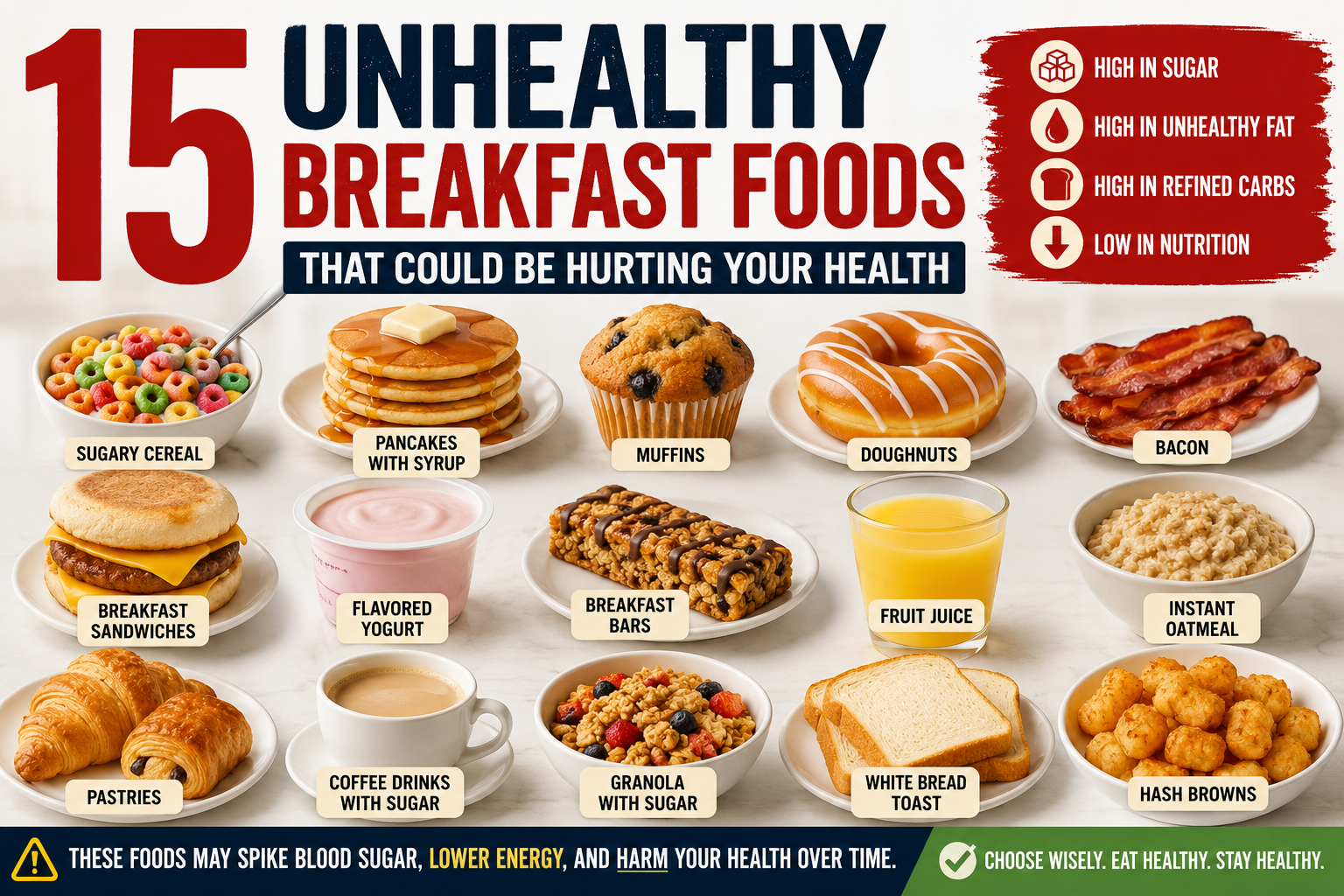
15 Unhealthy Breakfast Foods That Could Be Hurting Your Health
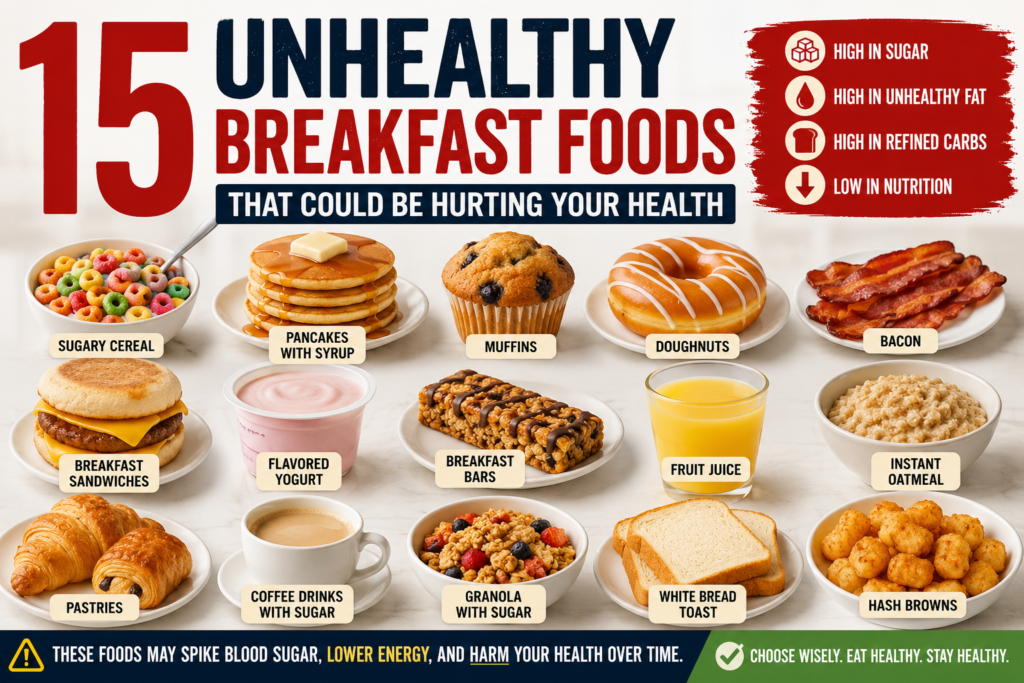
15 Unhealthy Breakfast Foods That Could Be Hurting Your Health
Breakfast is often called the most important meal of the day, but not every breakfast supports good health. Many popular morning meals are packed with added sugars, refined carbohydrates, unhealthy fats, and excessive sodium. While these foods may taste delicious and save time during busy mornings, regularly eating them can leave you feeling tired, hungry, and less satisfied before lunchtime.
Choosing a healthier breakfast doesn’t mean giving up convenience or flavor. Small changes—such as replacing highly processed foods with whole grains, lean protein, fruits, and healthy fats—can make a significant difference in your daily nutrition. Understanding which unhealthy breakfast foods to limit is the first step toward building healthier eating habits.
In this guide, we’ll explore the worst breakfast foods that nutrition experts often recommend limiting, explain why they may not be the best choice, and suggest healthier breakfast alternatives that can help you start your day with lasting energy and better overall wellness.
Why Your Breakfast Choices Matter
Breakfast helps replenish your body’s energy after an overnight fast and provides nutrients needed to support concentration, metabolism, and physical activity throughout the morning. However, eating highly processed or sugary breakfast foods can cause rapid increases and drops in blood sugar, leading to hunger, cravings, and reduced energy levels.
A balanced breakfast typically includes protein, fiber, healthy fats, and complex carbohydrates. These nutrients help keep you full longer while supporting steady energy and better morning nutrition. By replacing processed breakfast foods with healthier alternatives, you can improve your daily nutrient intake without sacrificing taste or convenience.
15 Unhealthy Breakfast Foods That Could Be Hurting Your Health
1. Sugary Breakfast Cereals
Many people choose sugary breakfast cereals because they’re quick, affordable, and require little preparation. Colorful packaging and added vitamins often make them appear healthier than they really are.
The problem is that many cereals contain large amounts of added sugar and refined grains while providing very little fiber or protein. This combination may cause blood sugar spikes followed by energy crashes, making you hungry again within a short time. Regularly consuming sugary cereals may also contribute to excess calorie intake over time.
Better alternatives: Choose plain oatmeal, unsweetened whole-grain cereal, or high-fiber cereals with minimal added sugar. Add fresh berries, sliced bananas, nuts, or seeds for natural sweetness and improved nutrition.
2. Toaster Pastries
Toaster pastries remain a popular breakfast because they’re portable, inexpensive, and ready in minutes. Busy schedules often make them an appealing grab-and-go option.
Despite their convenience, these pastries are typically made with refined flour, added sugars, and processed oils. Many contain very little protein or fiber, meaning they provide quick calories without lasting fullness. Their high sugar content may contribute to rapid fluctuations in blood glucose levels, especially when eaten alone.
Better alternatives: Whole-grain toast with peanut butter, Greek yogurt with fruit, or homemade whole-grain muffins made with oats can offer more balanced morning nutrition.
3. Sweetened Flavored Yogurt
Yogurt is widely recognized as a healthy food, leading many people to assume every variety is equally nutritious. However, flavored yogurts often contain surprisingly high amounts of added sugar.
Although yogurt naturally provides calcium and protein, excessive sweeteners can reduce its overall nutritional value. Some flavored varieties contain as much sugar as desserts, making them one of the more overlooked sugary breakfast foods. Regular consumption may increase overall sugar intake while offering less satiety than less processed options.
Better alternatives: Select plain Greek yogurt and add fresh fruit, cinnamon, chia seeds, or a small drizzle of honey if desired. This provides more protein with better control over added sugars.
4. Pancakes with Syrup
Pancakes are a classic breakfast favorite enjoyed by families around the world because they’re comforting, delicious, and easy to customize.
Traditional pancakes made with refined white flour and topped generously with syrup are often high in refined carbohydrates and added sugars. They usually lack sufficient protein and fiber to keep you full throughout the morning. Large portions can also increase calorie intake without providing balanced nutrition.
Better alternatives: Prepare pancakes using whole-wheat flour or oats and top them with fresh berries, plain yogurt, nut butter, or a light spread of fruit instead of excessive syrup.
5. Doughnuts
Doughnuts are popular for their sweet taste, soft texture, and convenience at coffee shops and bakeries. Many people grab one during busy mornings alongside their favorite coffee.
Unfortunately, doughnuts are among the worst breakfast foods due to their combination of refined flour, added sugars, and unhealthy fats. Deep frying further increases their calorie content while offering minimal nutritional value. Because they’re low in protein and fiber, they rarely keep hunger away for long.
Better alternatives: Pair whole-grain toast with eggs, enjoy overnight oats, or eat fruit with cottage cheese for a more satisfying and nutrient-rich breakfast.
6. Breakfast Sausage
Breakfast sausage is a traditional morning staple because it’s flavorful, filling, and pairs well with eggs and toast.
However, many processed breakfast sausages contain high amounts of sodium and saturated fat. Frequent consumption of heavily processed meats has been associated with poorer overall dietary quality. While sausage does provide protein, relying on it as a daily breakfast choice may increase sodium intake beyond recommended levels.
Better alternatives: Lean turkey sausage, grilled chicken, eggs, tofu scramble, or beans provide protein while generally containing less saturated fat and sodium.
7. Sweet Coffee Drinks
Many people skip breakfast entirely and replace it with a flavored coffee drink loaded with syrups, whipped cream, and sweetened milk.
Although these beverages may seem harmless, they often contain significant amounts of added sugar and calories while providing very little protein or fiber. Drinking sugary coffee alone may leave you hungry soon afterward and contribute to excess daily calorie intake. Regularly choosing these drinks instead of a balanced breakfast may not support long-lasting energy.
Better alternatives: Choose black coffee or coffee with a splash of milk alongside oatmeal, eggs, whole-grain toast, fruit, or Greek yogurt to create a healthier morning meal.
8. Packaged Breakfast Muffins
Packaged muffins are often marketed as wholesome breakfast choices because they may contain ingredients like bran, blueberries, or whole grains. However, many commercially produced muffins are oversized and loaded with added sugar, refined flour, and unhealthy fats. They can be surprisingly high in calories while offering little protein or fiber. Better alternatives: Bake homemade whole-grain muffins with oats and fruit, or enjoy whole-grain toast with nut butter and fresh berries.
9. Frozen Breakfast Sandwiches
Frozen breakfast sandwiches are convenient for busy mornings and require only a few minutes in the microwave. While they provide protein, many varieties also contain processed meats, refined bread, high sodium, and saturated fat. Eating them regularly may increase sodium intake and reduce overall diet quality. Better alternatives: Make your own breakfast sandwich using whole-grain bread, eggs, vegetables, and avocado for a fresher, more balanced meal.
10. Biscuits with Gravy
Biscuits and gravy are a comforting breakfast in many households thanks to their rich flavor and satisfying texture. Traditional recipes are typically made with refined flour, butter, cream, and processed sausage, making them high in saturated fat, sodium, and calories. They also contain limited fiber. Better alternatives: Enjoy whole-grain biscuits in moderation with scrambled eggs, vegetables, or a lighter yogurt-based gravy.
11. Sweet Breakfast Bars
Breakfast bars are popular because they are portable and require no preparation. Unfortunately, many resemble candy bars more than nutritious breakfasts. They often contain added sugars, refined grains, and artificial ingredients while lacking sufficient protein and fiber to keep you satisfied. Better alternatives: Choose bars made with whole oats, nuts, seeds, and minimal added sugar, or prepare homemade energy bars for better nutrition.
12. White Bread with Jam
Toast with jam is a simple breakfast that many people have enjoyed for years. However, white bread is made from refined flour, and sugary jams add even more simple carbohydrates. Together, they provide quick energy but little lasting fullness due to the lack of protein and fiber. Better alternatives: Use whole-grain bread and top it with natural peanut butter, almond butter, avocado, or fresh fruit instead of sugary syrups.
13. Instant Flavored Oatmeal
Instant oatmeal is convenient, but flavored varieties often contain added sugars, artificial flavorings, and extra sodium. Although oats themselves are nutritious and rich in fiber, heavily sweetened packets reduce many of those benefits. Depending solely on flavored versions can increase daily sugar intake. Better alternatives: Prepare plain rolled or steel-cut oats and add cinnamon, chopped apples, berries, nuts, or seeds for natural flavor and additional nutrients.
14. Breakfast Pizza
Breakfast pizza combines familiar breakfast favorites into one meal, making it appealing for weekends or quick leftovers. However, it often contains processed meats, refined crust, large amounts of cheese, and excess sodium. These ingredients can significantly increase calorie and saturated fat intake. Better alternatives: Make a homemade whole-wheat breakfast pizza topped with vegetables, eggs, and moderate amounts of reduced-fat cheese.
15. Fast-Food Breakfast Combos
Fast-food breakfast meals are attractive because they’re inexpensive, filling, and readily available during busy mornings. However, many combos include processed meats, fried potatoes, refined bread, sugary drinks, and oversized portions. This combination may provide excessive calories, sodium, saturated fat, and added sugars in a single meal. Better alternatives: Choose oatmeal, fruit, egg-based options, or a homemade breakfast prepared with whole foods whenever possible.
Healthy Breakfast Swaps
| Instead Of | Choose | Benefits |
| Sugary cereal | Plain oatmeal with berries | More fiber and lasting energy |
| Toaster pastries | Whole-grain toast with peanut butter | Higher protein and healthy fats |
| Flavored yogurt | Plain Greek yogurt with fruit | Less added sugar and more protein |
| Pancakes with syrup | Whole-grain pancakes with fresh fruit | Better fiber and balanced nutrition |
| Doughnuts | Eggs with whole-grain toast | Greater satiety and protein |
| Breakfast sausage | Eggs, beans, or turkey sausage | Lower sodium and saturated fat |
| Sweet coffee drinks | Coffee with a balanced breakfast | Fewer added sugars and improved fullness |
| Packaged muffins | Homemade oat muffins | More whole grains and less sugar |
| Frozen sandwiches | Homemade breakfast sandwich | Fresher ingredients and lower sodium |
| Breakfast bars | Nuts, fruit, or homemade oat bars | Better fiber and healthy fats |
How to Build a Balanced Breakfast
A healthy breakfast should include a combination of protein, fiber, healthy fats, and complex carbohydrates. Protein-rich foods such as eggs, Greek yogurt, cottage cheese, tofu, or legumes help maintain fullness and support muscle health. Whole grains like oats and whole-wheat bread provide steady energy, while fruits and vegetables contribute vitamins, minerals, antioxidants, and fiber. Healthy fats from nuts, seeds, avocado, or nut butter further improve satisfaction and nutrient absorption. Aim to include at least three of these food groups each morning while limiting highly processed foods and added sugars. Planning simple breakfasts ahead of time can also make healthy eating easier during busy weekdays.
Common Breakfast Mistakes to Avoid
One of the biggest breakfast mistakes is relying on highly processed foods simply because they are convenient. Another common error is choosing meals that contain mostly refined carbohydrates without enough protein or fiber, leading to hunger soon afterward. Skipping breakfast altogether may also make some people more likely to overeat later in the day. Drinking sugary coffee beverages instead of eating a complete meal can provide excess calories without balanced nutrition. Finally, overlooking portion sizes and regularly consuming oversized restaurant breakfasts may increase daily calorie intake. Reading nutrition labels and prioritizing whole foods can help create healthier morning habits.
Frequently Asked Questions
1. What are the most unhealthy breakfast foods?
The most unhealthy breakfast foods are generally those high in added sugars, refined grains, sodium, and saturated fats while being low in fiber and protein. Examples include sugary cereals, doughnuts, toaster pastries, processed breakfast meats, and sweet coffee drinks. Choosing whole-food alternatives can help improve energy levels and overall morning nutrition.
2. Is skipping breakfast healthier than eating unhealthy breakfast foods?
It depends on individual preferences and health needs. For many people, eating a balanced breakfast with protein, fiber, and healthy fats is more beneficial than consuming highly processed breakfast foods. If breakfast is skipped, it’s important to maintain overall nutrient intake through balanced meals later in the day.
3. What makes a breakfast balanced?
A balanced breakfast combines protein, complex carbohydrates, healthy fats, and fiber. Examples include oatmeal with nuts and berries, eggs with whole-grain toast, or Greek yogurt with fruit and seeds. This combination helps provide steady energy, supports fullness, and contributes important nutrients for overall health.
4. Are all breakfast cereals unhealthy?
No. While many cereals are high in added sugar, others are made with whole grains and contain plenty of fiber. Look for cereals with minimal added sugar, higher fiber content, and simple ingredient lists. Pairing cereal with milk or yogurt and fruit can create a more balanced breakfast.
5. What is the healthiest quick breakfast?
Healthy quick breakfasts include overnight oats, plain Greek yogurt with fruit, whole-grain toast with nut butter, boiled eggs with fruit, or a smoothie made with fruit, vegetables, protein, and healthy fats. These meals are convenient while providing balanced nutrition to support sustained energy.
Conclusion
Breakfast sets the tone for the rest of your day, making it worthwhile to choose foods that nourish rather than simply satisfy temporary cravings. While many popular morning meals are convenient, regularly eating unhealthy breakfast foods that are high in added sugars, refined carbohydrates, sodium, and unhealthy fats may reduce the overall quality of your diet. Replacing them with whole grains, lean proteins, fruits, vegetables, and healthy fats can help support steady energy, improved fullness, and better long-term wellness.
Remember, healthier eating doesn’t require perfection—small, consistent improvements can have a meaningful impact over time. For more evidence-based nutrition tips, healthy recipes, and practical wellness advice, explore the latest articles on PureWellLife and make every breakfast a healthier start to your day.