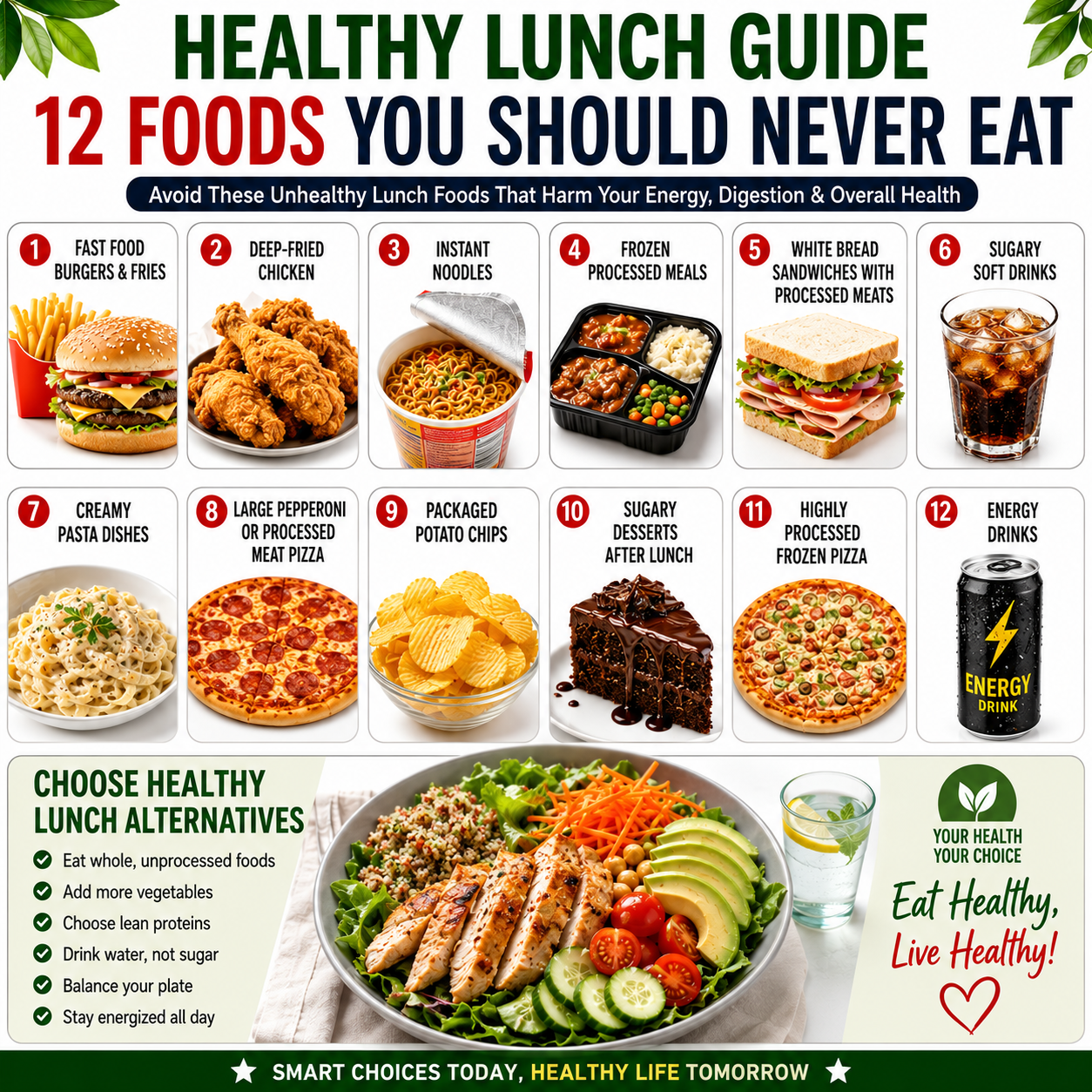
Lunch is more than just a meal in the middle of the day—it is the fuel that powers your body through the afternoon. The foods you choose at lunchtime can directly influence your energy levels, productivity, digestion, mood, and even your long-term health. Unfortunately, many popular lunch options are loaded with refined carbohydrates, unhealthy fats, excessive sodium, and added sugars that may leave you feeling sluggish, bloated, or hungry again within a short time.
A healthy lunch should provide balanced nutrition, including lean protein, fiber-rich vegetables, healthy fats, and complex carbohydrates. When these nutrients work together, they help stabilize blood sugar, improve concentration, and keep you satisfied until your next meal. However, regularly choosing heavily processed or nutritionally poor foods can contribute to weight gain, high cholesterol, elevated blood pressure, and an increased risk of chronic diseases over time.
In this comprehensive healthy lunch guide, you’ll discover Foods You Should Never Eat for Lunch, why they may be harmful, and healthier alternatives that can help you make smarter choices. Whether your goal is weight management, better energy, or overall wellness, avoiding these common lunch mistakes can make a significant difference.
Why Your Lunch Choices Matter
Lunch serves as the bridge between breakfast and dinner, making it one of the most important meals for maintaining steady energy throughout the day. Choosing nutrient-dense foods helps replenish your body’s energy stores, supports mental focus, and reduces afternoon cravings. On the other hand, lunches high in refined sugars, saturated fats, and processed ingredients often cause rapid blood sugar spikes followed by energy crashes, making it harder to stay productive.
A balanced lunch should ideally contain lean protein, colorful vegetables, whole grains, and healthy fats. This combination supports digestion, promotes satiety, and provides a steady release of energy. Making healthier lunch choices consistently can also reduce the risk of obesity, type 2 diabetes, heart disease, and other chronic health conditions while improving your overall quality of life.
1. Fast Food Burgers and Fries
Fast food burgers paired with large servings of fries remain one of the most common lunch choices worldwide. Although convenient, these meals are typically high in calories, saturated fat, sodium, and refined carbohydrates while providing relatively little fiber or essential nutrients. Eating them regularly can leave you feeling sluggish rather than energized.
Many fast-food meals also contain processed meats, sugary sauces, and oversized portions that contribute to excessive calorie intake. Frequent consumption has been associated with weight gain, increased cholesterol levels, and a higher risk of cardiovascular disease. Instead of providing lasting energy, these meals often cause post-lunch fatigue and hunger later in the afternoon.
Better Alternative
Choose a grilled chicken sandwich on whole-grain bread with a side salad, or prepare a homemade turkey burger with baked sweet potato wedges.
2. Deep-Fried Chicken
Deep-fried chicken may be crispy and flavorful, but it is often coated in refined flour and cooked in oils that have been repeatedly heated. This cooking process increases unhealthy fats while significantly raising the calorie content of the meal.
Because fried foods digest slowly, they can leave you feeling heavy and uncomfortable for several hours. Regular consumption may also contribute to inflammation, high cholesterol, and weight gain. If eaten frequently, deep-fried foods can reduce the overall nutritional quality of your diet.
Better Alternative
Opt for grilled, roasted, or air-fried chicken seasoned with herbs and spices. Pair it with steamed vegetables and brown rice for a balanced meal.
3. Instant Noodles
Instant noodles are a quick and inexpensive lunch option, but they are among the least nutritious meals available. They are generally low in protein, fiber, vitamins, and minerals while being extremely high in sodium and refined carbohydrates.
Many instant noodle flavor packets contain excessive amounts of salt and artificial flavor enhancers. Eating them regularly may increase blood pressure and contribute to poor dietary habits. Since they lack sufficient protein and fiber, they also leave you feeling hungry shortly after eating.
Better Alternative
Prepare whole-grain noodles with grilled vegetables, lean chicken, tofu, or eggs for a more balanced and satisfying lunch.
4. Frozen Processed Meals
Frozen meals offer convenience, especially during busy workdays, but many commercially prepared options contain high amounts of sodium, preservatives, unhealthy fats, and refined ingredients. While some healthier frozen meals exist, many traditional varieties prioritize shelf life over nutritional value.
These meals are often low in fresh vegetables and fiber, reducing their ability to keep you full. Excess sodium intake may contribute to high blood pressure and water retention. Reading nutrition labels carefully is essential when choosing frozen meals.
Better Alternative
Prepare homemade lunches in advance using grilled protein, vegetables, and whole grains. Meal prepping allows greater control over ingredients and portion sizes.
5. White Bread Sandwiches with Processed Meats
White bread sandwiches filled with processed meats such as salami, bologna, or heavily processed ham are common lunch staples. However, they combine refined carbohydrates with processed meats that are often high in sodium, preservatives, and saturated fat.
White bread provides little fiber, causing rapid digestion and blood sugar spikes. Processed meats have also been linked to increased risks of heart disease and certain cancers when consumed frequently. This combination may satisfy hunger temporarily but rarely provides balanced nutrition.
Better Alternative
Choose whole-grain bread filled with grilled chicken, turkey breast, hummus, avocado, fresh vegetables, or tuna packed in water.
6. Sugary Soft Drinks
Many people pair lunch with soda or other sugary beverages without realizing how much sugar they consume in a single serving. A regular soft drink can contain several teaspoons of added sugar while providing virtually no nutritional value.
Sugary drinks contribute to blood sugar spikes followed by rapid energy crashes. They are also strongly associated with weight gain, insulin resistance, and tooth decay. Replacing sugary beverages with healthier options can significantly improve your daily nutrition.
Better Alternative
Drink water, sparkling water with lemon, unsweetened iced tea, or infused water with fresh fruits and herbs.
7. Creamy Pasta Dishes
Cream-based pasta dishes such as Alfredo pasta, macaroni with heavy cheese sauce, and rich restaurant-style pasta are popular lunch choices because they are filling and comforting. However, they are often loaded with refined pasta, butter, heavy cream, saturated fat, and excessive calories while providing relatively little fiber or vegetables. Although they may satisfy hunger initially, they can leave you feeling sluggish and sleepy during the afternoon.
These meals digest slowly due to their high fat content, which may reduce productivity and cause discomfort for some people. Large portions also contribute to excessive calorie intake, making them less suitable if you’re trying to maintain a healthy weight. Enjoying creamy pasta occasionally is perfectly fine, but it should not become a regular lunch habit.
Better Alternative
Choose whole-wheat pasta tossed with olive oil, grilled chicken, fresh vegetables, spinach, tomatoes, mushrooms, and herbs. A tomato-based sauce is generally lighter while still delivering excellent flavor.
8. Large Pepperoni or Processed Meat Pizza
Pizza is convenient and widely available, making it a common lunch option. However, pizzas topped with processed meats like pepperoni, sausage, and bacon often contain high amounts of sodium, saturated fat, refined flour, and calories. Combined with generous amounts of cheese, they can become an extremely heavy midday meal.
Eating large portions may cause bloating, fatigue, and excessive calorie consumption. Since refined crusts are quickly digested, they may also contribute to blood sugar fluctuations, especially when paired with sugary beverages.
Better Alternative
Enjoy a homemade pizza made with a whole-grain crust, plenty of vegetables, grilled chicken, mushrooms, onions, spinach, and moderate amounts of cheese. Pair it with a fresh salad for added fiber.
9. Packaged Potato Chips
Many people add a bag of potato chips to their lunch because they’re convenient and tasty. Unfortunately, chips are typically high in sodium, unhealthy fats, and refined starch while offering very little nutritional value. They provide plenty of calories without keeping you full for long.
Regularly replacing nutrient-rich side dishes with chips can reduce your intake of fiber, vitamins, and minerals. Their high salt content may also increase thirst and contribute to water retention when consumed frequently.
Better Alternative
Swap potato chips for roasted chickpeas, mixed nuts, air-popped popcorn, vegetable sticks with hummus, or a piece of fresh fruit.
10. Sugary Desserts After Lunch
Finishing lunch with donuts, pastries, cakes, cookies, or sugary desserts may seem harmless, but these treats often contain refined flour, added sugars, unhealthy fats, and very few nutrients. They provide a quick burst of energy followed by a rapid decline in blood sugar, commonly known as a sugar crash.
Frequent consumption of sugary desserts may contribute to weight gain, increased cravings, and poor blood sugar control. While occasional treats can fit into a balanced diet, making them a daily lunch habit can negatively affect overall health.
Better Alternative
Choose naturally sweet options like fresh berries, apples, oranges, Greek yogurt with fruit, or a small serving of dark chocolate alongside nuts.
11. Highly Processed Frozen Pizza
Frozen pizzas are another convenient lunch option, but many varieties contain refined flour crusts, processed meats, artificial preservatives, excessive sodium, and unhealthy fats. They are often low in vegetables and fiber, making them less satisfying despite their high calorie content.
Because frozen pizzas are heavily processed, they generally provide fewer beneficial nutrients than homemade alternatives. Eating them frequently may increase sodium intake beyond recommended daily limits and contribute to poor overall diet quality.
Better Alternative
Prepare homemade mini pizzas using whole-wheat pita bread or whole-grain tortillas topped with vegetables, lean protein, and a moderate amount of cheese.
12. Energy Drinks
Some people rely on energy drinks to fight afternoon tiredness, especially after a busy morning. However, many energy drinks contain high amounts of caffeine, sugar, and artificial ingredients. Instead of providing steady energy, they often cause temporary stimulation followed by fatigue later in the day.
Excessive consumption may also increase heart rate, contribute to dehydration, and interfere with sleep quality if consumed regularly. Better energy comes from balanced nutrition rather than stimulants.
Better Alternative
Drink water, coconut water, unsweetened green tea, black coffee in moderation, or enjoy a balanced lunch that includes lean protein, complex carbohydrates, and healthy fats to maintain natural energy levels.
Healthy Lunch Alternatives
Replacing unhealthy lunch foods doesn’t mean sacrificing taste. A nutritious lunch should include a balance of protein, healthy fats, complex carbohydrates, and fiber-rich vegetables. This combination supports stable energy, better concentration, and longer-lasting fullness.
Here are some healthier lunch ideas:
| Instead of… | Choose… |
| Fast food burger | Grilled chicken burger on whole-grain bread |
| French fries | Baked sweet potato wedges |
| Instant noodles | Whole-grain noodles with vegetables |
| White bread | Whole-grain bread or wraps |
| Creamy pasta | Whole-wheat pasta with tomato sauce |
| Potato chips | Roasted chickpeas or mixed nuts |
| Sugary soda | Water, sparkling water, or unsweetened tea |
| Frozen meals | Homemade meal-prep bowls |
| Fried chicken | Grilled or baked chicken |
| Sugary desserts | Fresh fruit or Greek yogurt |
| Frozen pizza | Homemade whole-grain pizza |
| Energy drinks | Water, green tea, or black coffee |
Tips for Building the Perfect Healthy Lunch
Creating a balanced lunch doesn’t have to be complicated. Small improvements can make a significant difference in your daily nutrition and energy levels. By planning ahead and choosing whole foods, you can enjoy meals that are both satisfying and nourishing.
Follow these simple tips:
- Include a lean protein source such as chicken, fish, eggs, tofu, or beans.
- Fill at least half of your plate with colorful vegetables.
- Choose whole grains like brown rice, quinoa, or whole-wheat bread.
- Add healthy fats from avocado, olive oil, seeds, or nuts.
- Drink water instead of sugary beverages.
- Control portion sizes to avoid overeating.
- Prepare lunches in advance to reduce reliance on processed foods.
- Include a piece of fresh fruit for natural sweetness and extra fiber.
These habits can help maintain energy, improve digestion, support weight management, and promote long-term health.
Frequently Asked Questions (FAQs)
1. What is the healthiest food to eat for lunch?
A healthy lunch should contain a balance of lean protein, complex carbohydrates, healthy fats, and plenty of vegetables. Meals such as grilled chicken with brown rice and vegetables, quinoa salads, lentil soup with whole-grain bread, or salmon with roasted vegetables provide sustained energy and essential nutrients. The key is choosing whole, minimally processed foods that keep you full without causing energy crashes.
2. Why do I feel sleepy after eating lunch?
Feeling tired after lunch often results from eating meals that are high in refined carbohydrates, added sugars, or unhealthy fats. These foods can cause rapid spikes and drops in blood sugar, making you feel sluggish. Heavy meals also require more energy for digestion. Choosing balanced meals with protein, fiber, and healthy fats can help maintain steady energy throughout the afternoon.
3. Is skipping lunch healthier than eating unhealthy food?
Skipping lunch is generally not recommended. Missing meals may lead to low energy levels, poor concentration, and overeating later in the day. Instead of skipping lunch, choose healthier alternatives made from whole foods. Even a simple meal like a salad with grilled chicken, yogurt with fruit, or a vegetable wrap is better than skipping the meal altogether.
4. Are frozen meals always unhealthy?
Not all frozen meals are unhealthy. Some options are made with lean protein, vegetables, and whole grains while keeping sodium and saturated fat at moderate levels. Always read the nutrition label and ingredient list before purchasing. Meals with lower sodium, higher protein, and fewer artificial additives are generally better choices.
5. Can I eat pizza occasionally?
Yes. Pizza can fit into a balanced diet when enjoyed occasionally and in moderation. Choosing a whole-grain crust, vegetable toppings, lean proteins, and moderate cheese can make it a healthier option. Pairing pizza with a side salad also increases fiber intake and improves the nutritional value of the meal.
6. What should I drink with lunch?
Water is the healthiest choice because it supports hydration without adding sugar or calories. Other good options include sparkling water, unsweetened tea, black coffee in moderation, or naturally flavored water with lemon, cucumber, or mint. Limiting sugary drinks helps maintain stable blood sugar and supports overall health.
Key Takeaways
Your lunch choices play a major role in your daily energy, productivity, and long-term health. Avoiding highly processed foods can improve digestion, stabilize blood sugar, and reduce the risk of chronic diseases.
Remember These Key Points:
- Avoid fast food burgers and fries whenever possible.
- Limit fried foods and processed meats.
- Replace instant noodles with whole-grain alternatives.
- Choose whole-grain bread instead of white bread.
- Skip sugary soft drinks and energy drinks.
- Reduce creamy pasta and highly processed frozen meals.
- Avoid potato chips as your regular lunch side.
- Choose fresh fruit instead of sugary desserts.
- Include vegetables in every lunch.
- Eat lean protein for longer-lasting fullness.
- Drink plenty of water throughout the day.
- Prepare meals ahead to make healthy eating easier.
Conclusion
A healthy lunch doesn’t need to be expensive, complicated, or time-consuming. The biggest improvements often come from replacing highly processed foods with fresh, nutrient-dense alternatives. By avoiding the 12 foods discussed in this guide, you can improve your energy levels, enhance mental focus, support healthy digestion, and reduce the risk of chronic illnesses over time.
Healthy eating is about consistency rather than perfection. Enjoy your favorite indulgent foods occasionally, but build your everyday lunch around lean proteins, whole grains, healthy fats, fruits, and vegetables. Small changes—such as swapping soda for water or choosing grilled chicken over fried—can lead to significant health benefits over the months and years.
Start with one healthier choice at your next lunch, and continue making gradual improvements. Your body and mind will thank you with better energy, improved well-being, and a healthier future.
Read Our Latest Blog : Is Fiber Good for Constipation? Myths vs Facts
;