How to Prevent Respiratory Infections During Flu Season
Respiratory infections become more common during flu season, affecting millions of people every year. These infections can spread quickly in homes, schools, workplaces, and public places through respiratory droplets and close contact.
Although it is not always possible to completely avoid infections, adopting healthy habits and preventive measures can significantly reduce your risk and help protect those around you.
What Are Respiratory Infections?
Respiratory infections affect the airways, nose, throat, and lungs.
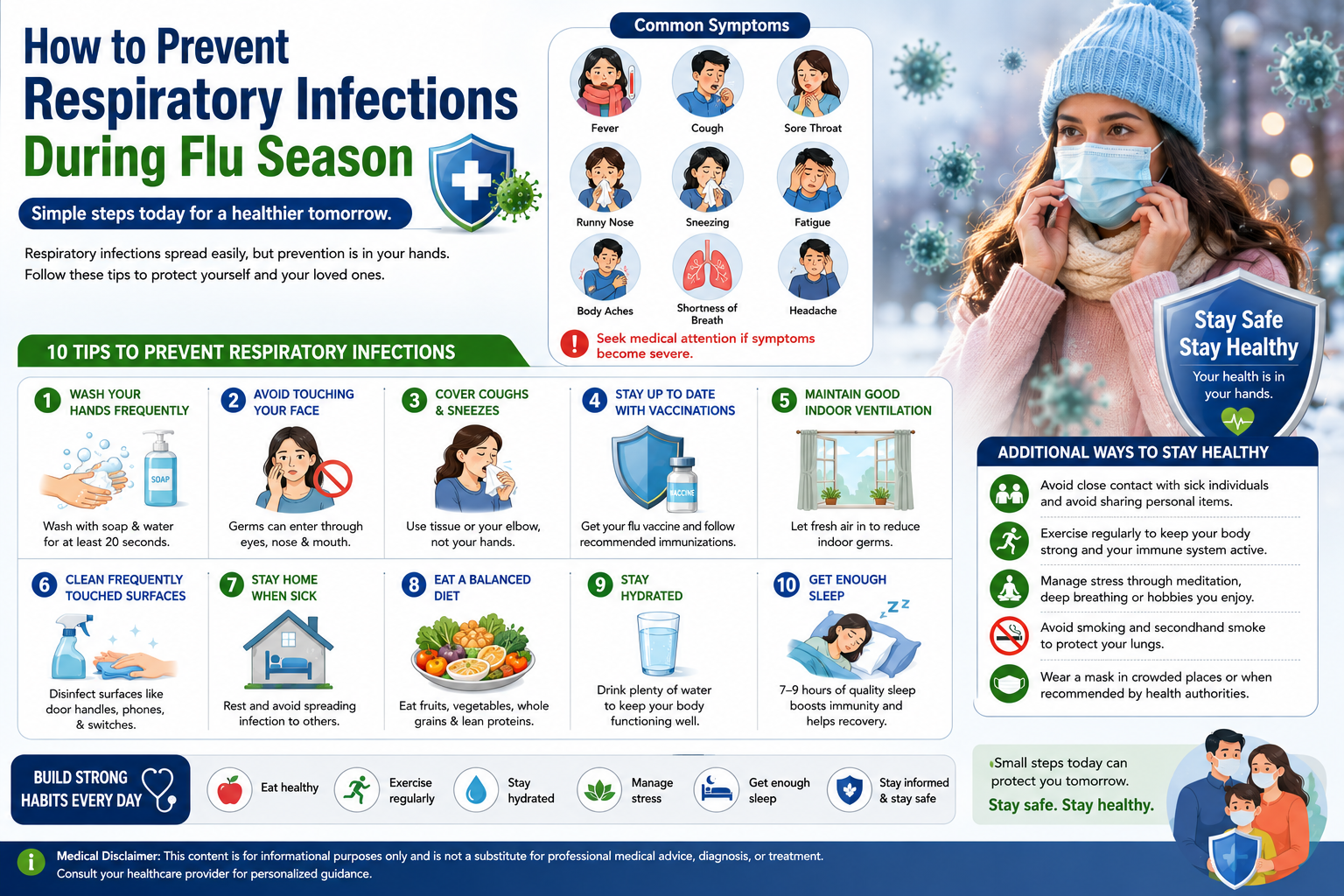
Common respiratory illnesses include:
- Influenza (flu)
- Common cold
- COVID-19
- Bronchitis
- Pneumonia
- Respiratory Syncytial Virus (RSV)
Some infections are mild, while others may become serious, especially for young children, older adults, pregnant individuals, and people with weakened immune systems.
Common Symptoms
Symptoms may include:
- Fever
- Cough
- Sore throat
- Runny or blocked nose
- Sneezing
- Body aches
- Fatigue
- Difficulty breathing in severe cases
Seek medical attention promptly if symptoms become severe or breathing difficulties develop.
Tips to Prevent Respiratory Infections During Flu Season
1. Wash Your Hands Frequently
Handwashing is one of the simplest and most effective ways to reduce the spread of germs.
Wash hands:
- Before eating
- After coughing or sneezing
- After using the restroom
- After returning home
- After touching shared surfaces
Use soap and clean running water for at least 20 seconds whenever possible.
2. Avoid Touching Your Face
Viruses can enter the body through:
- Eyes
- Nose
- Mouth
Avoid touching your face with unwashed hands.
3. Cover Coughs and Sneezes
When coughing or sneezing:
- Use a tissue.
- Dispose of the tissue properly.
- If a tissue is unavailable, cough or sneeze into your elbow rather than your hands.
This helps reduce the spread of respiratory droplets.
4. Stay Up to Date with Recommended Vaccinations
Seasonal flu vaccination is one of the most effective ways to reduce the risk of influenza and its complications.
Follow recommendations from your healthcare provider regarding vaccinations appropriate for your age and health condition.
5. Maintain Good Indoor Ventilation
Fresh air helps reduce the concentration of airborne particles indoors.
When possible:
- Open windows.
- Improve airflow.
- Follow local health guidance regarding ventilation.
6. Clean Frequently Touched Surfaces
Regularly disinfect commonly touched objects such as:
- Door handles
- Mobile phones
- Keyboards
- Light switches
- Remote controls
7. Stay Home When You’re Sick
If you develop symptoms of a respiratory infection:
- Rest at home.
- Avoid close contact with others.
- Follow medical advice regarding isolation when appropriate.
This helps reduce transmission to family members, coworkers, and classmates.
8. Eat a Balanced Diet
Good nutrition supports overall health and normal immune function.
Include:
- Fruits
- Vegetables
- Whole grains
- Lean proteins
- Healthy fats
- Dairy or fortified alternatives
9. Stay Hydrated
Drink enough water throughout the day to support normal body functions and overall well-being.
10. Get Enough Sleep
Adequate sleep supports:
- Immune function
- Recovery
- Overall health
Aim for age-appropriate sleep every night.
Additional Tips to Stay Healthy During Flu Season
Along with good hygiene and healthy eating, these simple habits can further reduce your risk of respiratory infections.
Avoid Close Contact with Sick Individuals
If someone around you is ill:
- Keep a reasonable distance when possible.
- Avoid sharing personal items such as drinking glasses, utensils, or towels.
Exercise Regularly
Moderate physical activity supports overall health and contributes to normal immune function.
Examples include:
- Walking
- Cycling
- Stretching
- Swimming
- Light strength training
Choose activities appropriate for your age and fitness level.
Manage Stress
Long-term stress may affect overall well-being.
Healthy stress-management techniques include:
- Meditation
- Deep breathing
- Yoga
- Reading
- Spending time with loved ones
Avoid Smoking and Secondhand Smoke
Smoking can damage the respiratory system and increase the risk of respiratory illnesses.
Avoid tobacco products and limit exposure to secondhand smoke whenever possible.
Wear a Mask When Appropriate
During periods of high respiratory virus activity or when recommended by public health authorities, wearing a well-fitting mask in crowded indoor settings may help reduce the spread of respiratory infections.
Frequently Asked Questions
How do respiratory infections spread?
Most respiratory infections spread through droplets released when an infected person coughs, sneezes, talks, or breathes. They can also spread through contaminated surfaces followed by touching the eyes, nose, or mouth.
Can healthy eating prevent the flu?
A healthy diet supports overall health and normal immune function, but it cannot completely prevent influenza or other respiratory infections.
Is the flu vaccine important?
Seasonal flu vaccination is recommended for many individuals and can help reduce the risk of influenza and its complications. Consult your healthcare provider for advice based on your age and medical history.
Should I exercise if I have the flu?
If you are feeling unwell, rest and follow your healthcare provider’s advice. Returning to physical activity too soon may delay recovery.
When should I see a doctor?
Seek medical attention if you experience:
- Difficulty breathing
- Persistent high fever
- Chest pain
- Confusion
- Symptoms that worsen or do not improve
- Signs of dehydration
Young children, older adults, pregnant individuals, and people with chronic medical conditions should seek medical advice promptly if they develop flu-like symptoms.
Key Takeaways
- Wash your hands regularly with soap and water.
- Avoid touching your eyes, nose, and mouth with unwashed hands.
- Cover coughs and sneezes properly.
- Stay up to date with recommended vaccinations.
- Eat a balanced diet, stay hydrated, and get enough sleep.
- Keep indoor spaces clean and well ventilated.
- Stay home when sick to reduce the spread of infection.
- Consult a healthcare professional if symptoms become severe or persistent.
Conclusion
Respiratory infections are common during flu season, but simple preventive measures can make a significant difference. Practicing good hand hygiene, maintaining a healthy lifestyle, staying current with recommended vaccinations, and avoiding close contact with sick individuals can help protect both you and your family. Consistency is key—small daily habits contribute to better respiratory health and reduce the spread of infections within communities.