How to Prevent Seasonal Allergies: Tips to Reduce Allergy Symptoms
Seasonal allergies, also known as hay fever or seasonal allergic rhinitis, affect millions of people every year. They occur when the immune system reacts to allergens such as pollen, mold spores, or grass. While seasonal allergies cannot always be completely avoided, simple preventive measures can help reduce symptoms and improve daily comfort.
Understanding common triggers and practicing healthy habits can help you manage allergy season more effectively.
What Causes Seasonal Allergies?
Seasonal allergies are commonly triggered by:
- Tree pollen
- Grass pollen
- Weed pollen
- Mold spores
- Dust carried in the air
These allergens are more common during certain seasons, depending on your location and climate.
Common Symptoms of Seasonal Allergies
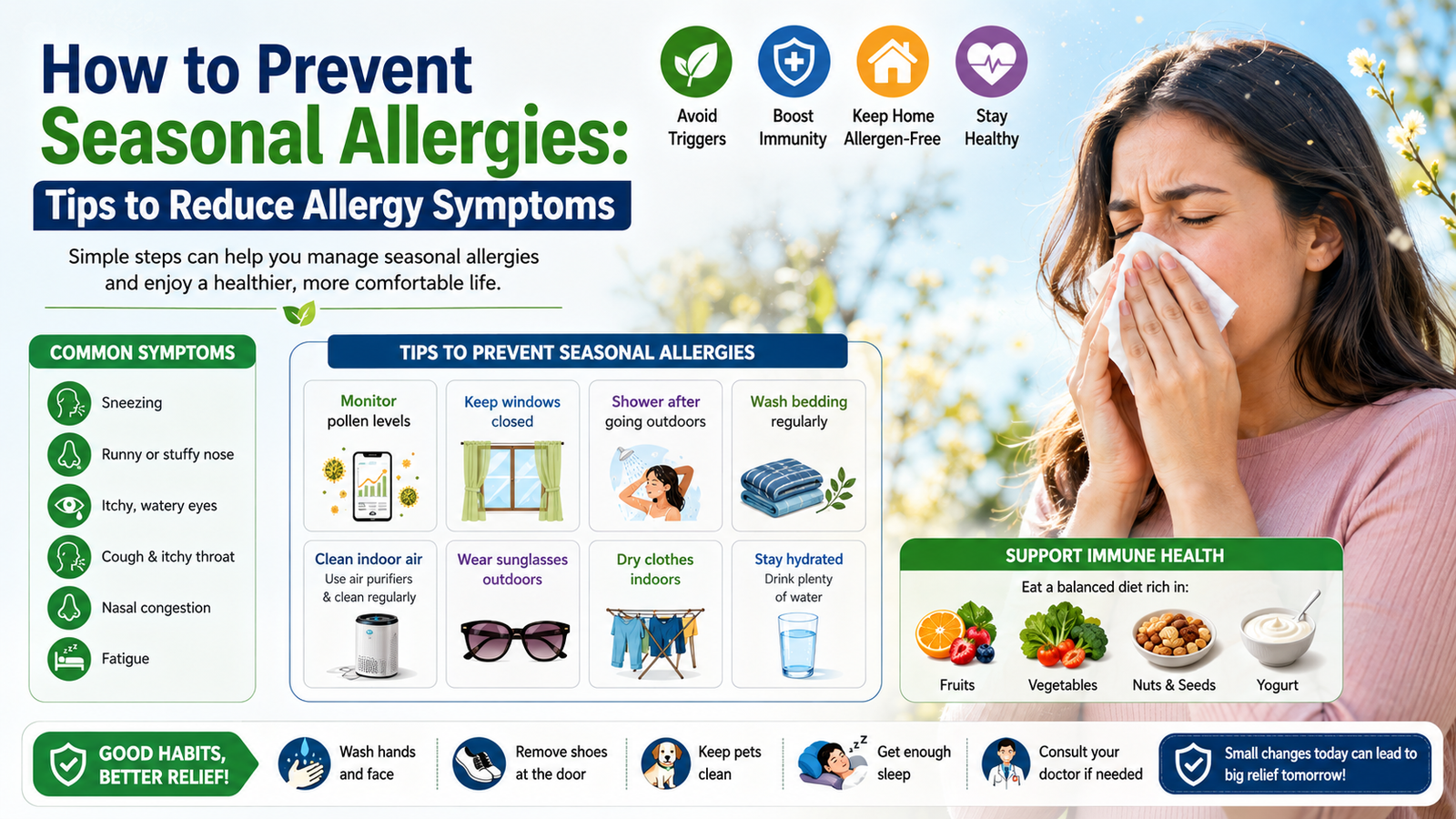
Symptoms may include:
- Sneezing
- Runny or stuffy nose
- Itchy eyes
- Watery eyes
- Itchy throat
- Cough
- Nasal congestion
- Fatigue caused by allergy symptoms
If symptoms are severe or persistent, consult a healthcare professional for proper diagnosis and treatment.
Tips to Prevent Seasonal Allergies
1. Monitor Pollen Levels
Check local pollen forecasts during allergy season.
On days when pollen counts are high:
- Limit outdoor activities when possible.
- Keep windows closed.
2. Keep Windows Closed
During high pollen seasons:
- Close home windows.
- Keep car windows closed while driving.
This helps reduce pollen entering indoor spaces.
3. Shower After Being Outdoors
Pollen can collect on:
- Hair
- Skin
- Clothing
Taking a shower and changing clothes after spending time outdoors may help reduce indoor exposure.
4. Wash Bedding Regularly
Wash:
- Bed sheets
- Pillowcases
- Blankets
Regular cleaning helps reduce pollen, dust, and other allergens.
5. Clean Indoor Air
Use high-quality air filters if available and keep indoor spaces clean.
Regularly:
- Vacuum floors
- Dust furniture
- Clean curtains and carpets
Follow the manufacturer’s instructions for maintaining air filters.
6. Wear Sunglasses Outdoors
Sunglasses can help reduce pollen contact with your eyes.
This may lessen eye irritation during high pollen days.
7. Dry Clothes Indoors During Peak Allergy Season
Outdoor clotheslines may allow pollen to collect on freshly washed clothing.
Drying clothes indoors can help reduce exposure.
8. Stay Hydrated
Drinking enough water supports overall health and may help keep the nose and throat comfortable.
9. Maintain Good Indoor Hygiene
Regular cleaning helps reduce allergens inside the home.
Focus on:
- Floors
- Rugs
- Upholstery
- Curtains
- Air vents
10. Follow Your Healthcare Professional’s Advice
If you have diagnosed seasonal allergies, follow the treatment plan recommended by your healthcare provider. Avoid starting or changing medications without professional guidance.
Foods That Support Overall Immune Health
Although no food can cure allergies, a balanced diet supports overall health.
Include:
- Citrus fruits
- Berries
- Leafy green vegetables
- Nuts
- Seeds
- Yogurt (if suitable)
- Whole grains
- Lean protein
Healthy eating works best alongside other allergy prevention measures.
Common Allergy Mistakes to Avoid
Managing seasonal allergies involves more than avoiding pollen. Some everyday habits can increase exposure to allergens without you realizing it.
Spending Too Much Time Outdoors During High Pollen Days
Pollen levels are often higher during certain times of the day and in windy weather.
If pollen counts are high:
- Limit unnecessary outdoor activities.
- Plan outdoor exercise when pollen levels are lower, if possible.
Forgetting to Wash Hands and Face
After spending time outside, pollen can remain on your:
- Hands
- Face
- Hair
Washing exposed skin may help reduce contact with allergens.
Bringing Outdoor Shoes Indoors
Shoes can carry pollen, dust, and dirt into your home.
Consider removing shoes at the entrance to help keep indoor spaces cleaner.
Ignoring Indoor Air Quality
Indoor allergens such as dust and mold can worsen allergy symptoms.
Keep your home clean by:
- Vacuuming regularly
- Dusting surfaces
- Controlling excess moisture to reduce mold growth
Skipping Medical Advice
If allergy symptoms become severe, persistent, or interfere with daily life, consult a qualified healthcare professional for proper evaluation and treatment.
Healthy Habits During Allergy Season
Simple daily habits can help reduce exposure to seasonal allergens.
- Wear a hat when spending time outdoors.
- Wash outdoor clothing after returning home.
- Keep pets clean if they spend time outside, as they can carry pollen indoors.
- Stay hydrated throughout the day.
- Maintain a healthy, balanced diet and get enough sleep to support overall well-being.
Frequently Asked Questions
What is the main cause of seasonal allergies?
Seasonal allergies are most commonly triggered by pollen from trees, grasses, and weeds. Mold spores can also contribute to symptoms in some seasons.
Can seasonal allergies be completely prevented?
It may not be possible to prevent seasonal allergies entirely, but reducing exposure to allergens and following appropriate medical advice can help manage symptoms.
When is allergy season?
The timing depends on the region and local climate. Tree pollen is often common in spring, grass pollen in late spring and summer, and weed pollen in late summer and autumn.
Can children develop seasonal allergies?
Yes. Seasonal allergies can occur in both children and adults. Symptoms should be evaluated by a healthcare professional if they are frequent or severe.
Do seasonal allergies cause fever?
Seasonal allergies typically do not cause fever. If you develop a fever along with respiratory symptoms, it may indicate another illness, and you should consult a healthcare professional.
Key Takeaways
- Seasonal allergies are commonly triggered by pollen, mold spores, and other airborne allergens.
- Common symptoms include sneezing, itchy eyes, runny nose, and nasal congestion.
- Keeping windows closed, monitoring pollen levels, showering after outdoor activities, and maintaining a clean indoor environment may help reduce allergen exposure.
- A balanced diet, adequate sleep, hydration, and good hygiene support overall health during allergy season.
- Seek medical advice if symptoms are severe, persistent, or interfere with daily activities.
Conclusion
Seasonal allergies can be uncomfortable, but adopting practical prevention strategies can make allergy season more manageable. Reducing exposure to pollen, maintaining a clean home, practicing good hygiene, and following healthy lifestyle habits can help minimize symptoms and improve quality of life. While allergies cannot always be avoided, consistent preventive measures and timely medical care can help you stay active and comfortable throughout the season.