Fresh vegetables are one of the most important parts of a healthy diet, yet they often spoil before they can be used. Wilted lettuce, soft tomatoes, moldy cucumbers, and sprouting potatoes are common problems in many households. Besides wasting money, spoiled vegetables also contribute to unnecessary food waste and make healthy eating more difficult. The good news is that you do not need expensive gadgets or chemical preservatives to keep vegetables fresh for longer.
Learning How to Store Vegetables Naturally can dramatically extend the life of your produce while maintaining its flavor, texture, and nutritional value. Simple practices such as separating certain vegetables, controlling moisture, using breathable storage containers, and understanding which vegetables belong in the refrigerator or pantry can make a remarkable difference.
In this comprehensive guide, you’ll discover practical storage methods for everyday vegetables, common mistakes to avoid, and expert-backed kitchen hacks that help reduce waste, save money, and make meal preparation easier. Whether you’re shopping weekly or harvesting vegetables from your own garden, these natural storage techniques will help you enjoy fresher produce every day.
Why Proper Vegetable Storage Matters
Proper vegetable storage is about much more than simply keeping food in the refrigerator. Every vegetable has unique storage needs based on its moisture content, respiration rate, and sensitivity to temperature. When vegetables are stored incorrectly, they lose water rapidly, become soft, develop mold, or begin to rot. Some vegetables also release natural gases that accelerate the ripening and spoilage of nearby produce.
Natural storage methods help preserve freshness without relying on chemical treatments. By understanding how different vegetables behave after harvest, you can significantly reduce waste, maintain better flavor, and retain valuable nutrients. Proper storage also supports meal planning by ensuring vegetables stay fresh throughout the week, making it easier to prepare healthy meals without frequent grocery trips.
Additional benefits include:
- Lower grocery expenses
- Less household food waste
- Better nutritional quality
- Longer vegetable shelf life
- Improved kitchen organization
- Reduced environmental impact
What Makes Vegetables Spoil Faster?
Vegetables continue to breathe after they are harvested. During this natural process, they consume oxygen and release carbon dioxide, moisture, and heat. Environmental factors such as humidity, airflow, temperature, and exposure to ethylene gas greatly influence how quickly vegetables deteriorate. Understanding these factors allows you to make better storage decisions and naturally extend freshness.
The main causes of premature spoilage include:
| Cause | Effect |
| Excess moisture | Mold and bacterial growth |
| High temperatures | Faster aging and wilting |
| Poor air circulation | Rot and unpleasant odors |
| Ethylene gas exposure | Premature ripening |
| Physical damage | Faster decay |
| Dirty storage containers | Increased bacterial contamination |
Recognizing these spoilage triggers is the first step toward building effective and natural vegetable storage habits that work in every kitchen.
Basic Rules for Storing Vegetables Naturally
Natural vegetable storage begins with a few universal principles that apply to almost every type of produce. Following these guidelines consistently can dramatically increase freshness while reducing unnecessary waste. Small changes in storage habits often produce the biggest improvements in shelf life.
1. Store Only Fresh Vegetables
Always inspect vegetables before putting them away. Remove damaged, bruised, or moldy items because they can quickly affect nearby produce. Starting with fresh vegetables gives you the best chance of extending their usable life.
2. Avoid Washing Before Storage
Many vegetables stay fresh longer when stored dry. Washing introduces excess moisture that encourages mold and bacterial growth. Instead, wash vegetables just before cooking or eating. Leafy greens are an exception if they are thoroughly dried after washing.
3. Control Moisture Levels
Too much moisture promotes spoilage, while too little causes vegetables to dry out. Paper towels placed inside storage containers can absorb excess moisture and help maintain the ideal environment for leafy vegetables.
4. Separate Ethylene-Producing Foods
Some fruits naturally produce ethylene gas, including:
- Apples
- Bananas
- Avocados
- Pears
- Peaches
Keep these fruits away from vegetables like lettuce, broccoli, cucumbers, carrots, and leafy greens, which are highly sensitive to ethylene and may spoil more quickly when stored together.
5. Use Breathable Storage Containers
Avoid completely airtight storage for most vegetables. Mesh bags, reusable produce bags, ventilated containers, and paper bags allow proper airflow while maintaining appropriate humidity. These options help prevent moisture buildup and reduce the risk of mold.
Refrigerator vs Pantry Storage: Which Is Better?
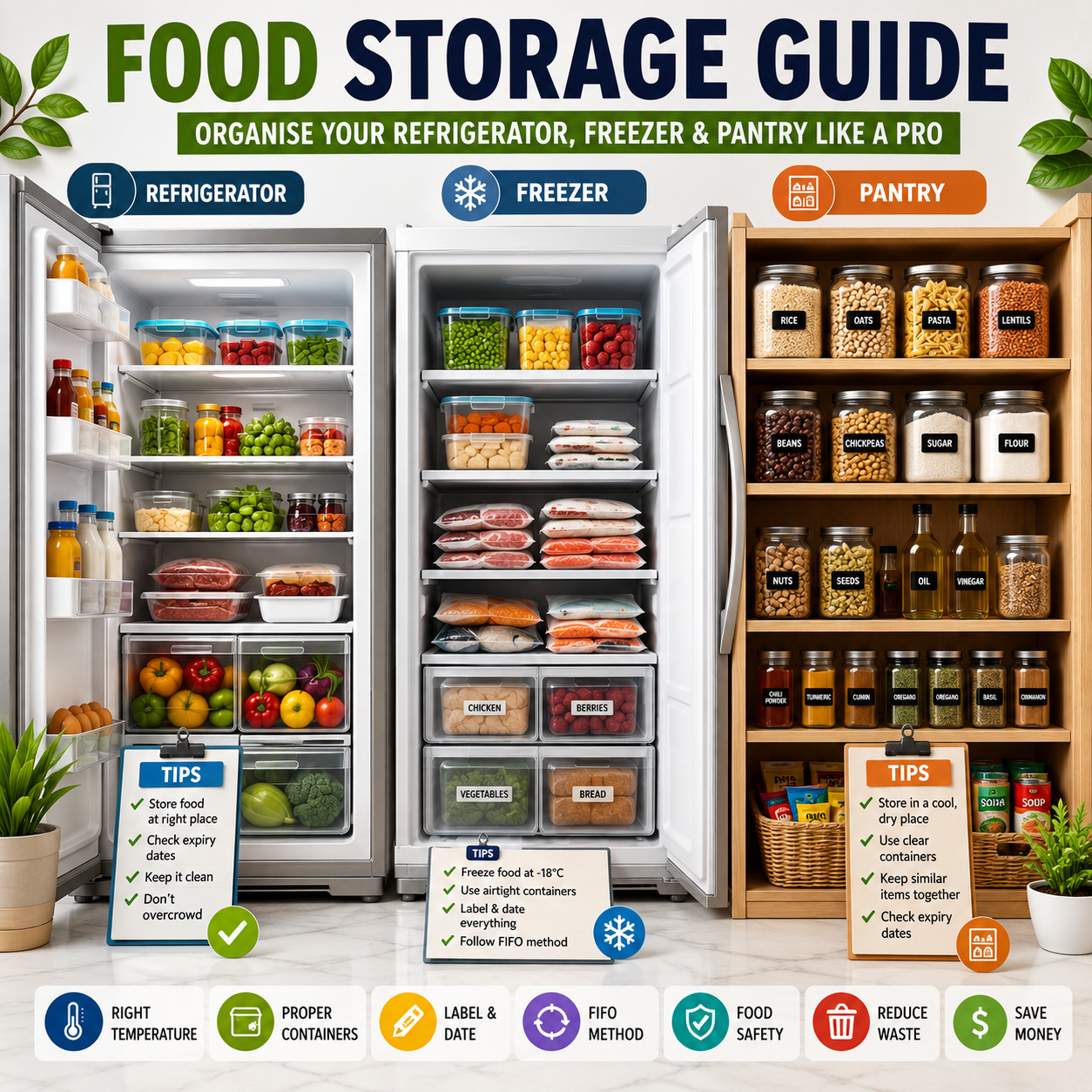
Not every vegetable belongs in the refrigerator. While cool temperatures extend the shelf life of many vegetables, others suffer from cold damage or lose flavor when refrigerated. Choosing the correct storage location is one of the easiest ways to naturally preserve freshness.
| Store in Refrigerator | Store in Pantry |
| Spinach | Potatoes |
| Broccoli | Onions |
| Lettuce | Garlic |
| Carrots | Sweet potatoes |
| Celery | Winter squash |
| Cauliflower | Pumpkins |
| Bell peppers | Shallots |
Vegetables kept in the pantry should be stored in a cool, dry, dark, and well-ventilated area. Refrigerated vegetables benefit from humidity-controlled drawers that reduce moisture loss while preventing excessive condensation.
Selecting the right storage environment for each vegetable not only extends freshness but also helps preserve taste, texture, and nutritional quality.
Natural Storage Methods for Different Vegetables
Different vegetables require different care because they contain varying amounts of water, sugars, and natural enzymes. Applying the right storage method to each type ensures maximum freshness while minimizing spoilage.
Leafy Greens
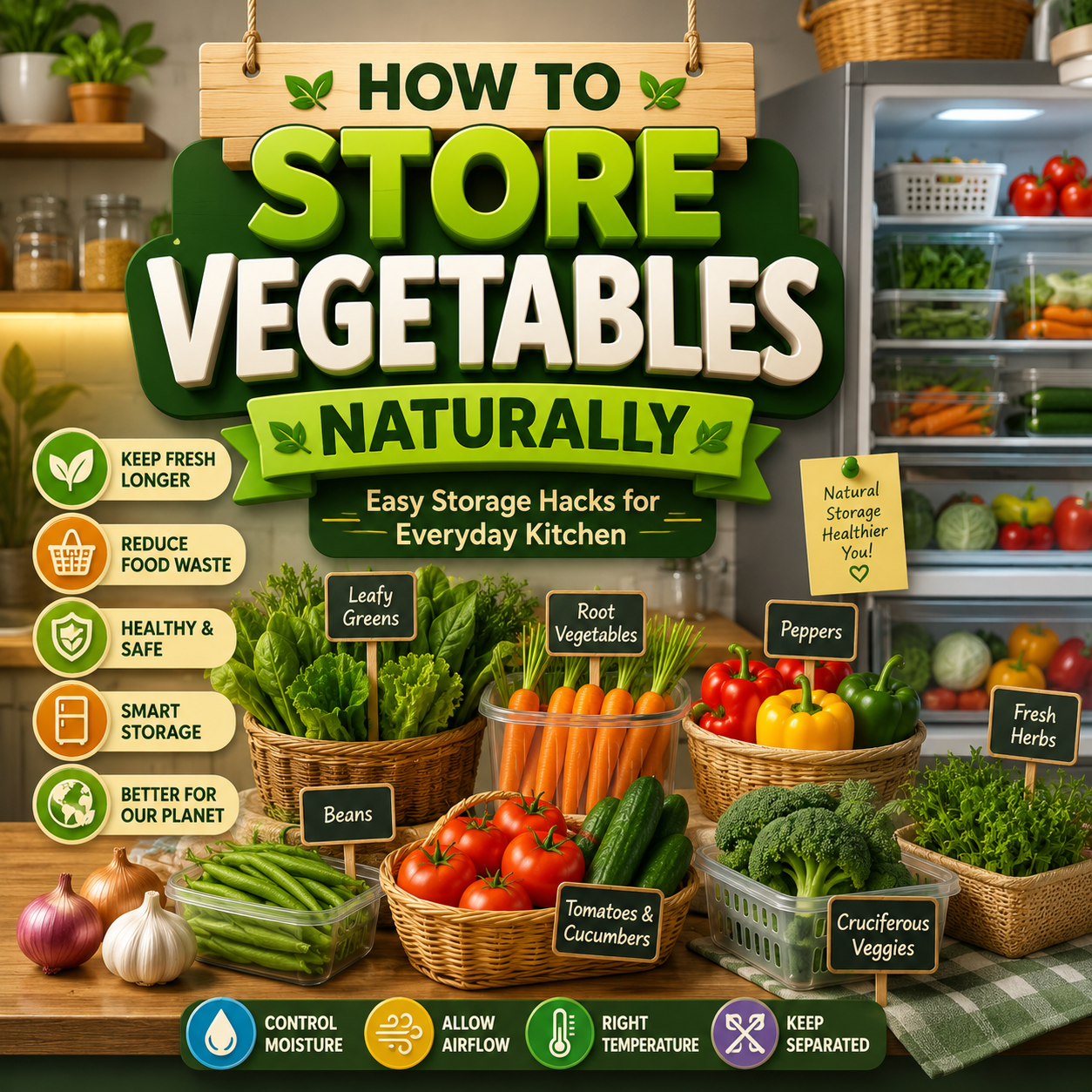
Leafy vegetables such as spinach, lettuce, kale, cilantro, and parsley lose moisture quickly. Without proper storage, they wilt within days. The best natural method is to gently wrap clean, dry leaves in paper towels before placing them in a breathable storage container or reusable produce bag. The paper towel absorbs excess moisture while maintaining enough humidity to keep the leaves crisp.
Check the paper towel every few days and replace it if it becomes damp. This simple technique can noticeably extend the freshness of leafy greens and reduce waste in your refrigerator.
Carrots
Carrots remain crisp when stored in the refrigerator with adequate humidity. Remove the leafy tops before storage because they continue drawing moisture from the roots, causing carrots to soften. Store carrots in a perforated plastic bag or reusable produce bag inside the crisper drawer.
For even longer storage, carrots can be placed in a container of clean water in the refrigerator. Change the water every few days to keep them fresh and crunchy.
Cucumbers
Cucumbers are sensitive to very cold temperatures and excessive moisture. Store them in the warmest part of the refrigerator, such as the upper shelf or refrigerator door, rather than the coldest drawer. Wrapping cucumbers loosely in a dry kitchen towel or paper towel helps absorb moisture while allowing adequate airflow.
Avoid storing cucumbers next to ethylene-producing fruits like bananas or apples, as this accelerates yellowing and softening.
Tomatoes
Tomatoes develop the best flavor when stored at room temperature until fully ripe. Refrigeration slows ripening and can alter their texture, making them mealy. Place tomatoes stem-side down on a countertop away from direct sunlight.
If tomatoes become overripe and cannot be used immediately, refrigeration can slow further deterioration for a short period. Allow refrigerated tomatoes to return to room temperature before eating to improve their flavor.
Potatoes
Potatoes last longest when stored in a cool, dark, dry, and well-ventilated place. A pantry, cellar, or cupboard away from direct sunlight is ideal. Exposure to light causes potatoes to turn green and produce solanine, a naturally occurring compound that can be harmful if consumed in large amounts. High humidity or sealed plastic bags can also encourage mold and sprouting.
Use a paper bag, burlap sack, or ventilated basket instead of airtight containers. Keep potatoes away from onions because both release gases and moisture that speed up spoilage. Check your potato supply weekly and remove any soft or sprouting potatoes to prevent them from affecting the rest.
Onions
Whole onions prefer a cool, dry location with good air circulation. Store them in mesh bags, wire baskets, or breathable containers to allow airflow. Avoid refrigerating whole onions unless they have been cut, as refrigeration can make them soft and encourage mold growth.
Once an onion is peeled or sliced, place it in a sealed container and refrigerate it. Use cut onions within a few days for the best flavor and food safety. Keeping onions separate from potatoes also helps extend the shelf life of both vegetables.
Garlic
Garlic stores naturally for several weeks or even months when kept in a dry, dark place with proper ventilation. Leave the bulbs intact until you’re ready to use them. Breaking bulbs apart too early reduces their storage life because individual cloves dry out faster.
Never store fresh garlic in sealed plastic bags, as trapped moisture promotes mold. A small basket, garlic keeper, or mesh container works well. Refrigerate peeled cloves only if you plan to use them within a few days.
Broccoli
Broccoli stays fresh longest in the refrigerator with moderate humidity. Wrap the stem loosely in a damp paper towel or place the broccoli in a perforated produce bag to balance moisture and airflow. Avoid tightly sealing broccoli because it continues to release moisture after harvest.
Use broccoli within five to seven days for the best taste and nutritional quality. If the florets begin turning yellow, the vegetable is aging but may still be suitable for cooking if there are no signs of spoilage.
Cauliflower
Cauliflower requires similar care to broccoli. Store the head stem-side down in the refrigerator to prevent moisture from collecting on the florets. A breathable produce bag helps reduce condensation while maintaining freshness.
Avoid washing cauliflower before storage. Wash it only before cooking to reduce excess moisture that can shorten its shelf life. Properly stored cauliflower often remains fresh for one to two weeks.
Bell Peppers
Bell peppers remain crisp when refrigerated in the vegetable crisper drawer. Store them whole without washing and keep them in a breathable produce bag or the original grocery bag with a few ventilation holes.
After slicing peppers, transfer them to an airtight container lined with a paper towel to absorb moisture. Using them within three to five days ensures the best texture and flavor.
Mushrooms
Mushrooms require careful moisture management because they absorb water easily. Store them in a paper bag inside the refrigerator instead of plastic packaging, which traps moisture and encourages sliminess.
Never wash mushrooms before storing them. Brush off dirt with a dry cloth or soft brush and rinse them only immediately before cooking. Proper storage helps mushrooms stay firm and flavorful for up to one week.
Herbs
Fresh herbs vary slightly in their storage needs, but many benefit from being treated like fresh flowers. Trim the stems and place herbs such as parsley, cilantro, and dill in a jar with a small amount of water. Cover the leaves loosely with a reusable produce bag and refrigerate.
Woody herbs like rosemary and thyme can be wrapped in a slightly damp paper towel and stored in a breathable container. These simple methods help herbs stay vibrant for several days longer.
Green Beans
Green beans remain crisp when refrigerated in a breathable produce bag or perforated container. Avoid washing them before storage because excess moisture speeds up spoilage.
Use green beans within five to seven days for the best flavor and texture. If they become limp but are not spoiled, they may still be suitable for soups or stir-fries.
Zucchini
Zucchini prefers cool temperatures but should not be stored in airtight containers. Keep it in a perforated produce bag inside the refrigerator and avoid washing until you’re ready to cook.
Use zucchini within one week. If the skin becomes wrinkled or develops soft spots, it is beginning to lose moisture and quality.
Best Containers for Natural Vegetable Storage
Choosing the right storage container is just as important as selecting the correct storage location. Containers that balance airflow and humidity help vegetables remain fresh longer without relying on artificial preservatives.
| Storage Container | Best For | Benefits |
| Reusable produce bags | Leafy greens, peppers | Breathable and eco-friendly |
| Glass containers | Cut vegetables | Keeps odors contained |
| Paper bags | Mushrooms, potatoes | Reduces moisture buildup |
| Mesh bags | Onions, garlic | Excellent air circulation |
| Ventilated plastic containers | Mixed vegetables | Balances humidity |
| Glass jars | Fresh herbs | Keeps stems hydrated |
| Bamboo baskets | Root vegetables | Natural ventilation |
Using reusable storage solutions also reduces plastic waste and supports a more sustainable kitchen.
Common Vegetable Storage Mistakes
Even with good intentions, a few common habits can shorten the life of fresh vegetables. Identifying these mistakes helps you protect your groceries and reduce unnecessary waste.
Washing Everything Immediately
While washing vegetables right after shopping seems convenient, storing them wet often encourages mold and bacterial growth. Wash produce only when you are ready to prepare it unless the vegetables can be dried thoroughly.
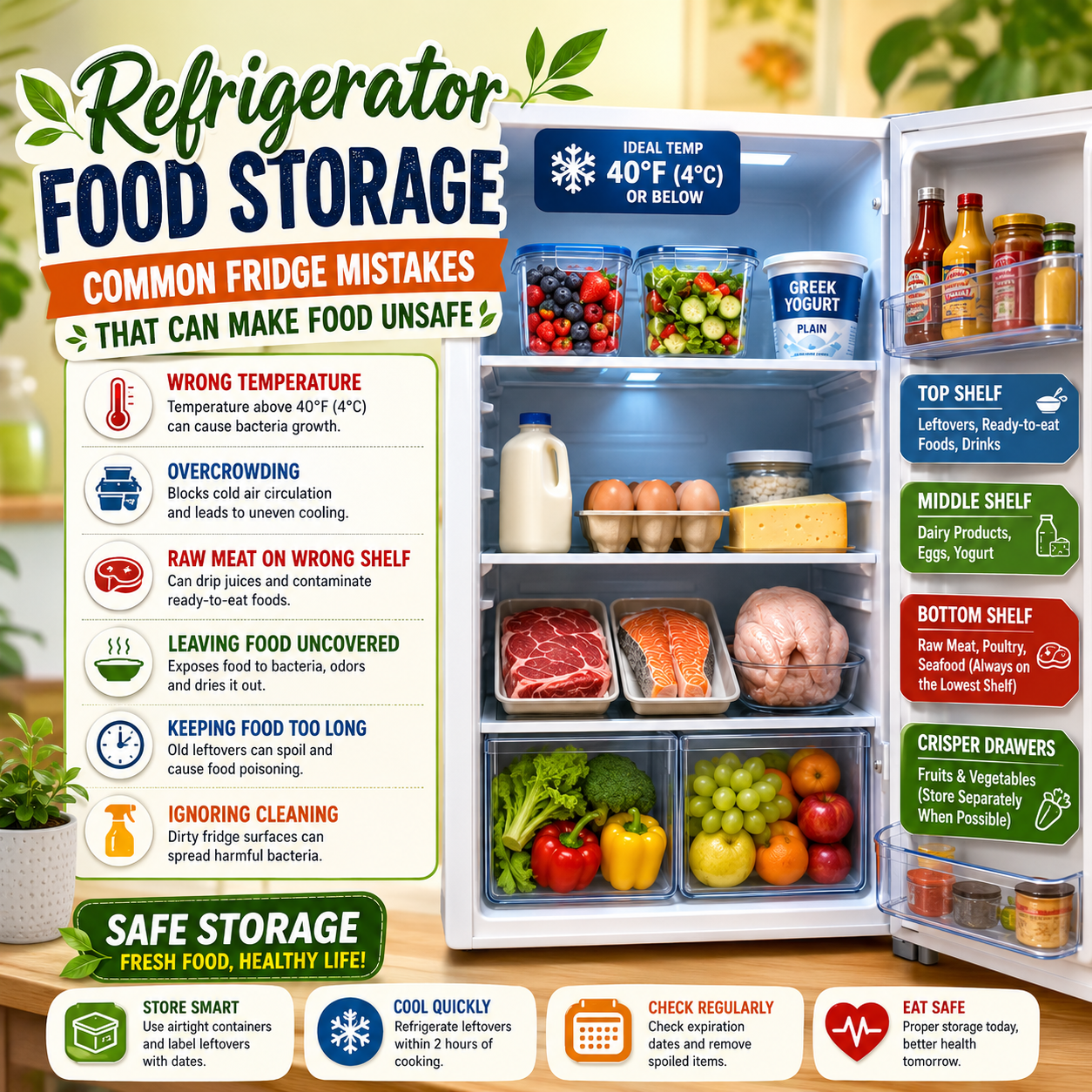
Overcrowding the Refrigerator
Stuffing vegetables into tightly packed drawers limits airflow and traps moisture. Leave enough space for cool air to circulate around produce, helping maintain freshness.
Mixing Fruits and Vegetables
Many fruits produce ethylene gas, which speeds ripening and spoilage in nearby vegetables. Separate ethylene-sensitive vegetables from fruits such as apples, bananas, pears, and avocados.
Ignoring Refrigerator Temperature
A refrigerator that is too warm allows bacteria to multiply more quickly, while temperatures that are too cold may damage sensitive vegetables. Maintaining a consistent temperature between 1°C and 4°C (34°F–40°F) helps preserve freshness.
Forgetting Older Produce
Practice the “first in, first out” method. Place older vegetables at the front so they are used before newer purchases. This simple habit significantly reduces food waste.
Weekly Vegetable Storage Routine
Creating a simple weekly routine helps keep your vegetables organized and fresh. Spending just a few minutes each week prevents forgotten produce from spoiling.
Day 1: Grocery Shopping
- Inspect vegetables for damage.
- Separate pantry vegetables from refrigerated ones.
- Remove any packaging that traps excess moisture.
- Store vegetables in appropriate containers.
Midweek Check
- Inspect leafy greens.
- Replace damp paper towels.
- Remove vegetables showing signs of spoilage.
- Reorganize produce so older items are visible.
End of the Week
- Use vegetables nearing the end of their shelf life.
- Prepare soups, stir-fries, or roasted vegetables.
- Freeze suitable vegetables if they won’t be used soon.
- Clean refrigerator drawers before the next shopping trip.
Following this routine minimizes waste while making meal planning much easier.
Seasonal Vegetable Storage Tips
Seasonal vegetables often last longer because they are fresher when purchased locally. Adjusting your storage methods according to the season can improve shelf life even further.
Spring
Store asparagus upright in water, similar to fresh herbs. Leafy greens benefit from breathable containers with paper towels to control moisture.
Summer
Tomatoes, cucumbers, and zucchini should be protected from excessive heat. Keep ripe tomatoes at room temperature and refrigerate only when necessary.
Autumn
Root vegetables such as carrots, beets, and turnips store well in cool, dark environments with moderate humidity. Check them regularly for signs of sprouting or softening.
Winter
Winter squash, pumpkins, onions, garlic, and potatoes naturally keep well in cool pantries. Ensure good ventilation and avoid storing them near heating appliances.
Expert Natural Storage Hacks
Small changes in daily habits can make a significant difference in vegetable freshness. Professional kitchens and experienced home cooks often rely on these simple, natural techniques.
- Line vegetable drawers with clean paper towels to absorb excess moisture.
- Label storage containers with purchase dates.
- Keep refrigerators clean to reduce bacterial contamination.
- Avoid cutting vegetables until needed.
- Freeze extra herbs in olive oil using ice cube trays.
- Revive wilted leafy greens by soaking them briefly in ice water before use.
- Rotate produce weekly to ensure older vegetables are used first.
- Buy only the quantity you expect to use within one week.
These practical habits help maximize freshness while reducing household food waste and grocery expenses.
Frequently Asked Questions (FAQs)
1. How long do fresh vegetables usually last?
Shelf life depends on the vegetable and storage conditions. Leafy greens generally last 5–7 days, carrots 2–4 weeks, broccoli about one week, and potatoes several weeks to months when stored correctly. Proper temperature, airflow, and moisture control significantly extend freshness.
2. Can vegetables be frozen for long-term storage?
Yes. Many vegetables freeze well after blanching, including broccoli, carrots, peas, green beans, and cauliflower. Freezing preserves nutrients and reduces food waste. Always store frozen vegetables in airtight freezer-safe containers or bags and label them with the freezing date.
3. Why should potatoes and onions be stored separately?
Potatoes release moisture while onions release gases that accelerate spoilage. Keeping them together encourages sprouting, mold growth, and shorter shelf life. Store each vegetable separately in breathable containers within a cool, dry pantry.
4. Is it safe to eat slightly wilted vegetables?
Slightly wilted vegetables are often safe if they have no mold, unpleasant odor, or slimy texture. Leafy greens can sometimes be revived in ice water, while soft vegetables may still be suitable for soups or cooked dishes.
5. What’s the best way to organize a refrigerator?
Store vegetables in humidity-controlled crisper drawers, keep fruits separate, place older produce at the front, and avoid overcrowding. Good organization improves airflow and helps you use vegetables before they spoil.
6. Are reusable produce bags better than plastic bags?
Yes. Reusable produce bags improve airflow, reduce condensation, and are environmentally friendly. Unlike sealed plastic bags, they help vegetables maintain proper humidity while reducing single-use plastic waste.
7. Can storing vegetables naturally save money?
Absolutely. Proper storage extends shelf life, reduces spoilage, minimizes grocery waste, and helps families use more of the produce they purchase. Over time, these habits can noticeably lower food expenses.
8. Should herbs be stored differently from vegetables?
Yes. Tender herbs like parsley and cilantro store well with stems in water, while woody herbs such as rosemary and thyme prefer wrapping in a slightly damp paper towel. These methods keep herbs fresh longer than simply placing them in the refrigerator.
9. What vegetables are most sensitive to ethylene gas?
Leafy greens, broccoli, cucumbers, carrots, cauliflower, and peppers are highly sensitive to ethylene gas. Keep them away from apples, bananas, pears, avocados, and other ethylene-producing fruits to prevent premature aging.
10. What are the easiest natural storage hacks?
Simple hacks include using paper towels to absorb moisture, storing vegetables in breathable containers, rotating produce weekly, labeling storage dates, separating fruits from vegetables, and maintaining a clean refrigerator. These habits require little effort but make a big difference.
Key Takeaways
- Store each vegetable according to its specific temperature and humidity needs.
- Avoid washing vegetables before storage unless they can be dried completely.
- Use breathable storage containers for better airflow.
- Keep ethylene-producing fruits away from sensitive vegetables.
- Inspect vegetables weekly and remove spoiled items immediately.
- Store potatoes, onions, and garlic in a cool, dark pantry.
- Maintain refrigerator temperatures between 1°C and 4°C (34°F–40°F).
- Plan meals to reduce unnecessary food waste.
- Reusable produce bags support both freshness and sustainability.
- Small storage improvements can save money and preserve nutrition.
Conclusion
Learning how to store vegetables naturally is one of the simplest ways to reduce food waste, protect your grocery budget, and enjoy fresher, healthier meals every day. By understanding the unique storage needs of different vegetables, controlling moisture, choosing breathable containers, and separating ethylene-producing fruits from sensitive produce, you can significantly extend shelf life without relying on artificial preservatives.
These practical storage habits also improve kitchen organization, simplify meal preparation, and help preserve the nutritional value of fresh vegetables. Whether you’re storing leafy greens, root vegetables, herbs, or seasonal produce, a little planning goes a long way toward keeping your ingredients at their best.
Start applying these natural storage techniques today and make them part of your regular kitchen routine. Over time, you’ll notice less spoilage, fewer grocery trips, and more confidence in preparing healthy meals with fresh vegetables. If you found this guide helpful, explore our other food storage and kitchen organization resources for more practical tips on reducing waste and eating well.
Read Our Latest Blog:Food Safety Tips: Daily Habits for Better Kitchen Hygiene and Food Safety