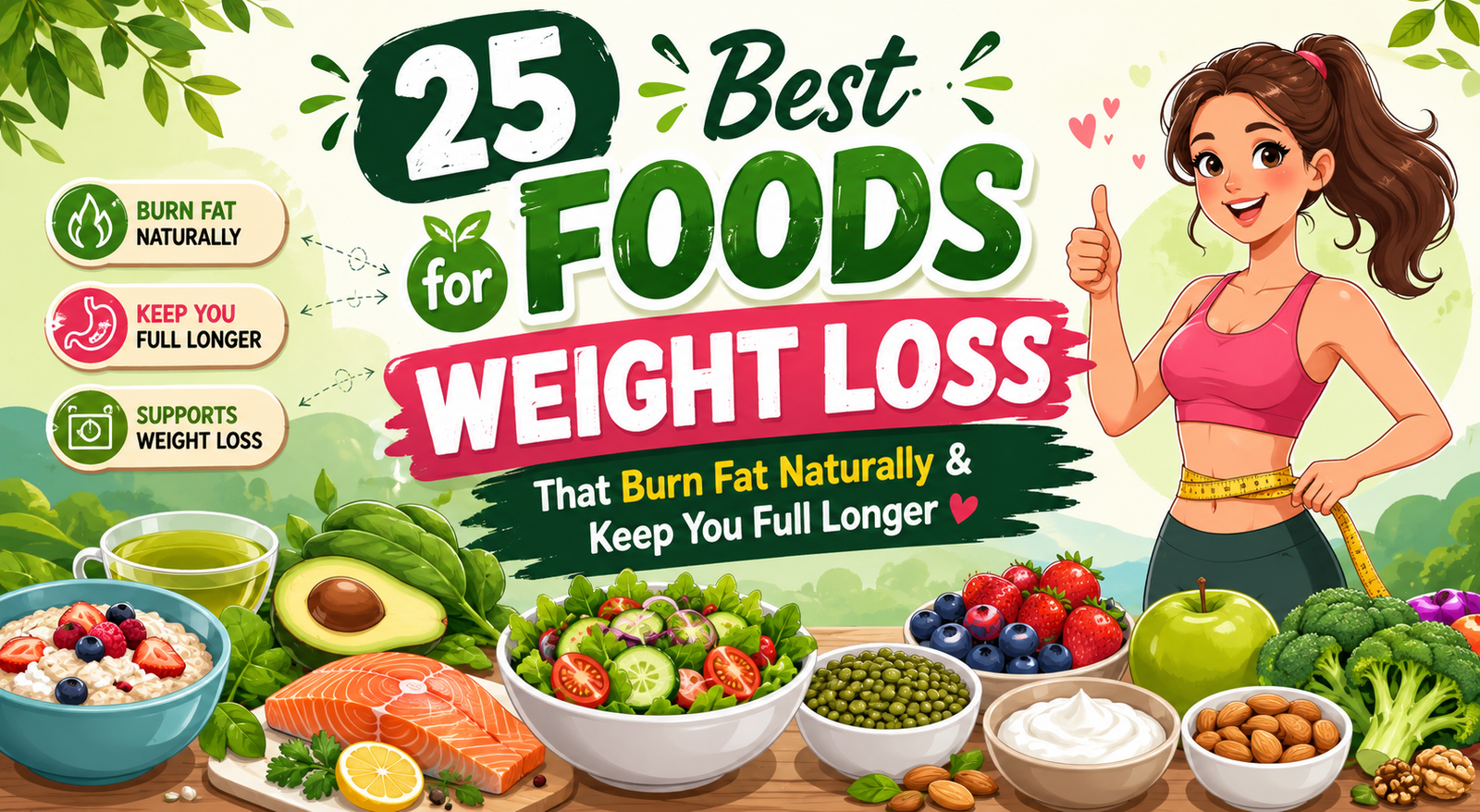
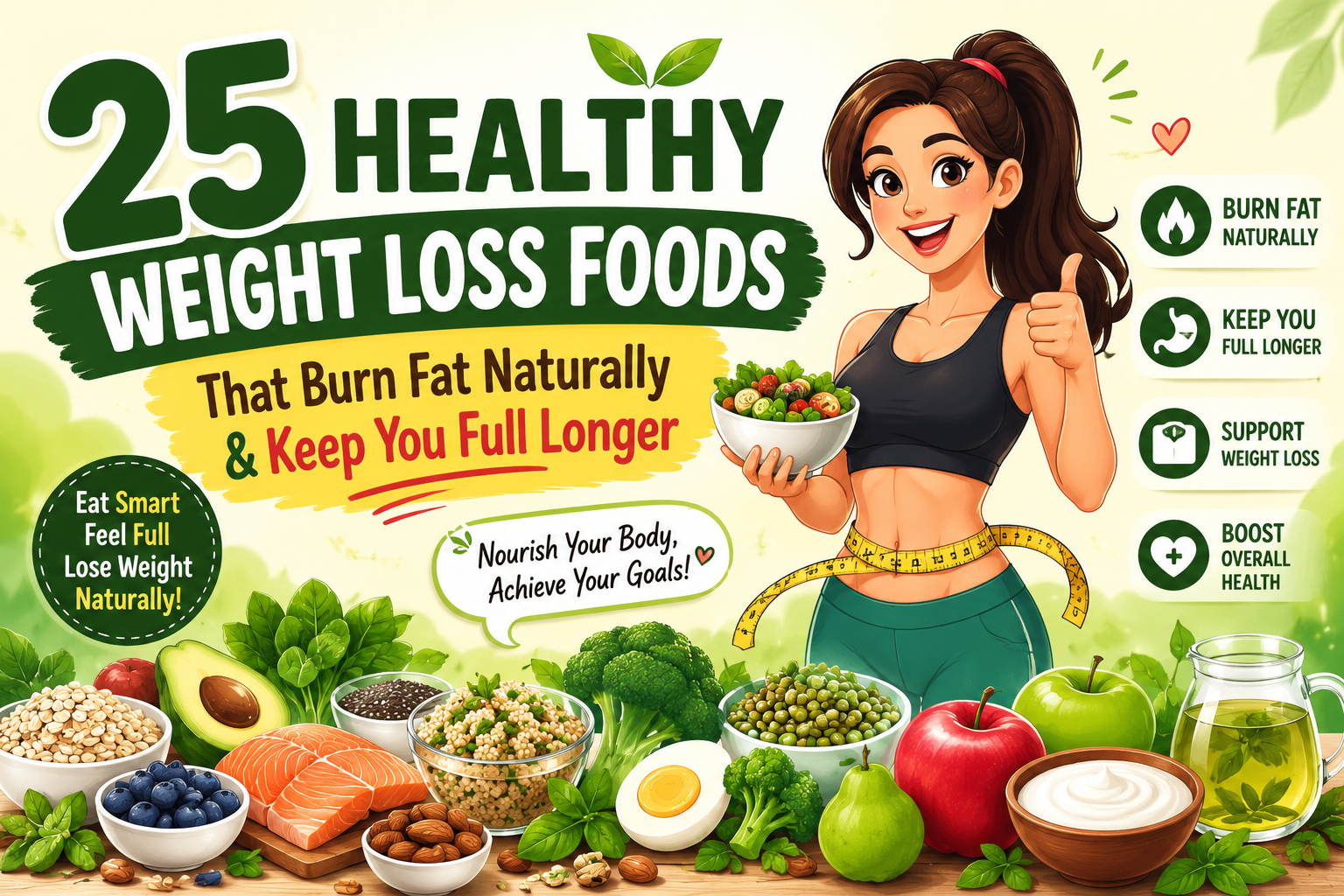
25 Healthy Weight Loss Foods That Burn Fat Naturally & Keep You Full Longer
Losing weight isn’t about starving yourself or following restrictive fad diets. Sustainable weight loss comes from making smarter food choices that nourish your body while helping you naturally consume fewer calories. The right foods can keep you satisfied for longer, stabilize blood sugar levels, support metabolism, and reduce unhealthy cravings throughout the day.
Healthy Weight Loss Foods are rich in nutrients like protein, fiber, healthy fats, vitamins, and minerals. These nutrients work together to promote fullness, preserve lean muscle during weight loss, and provide lasting energy. When combined with regular physical activity, quality sleep, and a balanced lifestyle, these foods can become powerful allies in achieving and maintaining a healthy weight.
In this comprehensive guide from PureWellLife, you’ll discover 25 science-backed foods that may support healthy weight management naturally. You’ll also learn why each food is beneficial, how to include it in your daily meals, and practical tips to maximize your results without following extreme diets. Whether you’re just beginning your weight-loss journey or looking to improve your current eating habits, this guide offers practical, evidence-based advice you can start using today.
Why Food Quality Matters for Weight Loss
Many people believe successful weight loss depends only on eating fewer calories. While maintaining a calorie deficit plays an important role, the quality of those calories matters just as much. Foods rich in protein, fiber, and healthy fats help regulate appetite, support muscle maintenance, and improve overall nutrition. In contrast, highly processed foods often contain added sugars and refined carbohydrates that digest quickly, leaving you hungry again soon after eating.
Choosing nutrient-dense foods makes it easier to stick with healthy eating habits over the long term because they provide greater satiety and essential nutrients without excessive calories. Rather than focusing on restriction, emphasizing wholesome foods creates a sustainable eating pattern that supports both weight management and overall health.
What Makes a Food Good for Weight Loss?
Not every low-calorie food supports healthy weight management. The best foods for weight loss provide a combination of nutrients that help control hunger, preserve muscle, and deliver steady energy. Understanding these characteristics can help you build balanced meals that are both satisfying and nutritious.
Key characteristics include:
- High protein content to increase fullness.
- Rich in dietary fiber to slow digestion.
- Low energy density, meaning fewer calories per serving.
- Packed with vitamins, minerals, and antioxidants.
- Minimal added sugars and refined ingredients.
- Easy to incorporate into everyday meals.
Foods with these qualities naturally support healthier eating habits by helping you stay full longer while meeting your nutritional needs.
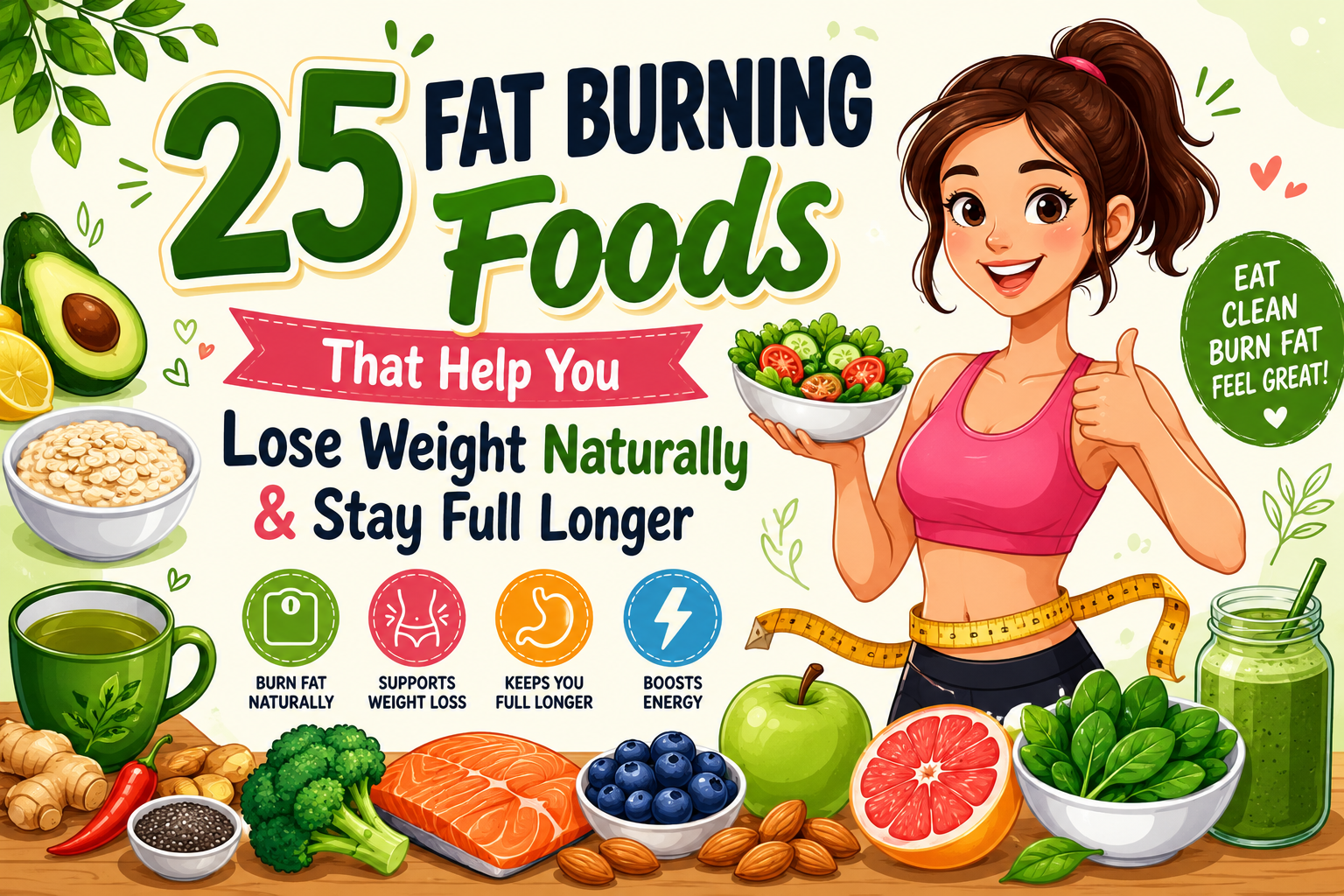
25 Healthy Weight Loss Foods That Burn Fat Naturally & Keep You Full Longer
1. Eggs
Eggs are among the most nutrient-dense breakfast foods available. They provide high-quality protein, healthy fats, and essential vitamins while remaining relatively low in calories. Eating protein-rich breakfasts may help reduce hunger later in the day, making it easier to avoid unnecessary snacking.
Eggs also contain nutrients such as choline, vitamin D, and selenium that support overall health. Whether boiled, poached, or scrambled with vegetables, eggs are a versatile addition to a balanced weight-loss diet.
Best ways to eat:
- Boiled eggs
- Vegetable omelet
- Poached eggs on whole-grain toast
- Egg muffins with spinach
2. Oats
Oats are one of the best whole grains for healthy weight management. They contain soluble fiber, particularly beta-glucan, which slows digestion and promotes lasting fullness. This gradual digestion also helps maintain steadier blood sugar levels compared with many refined breakfast cereals.
Because oats are highly versatile, they can be prepared in many healthy ways. Pairing oats with berries, nuts, or Greek yogurt creates a balanced breakfast containing fiber, protein, and healthy fats.
Benefits:
- High fiber
- Supports digestive health
- Promotes fullness
- Provides sustained energy
3. Greek Yogurt
Greek yogurt contains significantly more protein than regular yogurt, making it an excellent choice for people trying to lose weight. Protein supports muscle maintenance while increasing satiety, helping reduce overall calorie intake throughout the day.
Choose plain, unsweetened Greek yogurt to avoid excess added sugars. Adding fresh fruit, cinnamon, chia seeds, or chopped nuts provides natural sweetness and additional nutrients without compromising your health goals.
4. Leafy Greens
Leafy greens such as spinach, kale, Swiss chard, and romaine lettuce are incredibly low in calories while providing impressive amounts of vitamins, minerals, antioxidants, and dietary fiber. They add volume to meals without substantially increasing calorie intake.
These fat-burning vegetables make salads, soups, smoothies, and stir-fries more filling while contributing important nutrients such as vitamin K, folate, iron, and vitamin C.
Popular choices include:
- Spinach
- Kale
- Romaine lettuce
- Arugula
- Swiss chard
5. Apples
Apples are naturally high in water and dietary fiber, making them filling despite being relatively low in calories. Eating whole apples instead of drinking fruit juice provides more fiber and requires more chewing, both of which may help promote satiety.
Apples also contain polyphenols and antioxidants that contribute to overall health. Enjoy them as a convenient snack or pair them with a small amount of peanut butter for added protein and healthy fats.
6. Berries
Blueberries, strawberries, raspberries, and blackberries are nutritional powerhouses packed with fiber, antioxidants, and vitamin C. Their natural sweetness makes them a healthier alternative to sugary desserts while still satisfying sweet cravings.
Because berries are relatively low in calories yet rich in nutrients, they fit easily into balanced meal plans aimed at healthy weight management. Add them to oatmeal, yogurt, smoothies, or simply enjoy them fresh.
7. Salmon
Salmon provides high-quality protein along with heart-healthy omega-3 fatty acids. Protein helps maintain lean muscle during weight loss, while healthy fats contribute to greater satisfaction after meals.
Regularly including fatty fish like salmon in a balanced eating pattern supports overall cardiovascular health and provides nutrients such as vitamin D, selenium, and B vitamins.
Healthy preparation methods include:
- Baking
- Grilling
- Air frying
- Steaming
Avoid deep frying to keep calorie intake under control.
8. Chicken Breast
Skinless chicken breast is one of the leanest protein sources available. It delivers substantial protein with relatively little fat, making it popular among people focused on weight management and muscle maintenance.
Protein-rich meals can help reduce appetite and support recovery after exercise. Pair grilled chicken breast with vegetables and whole grains for a balanced, satisfying meal that supports long-term health rather than quick-fix dieting.
9. Lentils
Lentils are rich in plant-based protein, dietary fiber, iron, and complex carbohydrates. Their combination of protein and fiber helps promote fullness, making them one of the most satisfying plant foods available.
Lentils are affordable, versatile, and work well in soups, curries, salads, and grain bowls. Because they digest slowly, they may help support more stable blood sugar levels and reduce hunger between meals.
10. Beans
Beans such as black beans, kidney beans, chickpeas, and pinto beans are excellent additions to any weight loss foods list. They are naturally rich in fiber, protein, and important minerals while remaining relatively low in fat.
Including beans regularly may help improve meal satisfaction and reduce reliance on highly processed foods. They can be added to salads, wraps, soups, tacos, or homemade chili for an easy nutritional boost.
11. Broccoli
Broccoli is one of the most nutritious fat-burning vegetables you can include in your diet. It is naturally low in calories yet rich in fiber, vitamin C, vitamin K, folate, potassium, and plant compounds that support overall health. The high fiber content slows digestion, helping you feel satisfied for longer and reducing the urge to snack between meals.
This cruciferous vegetable is also incredibly versatile. Steam it as a side dish, roast it with olive oil and herbs, add it to stir-fries, or blend it into soups. Cooking broccoli lightly helps preserve many of its nutrients while making it easier to digest. Regularly eating broccoli supports healthy eating habits and makes balanced meals more filling without significantly increasing calorie intake.
Healthy serving ideas:
- Steamed broccoli with grilled chicken
- Roasted broccoli with garlic
- Broccoli stir-fry with tofu
- Broccoli soup made with low-fat ingredients
12. Cauliflower
Cauliflower is another nutrient-rich cruciferous vegetable that deserves a place on every weight loss foods list. Its mild flavor makes it an excellent substitute for higher-calorie ingredients like white rice, mashed potatoes, and pizza crust. This simple swap can reduce calorie intake while increasing fiber and essential nutrients.
Rich in vitamin C, fiber, and antioxidants, cauliflower supports digestive health and contributes to greater meal satisfaction. Whether roasted, mashed, steamed, or blended into soups, it is a flexible ingredient that fits many healthy recipes and eating styles.
13. Avocados
Although avocados contain more calories than many fruits, they are packed with heart-healthy monounsaturated fats, fiber, potassium, and several vitamins. Healthy fats digest more slowly, helping increase satiety and making meals more satisfying. Portion control remains important, but moderate servings can support balanced eating.
Instead of avoiding avocados because of their calorie content, enjoy them as part of nutrient-dense meals. Adding sliced avocado to salads, sandwiches, or grain bowls provides creaminess while supplying valuable nutrients that contribute to overall wellness.
Best serving size:
- About one-quarter to one-half of a medium avocado per meal.
14. Chia Seeds
Tiny but incredibly nutritious, chia seeds provide fiber, plant-based protein, healthy omega-3 fats, calcium, and magnesium. When mixed with liquid, they absorb water and form a gel-like texture that may promote fullness and reduce hunger.
Because they have a mild flavor, chia seeds are easy to incorporate into many meals. Sprinkle them over oatmeal, blend them into smoothies, stir them into yogurt, or prepare overnight chia pudding for a satisfying breakfast or snack.
15. Flaxseeds
Flaxseeds are another excellent source of dietary fiber and plant-based omega-3 fatty acids. They also contain lignans, natural compounds with antioxidant properties. Ground flaxseeds are generally easier to digest than whole seeds and allow your body to absorb more nutrients.
Adding one or two tablespoons of ground flaxseed to smoothies, oatmeal, yogurt, or baked goods can increase both fiber and healthy fat intake, making meals more satisfying while supporting digestive health.
16. Cottage Cheese
Cottage cheese is rich in protein and relatively low in calories, making it an excellent food for healthy weight management. Protein helps preserve lean muscle mass during weight loss while also increasing feelings of fullness after meals.
Choose low-fat or reduced-fat varieties if appropriate for your dietary needs, and pair cottage cheese with fresh berries, sliced cucumber, tomatoes, or herbs for a balanced snack. Its versatility makes it suitable for breakfast, lunch, or an evening meal.
17. Sweet Potatoes
Sweet potatoes provide complex carbohydrates, dietary fiber, potassium, vitamin A, and antioxidants. Unlike refined carbohydrates, they digest more slowly and provide a steadier source of energy throughout the day.
Baking or roasting sweet potatoes preserves their natural sweetness without requiring excessive added fats or sugars. Pair them with lean protein and vegetables for a balanced meal that supports long-term healthy eating rather than temporary dieting.
18. Quinoa
Quinoa is a nutrient-dense whole grain that contains all nine essential amino acids, making it a complete plant protein. It also supplies fiber, magnesium, iron, and several B vitamins that support energy metabolism.
Its combination of protein and fiber helps make meals more filling compared to many refined grains. Use quinoa as a base for salads, grain bowls, soups, or as a substitute for white rice in many recipes.
19. Almonds
Almonds are rich in healthy fats, protein, vitamin E, magnesium, and fiber. While they are calorie-dense, moderate portions can help satisfy hunger and reduce cravings for less nutritious snacks.
Portion size matters. A small handful—about 23 almonds—is generally considered an appropriate serving. Choosing unsalted almonds without added sugar or flavorings provides the greatest nutritional benefit.
Healthy snack ideas:
- Almonds with fresh fruit
- Almond butter on apple slices
- Chopped almonds over oatmeal
- Mixed with plain Greek yogurt
20. Green Tea
Green tea is a refreshing beverage that contains antioxidants known as catechins along with a moderate amount of caffeine. Research suggests these compounds may modestly support metabolism when combined with a healthy diet and regular physical activity. However, green tea alone is not a magic solution for weight loss.
Replacing sugary beverages with unsweetened green tea can reduce overall calorie intake while increasing hydration. Enjoy it hot or iced without added sugar for the greatest benefit.
21. Mushrooms
Mushrooms are naturally low in calories while providing important nutrients such as selenium, potassium, B vitamins, and antioxidants. Their savory flavor and meaty texture make them an excellent substitute for higher-calorie ingredients in many dishes.
Add mushrooms to omelets, stir-fries, soups, pasta dishes, or salads to increase volume and nutrition without significantly increasing calories. Their versatility makes them a valuable ingredient in healthy meal planning.
22. Cucumbers
Cucumbers consist mostly of water, making them exceptionally hydrating and low in calories. They also provide small amounts of vitamin K, potassium, and antioxidants. Because they add crunch and volume to meals, cucumbers help create satisfying dishes without contributing many calories.
Enjoy sliced cucumbers with hummus, add them to salads, or infuse water with cucumber slices for a refreshing drink that encourages hydration throughout the day.
23. Bell Peppers
Bell peppers are colorful vegetables packed with vitamin C, vitamin A, antioxidants, and fiber. Their natural sweetness makes them a healthy alternative to processed snacks while adding flavor and texture to meals.
Whether eaten raw, roasted, grilled, or stuffed with lean protein and whole grains, bell peppers provide essential nutrients that support overall health and fit easily into a balanced eating pattern.
24. Grapefruit
Grapefruit is a refreshing citrus fruit that contains vitamin C, fiber, and plenty of water. Eating whole grapefruit before meals may help some people feel fuller, potentially reducing calorie intake. However, grapefruit can interact with certain medications, so consult your healthcare provider if you take prescription medicines.
Choose whole fruit rather than juice to benefit from the fiber content and avoid consuming excess natural sugars in liquid form.
25. Tofu
Tofu is an excellent plant-based protein made from soybeans. It provides complete protein, calcium (when calcium-set), iron, and several essential minerals while remaining relatively low in saturated fat.
Its mild flavor allows it to absorb seasonings well, making tofu suitable for stir-fries, salads, soups, curries, and grilled dishes. Tofu is an excellent protein option for vegetarians, vegans, and anyone seeking greater variety in their meals.
How to Include Healthy Weight Loss Foods in Your Daily Diet
Knowing which foods support weight management is only the first step. Consistently incorporating them into balanced meals is what makes the biggest difference over time. Rather than making dramatic dietary changes overnight, start by replacing one or two processed foods each day with healthier alternatives.
A practical approach is to build each meal around lean protein, colorful vegetables, whole grains, and healthy fats. This combination helps promote satiety while providing the nutrients your body needs for energy, recovery, and overall health. Planning meals in advance, preparing healthy snacks, and keeping nutritious ingredients readily available can also reduce the temptation to choose convenience foods that are often high in added sugars and unhealthy fats.
Comparison Table: Healthy Weight Loss Foods at a Glance
| Food | Key Nutrient | Main Benefit |
| Eggs | Protein | Keeps you full longer |
| Oats | Soluble Fiber | Supports appetite control |
| Greek Yogurt | Protein | Helps preserve muscle |
| Leafy Greens | Fiber | Low calories, high volume |
| Apples | Fiber | Healthy snack option |
| Berries | Antioxidants | Naturally satisfy sweet cravings |
| Salmon | Omega-3 + Protein | Supports heart health |
| Chicken Breast | Lean Protein | Promotes satiety |
| Lentils | Protein + Fiber | Long-lasting fullness |
| Beans | Fiber | Supports digestion |
| Broccoli | Fiber | Adds volume to meals |
| Cauliflower | Fiber | Healthy substitute for refined carbs |
| Avocado | Healthy Fats | Keeps meals satisfying |
| Chia Seeds | Fiber | Helps reduce hunger |
| Flaxseeds | Omega-3 | Supports digestive health |
| Cottage Cheese | Protein | Low-calorie snack |
| Sweet Potatoes | Complex Carbs | Sustained energy |
| Quinoa | Complete Protein | Balanced nutrition |
| Almonds | Healthy Fats | Curbs cravings |
| Green Tea | Antioxidants | Healthy beverage choice |
| Mushrooms | Low Calories | Adds volume to meals |
| Cucumbers | Water | Hydration |
| Bell Peppers | Vitamin C | Nutrient-rich snack |
| Grapefruit | Fiber | Filling fruit |
| Tofu | Plant Protein | Vegetarian protein source |
Expert Tips for Healthy Weight Loss
Healthy eating works best when combined with sustainable lifestyle habits. Nutrition experts consistently recommend focusing on consistency rather than perfection. Small improvements repeated daily often lead to better long-term results than extreme diets that are difficult to maintain.
Follow these practical tips:
- Prioritize protein at every meal.
- Fill half your plate with vegetables.
- Choose whole foods over ultra-processed foods.
- Drink enough water throughout the day.
- Practice mindful eating by slowing down during meals.
- Get adequate sleep each night.
- Stay physically active most days of the week.
- Prepare healthy meals ahead of busy days.
- Limit sugary drinks and excessive alcohol.
- Aim for gradual, sustainable weight loss instead of rapid results.
Common Mistakes to Avoid
Many people unintentionally make choices that slow progress despite eating what they believe are healthy foods. Avoiding these common mistakes can make healthy eating more effective and easier to sustain over time.
Some frequent pitfalls include skipping meals, relying on highly processed “diet” foods, drinking calories through sugary beverages, ignoring portion sizes, and expecting immediate results. Weight management is influenced by many factors, including nutrition, physical activity, sleep, stress, and overall consistency. Building balanced habits is far more effective than following restrictive eating patterns that cannot be maintained.
Frequently Asked Questions (FAQs)
1. What are Healthy Weight Loss Foods?
Healthy Weight Loss Foods are nutrient-dense foods that help you feel full while providing essential nutrients. They typically contain protein, fiber, healthy fats, vitamins, and minerals. Examples include eggs, vegetables, legumes, whole grains, fruits, fish, and lean proteins. They support healthy eating habits and can be part of an overall weight-management plan.
2. Can one food help me lose weight faster?
No single food can cause significant weight loss on its own. Weight management depends on your overall eating pattern, physical activity, sleep, stress, and consistency over time. Certain foods may help reduce hunger or improve meal satisfaction, but they work best as part of a balanced lifestyle rather than a standalone solution.
3. How much protein should I eat for weight loss?
Protein needs vary based on age, activity level, body size, and health status. Including a quality protein source with each meal—such as eggs, fish, poultry, beans, tofu, or Greek yogurt—can support fullness and muscle maintenance. If you have specific health concerns, consult a registered dietitian or healthcare provider for personalized guidance.
4. Are frozen fruits and vegetables healthy?
Yes. Frozen fruits and vegetables are often picked and frozen at peak ripeness, helping preserve many nutrients. They are convenient, affordable, and reduce food waste. Choose varieties without added sauces, sugar, or excessive sodium to get the greatest nutritional benefit.
5. Should I completely avoid sugar to lose weight?
Completely eliminating sugar is not necessary for most people. Instead, aim to limit foods and beverages high in added sugars while enjoying naturally sweet foods like fruit. Reading nutrition labels and choosing minimally processed foods can help reduce added sugar intake without making your eating plan overly restrictive.
Key Takeaways
- Choose whole, minimally processed foods whenever possible.
- Include protein and fiber at every meal to stay full longer.
- Fill half your plate with vegetables and fruits.
- Replace refined grains with whole grains like oats and quinoa.
- Healthy fats from nuts, seeds, avocados, and fish support balanced nutrition.
- Portion control is important, even with nutritious foods.
- Stay hydrated and limit sugar-sweetened beverages.
- Combine healthy eating with regular physical activity and quality sleep.
- Sustainable habits produce better long-term results than crash diets.
- Consistency is the key to successful and lasting weight management.
Conclusion
Healthy weight loss is not about following restrictive diets or searching for a single “miracle” food. Instead, it comes from consistently choosing nutritious, satisfying foods that support your body’s needs while helping you maintain a healthy calorie balance. The 25 Healthy Weight Loss Foods covered in this guide—including lean proteins, whole grains, fruits, vegetables, legumes, healthy fats, and plant-based proteins—can help you build balanced meals that keep you energized and satisfied.
Remember that no individual food burns body fat by itself. Long-term success comes from combining smart food choices with regular physical activity, adequate sleep, stress management, and realistic expectations. Small, sustainable improvements often produce better results than drastic changes that are difficult to maintain.
At PureWellLife, our goal is to provide practical, evidence-based health information that empowers you to make informed lifestyle choices. Start by adding a few of these healthy foods to your weekly meal plan, experiment with new recipes, and focus on building habits you can enjoy for years to come. If you found this guide helpful, explore more nutrition and wellness resources on https://purewelllife.com/ to continue your journey toward a healthier, happier life.