Eye Infection Prevention Tips
Your eyes are among the most delicate and important organs in your body. Every day, they are exposed to dust, pollution, bacteria, viruses, allergens, and other irritants that can increase the risk of eye infections. While many eye infections are mild, some can lead to discomfort, blurred vision, or even serious complications if left untreated.
Fortunately, most eye infections can be prevented by following simple hygiene practices and healthy daily habits. Taking care of your eyes not only reduces the risk of infection but also supports long-term eye health and clear vision.
What Is an Eye Infection?
An eye infection occurs when harmful microorganisms such as bacteria, viruses, fungi, or parasites affect different parts of the eye or surrounding tissues. Eye infections may involve the eyelids, conjunctiva (the clear membrane covering the white part of the eye), cornea, or tear ducts.
Prompt diagnosis and proper treatment are important to prevent complications.
Common Types of Eye Infections
Conjunctivitis (Pink Eye)
Conjunctivitis is one of the most common eye infections. It causes redness, irritation, itching, watering, and discharge from the eyes.
Stye
A stye is a painful, red bump that develops near the edge of the eyelid due to a blocked oil gland or bacterial infection.
Keratitis
Keratitis is an infection or inflammation of the cornea. It is more common in people who wear contact lenses improperly.
Blepharitis
Blepharitis is inflammation of the eyelids that may cause redness, crusting, itching, and irritation.
Common Causes of Eye Infections
Eye infections may develop due to several factors, including:
- Poor hand hygiene
- Touching the eyes with dirty hands
- Improper contact lens care
- Sharing eye makeup or towels
- Exposure to contaminated water
- Viral or bacterial infections
- Allergies that lead to frequent eye rubbing
- Weakened immune system
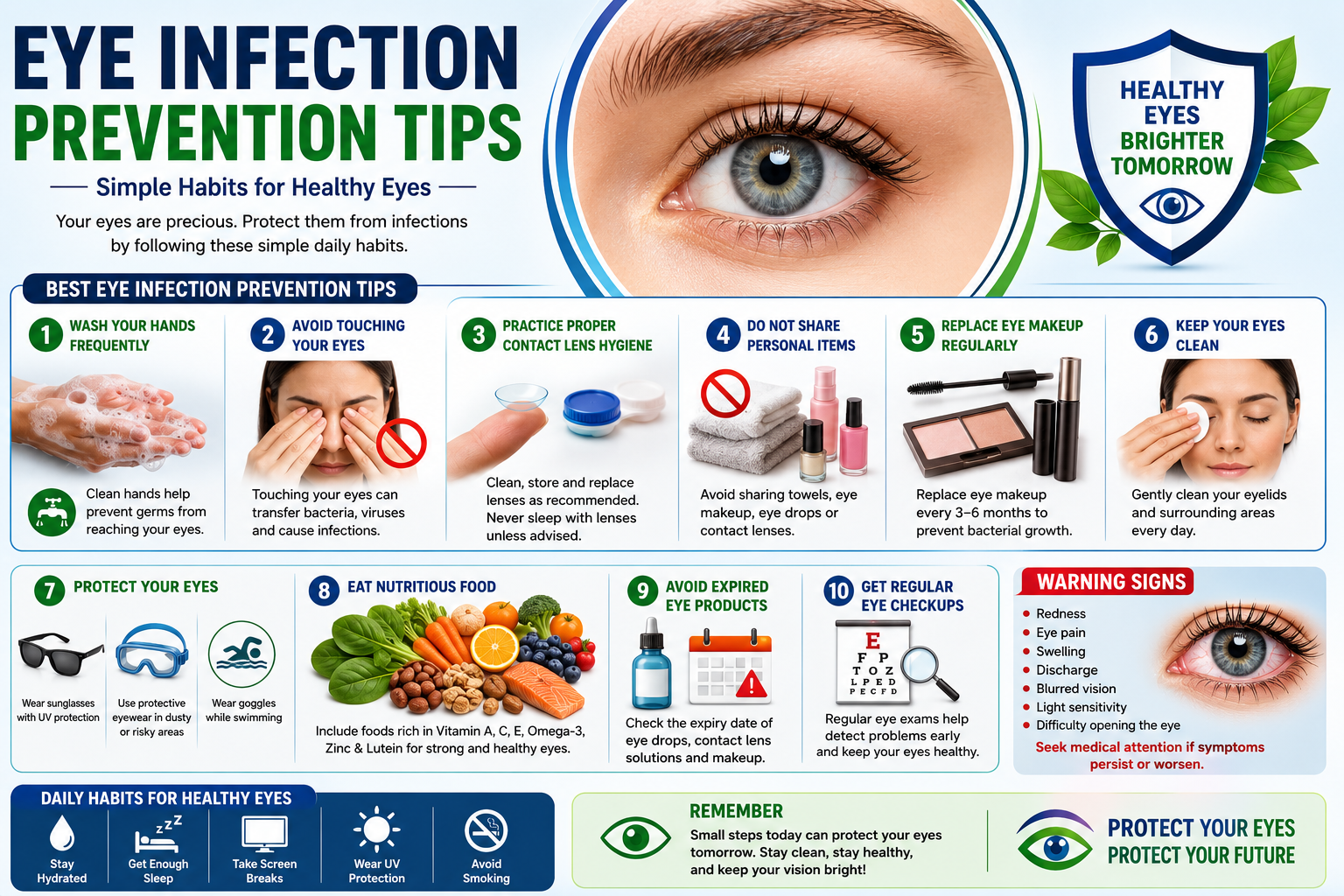
Best Eye Infection Prevention Tips
1. Wash Your Hands Frequently
Clean hands are your first line of defense against eye infections.
Wash your hands thoroughly with soap and water before:
- Touching your eyes
- Applying contact lenses
- Using eye drops
- Applying makeup
- Cleaning your eyelids
When soap and water are unavailable, use an alcohol-based hand sanitizer.
2. Avoid Touching Your Eyes
Many germs spread through your hands.
Avoid rubbing or touching your eyes unless your hands are clean.
This simple habit significantly reduces the risk of transferring bacteria and viruses to your eyes.
3. Practice Proper Contact Lens Hygiene
If you wear contact lenses:
- Wash your hands before handling lenses.
- Clean lenses using recommended solutions.
- Replace lenses as directed.
- Never sleep while wearing lenses unless specifically approved.
- Replace contact lens cases regularly.
Improper contact lens care is one of the leading causes of preventable eye infections.
4. Do Not Share Personal Items
Avoid sharing:
- Towels
- Pillowcases
- Eye drops
- Makeup
- Contact lenses
- Makeup brushes
Sharing personal items can spread bacteria and viruses between individuals.
5. Replace Eye Makeup Regularly
Old makeup can become contaminated with bacteria over time.
Experts generally recommend replacing:
- Mascara every 3 months
- Liquid eyeliner every 3–6 months
- Eye shadow according to manufacturer recommendations
Never use eye makeup during an active eye infection.
6. Keep Your Eyes Clean
Gently clean your eyelids and the area around your eyes every day, especially if you have allergies or oily eyelids.
Use:
- Clean water
- A soft, clean cloth
- Eyelid cleansing products if recommended by your eye care professional
Avoid using harsh soaps or chemicals near your eyes.
7. Protect Your Eyes from Dust and Pollution
Environmental irritants can increase the risk of eye irritation and infection.
Wear protective eyewear when:
- Riding a motorcycle or bicycle
- Working in dusty environments
- Gardening
- Using power tools
- Swimming (wear swimming goggles)
Protective eyewear helps reduce exposure to dust, chemicals, and contaminated water.
8. Eat Foods That Support Eye Health
A nutritious diet supports healthy vision and normal immune function.
Include foods rich in:
Vitamin A
- Carrots
- Sweet potatoes
- Spinach
- Kale
Vitamin C
- Oranges
- Kiwi
- Strawberries
- Bell peppers
Vitamin E
- Almonds
- Sunflower seeds
- Avocados
Omega-3 Fatty Acids
- Salmon
- Sardines
- Walnuts
- Chia seeds
- Flaxseeds
Lutein and Zeaxanthin
- Spinach
- Kale
- Broccoli
- Green peas
9. Avoid Using Expired Eye Products
Check the expiration dates of:
- Eye drops
- Contact lens solutions
- Eye makeup
- Artificial tears
Expired products may become contaminated and increase the risk of infection.
10. Get Regular Eye Examinations
Routine eye checkups help detect problems early, even before symptoms develop.
Regular eye exams are especially important for:
- Contact lens users
- Children
- Older adults
- People with diabetes
- Individuals with existing eye conditions
Warning Signs of an Eye Infection
Seek prompt medical attention if you experience:
- Persistent redness
- Eye pain
- Swelling around the eye
- Thick yellow or green discharge
- Blurred vision
- Light sensitivity
- Excessive tearing
- Difficulty opening the eye
- Fever accompanied by eye swelling
Do not ignore severe or worsening symptoms, as some eye infections require immediate treatment.
Daily Habits for Healthy Eyes
Simple daily habits can help reduce the risk of eye infections and maintain healthy vision.
- Wash your hands regularly.
- Avoid rubbing your eyes.
- Get enough sleep.
- Stay hydrated.
- Eat a balanced diet.
- Replace contact lenses and cases on schedule.
- Remove eye makeup before sleeping.
- Wear sunglasses with UV protection outdoors.
- Take regular screen breaks using the 20-20-20 rule (every 20 minutes, look at something 20 feet away for 20 seconds).
Frequently Asked Questions
What is the most common cause of eye infections?
Poor hand hygiene and touching the eyes with contaminated hands are among the most common causes. Improper contact lens care is another major risk factor.
Can eye infections spread from one person to another?
Yes. Some infections, such as viral and bacterial conjunctivitis (pink eye), are contagious and can spread through direct contact or shared personal items.
Should I wear contact lenses during an eye infection?
No. Contact lenses should generally be avoided during an active eye infection unless your eye care professional advises otherwise.
How can I naturally support healthy eyes?
Maintain good hygiene, eat a nutrient-rich diet, stay hydrated, get enough sleep, wear protective eyewear when needed, and attend regular eye examinations.
When should I see a doctor?
Seek medical care if symptoms are severe, worsen, persist for more than a couple of days, or include pain, vision changes, significant swelling, or heavy discharge.
Key Takeaways
- Most eye infections can be prevented through proper hygiene and healthy daily habits.
- Wash your hands before touching your eyes or handling contact lenses.
- Avoid sharing towels, eye makeup, and other personal eye care items.
- Eat foods rich in vitamins A, C, E, omega-3 fatty acids, lutein, and zeaxanthin.
- Replace eye makeup, contact lenses, and lens cases regularly.
- Schedule routine eye examinations to maintain long-term eye health.
- Seek prompt medical attention if you experience persistent redness, pain, blurred vision, or unusual eye discharge.
Conclusion
Healthy eyes are essential for everyday life, and preventing eye infections starts with simple, consistent habits. Washing your hands, practicing proper contact lens hygiene, avoiding eye rubbing, using clean eye care products, and eating a balanced diet can significantly reduce your risk of infection.
Regular eye checkups and early treatment of symptoms are equally important for protecting your vision. By making eye care part of your daily routine, you can help maintain clear, comfortable, and healthy eyes for years to come.