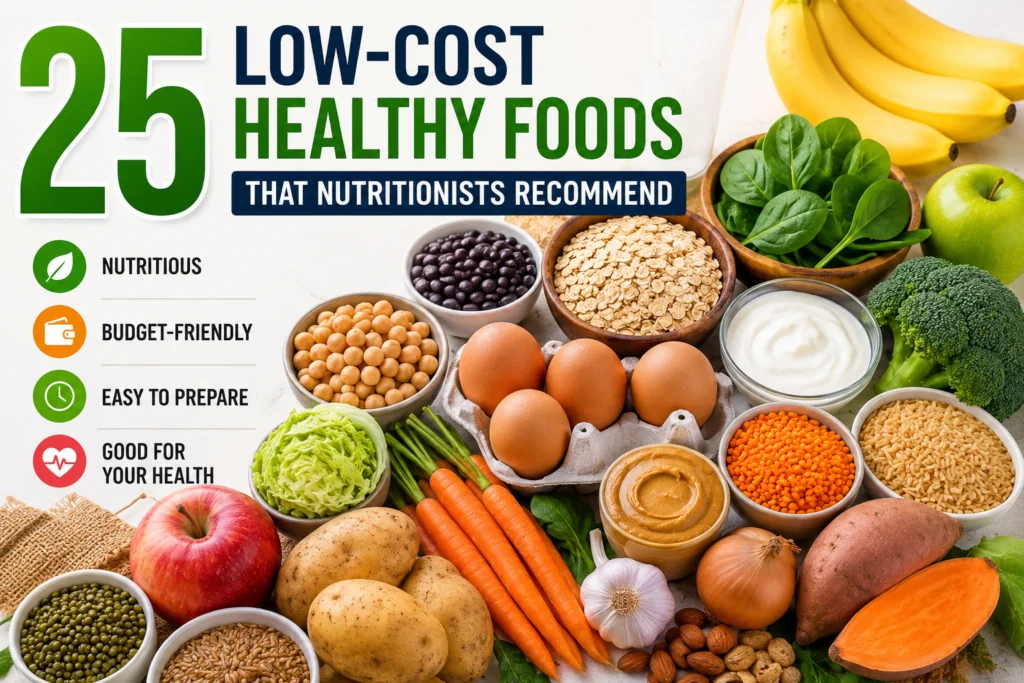
Eating healthy doesn’t have to mean spending hundreds of dollars on organic products, imported superfoods, or trendy diet plans. In fact, many registered nutritionists agree that some of the healthiest foods in the world are also the most affordable.
Whether you’re feeding a family, shopping as a student, or simply trying to cut your grocery bill, choosing nutrient-dense foods can help you save money without compromising your health.
This guide covers 25 affordable foods that offer the best nutrition for your budget, along with practical buying tips, meal ideas, and answers to common questions people ask online
Focus on
If you’re looking for healthy foods that cost less, start with oats, eggs, lentils, beans, brown rice, potatoes, sweet potatoes, bananas, frozen vegetables, yogurt, cabbage, carrots, spinach, peanut butter, canned tuna, and seasonal fruits.
These foods are affordable, widely available, rich in essential nutrients, and recommended by nutrition professionals because they provide excellent nutritional value for their price.
Why Nutritionists Recommend Budget-Friendly Whole Foods
The biggest myth about healthy eating is that it’s expensive.
Most nutritionists recommend building your meals around simple whole foods rather than highly processed convenience foods. Whole foods often provide:
- More vitamins and minerals
- Higher fiber
- Better-quality protein
- Longer-lasting energy
- Greater satiety
- Lower cost per serving
Instead of chasing expensive health trends, focus on foods that consistently deliver nutrition at a reasonable price.
25 Low-Cost Healthy Foods Worth Buying
1. Oats
Oats are one of the most affordable breakfast staples and are packed with soluble fiber that supports heart health and keeps you full for hours.
Best for: Breakfast, overnight oats, smoothies, baking
2. Eggs
Eggs provide complete protein along with vitamins D, B12, and choline. They are one of the best value protein sources available.
Budget Tip: Buying larger cartons usually lowers the cost per egg.
3. Brown Rice
Brown rice is an inexpensive whole grain that pairs well with vegetables, beans, chicken, or fish.
It stores well and makes meal prep easy.
4. Lentils
Nutritionists often recommend lentils because they are rich in plant protein, iron, folate, and fiber.
They cook quickly and are perfect for soups, curries, salads, and rice bowls.
5. Black Beans
Beans are filling, nutritious, and incredibly affordable.
They provide:
- Protein
- Fiber
- Magnesium
- Iron
- Potassium
Buying dried beans saves even more money.
6. Chickpeas
Chickpeas are one of the most versatile budget-friendly foods.
Use them in:
- Salads
- Hummus
- Curry
- Roasted snacks
- Wraps
7. Sweet Potatoes
Sweet potatoes are naturally sweet and loaded with vitamin A, potassium, and fiber.
They’re filling, inexpensive, and easy to prepare.
8. White Potatoes
Despite common myths, potatoes are nutritious when baked, roasted, or boiled instead of fried.
They provide vitamin C, potassium, and resistant starch that supports gut health.
9. Bananas
Bananas remain one of the cheapest fruits in most grocery stores.
They’re rich in potassium, vitamin B6, and natural carbohydrates that provide quick energy.
10. Apples
Apples are affordable throughout much of the year and make a perfect grab-and-go snack.
Eating the peel adds extra fiber and antioxidants.
11. Carrots
Carrots are inexpensive, last for weeks in the refrigerator, and provide beta-carotene, which the body converts into vitamin A.
Great for:
- Salads
- Soups
- Roasting
- Healthy snacks
12. Cabbage
Cabbage is one of the best vegetables for stretching your grocery budget.
It’s rich in vitamin C, vitamin K, and fiber while costing much less than many leafy greens.
13. Frozen Mixed Vegetables
Frozen vegetables are picked and frozen at peak freshness, helping preserve nutrients.
Benefits include:
- Less food waste
- Longer shelf life
- Quick cooking
- Affordable year-round
14. Spinach
Fresh or frozen spinach is packed with iron, folate, magnesium, and antioxidants.
Add it to smoothies, soups, pasta, or omelets.
15. Plain Greek Yogurt
Unsweetened Greek yogurt provides high-quality protein, calcium, and probiotics that support digestive health.
Choose plain varieties to avoid added sugar.
16. Peanut Butter
Natural peanut butter offers healthy fats, protein, and vitamin E at a very reasonable price.
Look for products made with just peanuts and a little salt.
17. Canned Tuna
Canned tuna is an affordable source of lean protein and omega-3 fatty acids.
It’s perfect for sandwiches, salads, pasta, or rice bowls.
18. Sardines
Although often overlooked, sardines are among the most nutrient-dense foods available.
They’re rich in:
- Omega-3 fats
- Calcium
- Vitamin D
- Protein
19. Popcorn
Air-popped popcorn is a whole grain snack that’s naturally high in fiber and surprisingly filling.
Skip the butter-heavy microwave versions.
20. Whole Wheat Bread
Whole wheat bread provides more fiber and nutrients than refined white bread.
Pair it with eggs, peanut butter, or avocado for a balanced meal.
21. Cottage Cheese
Cottage cheese is a protein-rich dairy option that’s often less expensive than many protein snacks.
It works well for breakfast, lunch, or post-workout meals.
22. Seasonal Fruits
Buying fruits in season helps reduce costs while improving freshness and flavor.
Examples include:
- Oranges
- Mangoes
- Grapes
- Watermelon
- Pears
23. Onions
Onions are inexpensive, versatile, and naturally rich in antioxidants.
They enhance flavor without adding unnecessary calories.
24. Garlic
Garlic is another low-cost kitchen essential.
Besides adding flavor, it contains beneficial plant compounds that support overall wellness.
25. Whole Wheat Pasta
Whole wheat pasta offers more fiber than refined pasta and creates satisfying meals when combined with vegetables and lean protein.
Smart Ways to Eat Healthy on a Budget
Small shopping habits can make a big difference.
Here are practical tips nutritionists often recommend:
- Plan meals before grocery shopping.
- Buy store brands whenever possible.
- Compare price per unit instead of package size.
- Purchase frozen produce when fresh prices are high.
- Buy seasonal fruits and vegetables.
- Cook at home more often.
- Prepare meals in batches.
- Freeze leftovers to reduce waste.
- Limit sugary drinks and processed snacks.
- Build meals around whole foods instead of packaged convenience foods.
Frequently Asked Questions
What are the healthiest foods that are also cheap?
Oats, eggs, lentils, beans, brown rice, potatoes, bananas, cabbage, carrots, frozen vegetables, and yogurt are among the healthiest low-cost foods available.
Can I eat healthy for less money?
Yes. Choosing whole grains, legumes, seasonal produce, affordable dairy, and simple protein sources allows you to maintain a nutritious diet while keeping grocery costs under control.
Are frozen vegetables as healthy as fresh vegetables?
Yes. Frozen vegetables are typically frozen shortly after harvest, which helps preserve many vitamins and minerals. They can be just as nutritious as fresh vegetables.
What is the cheapest source of protein?
Some of the most affordable protein-rich foods include eggs, lentils, beans, chickpeas, cottage cheese, plain Greek yogurt, canned tuna, and peanut butter.
How can I lower my grocery bill without eating unhealthy food?
Plan your meals, buy seasonal produce, choose frozen vegetables, purchase dried beans and whole grains, compare prices, and reduce purchases of highly processed snack foods
Final Thoughts
Healthy eating isn’t about buying expensive “superfoods” or following the latest diet trend. It’s about choosing simple, nutrient-rich foods that fit your lifestyle and your budget.
By keeping your pantry stocked with affordable staples like oats, lentils, beans, eggs, brown rice, frozen vegetables, seasonal fruits, and healthy dairy products, you can create balanced meals that support your health without increasing your grocery bill.
The best diet is one that is nutritious, practical, and sustainable. These 25 low-cost healthy foods prove that eating well doesn’t have to cost more.