
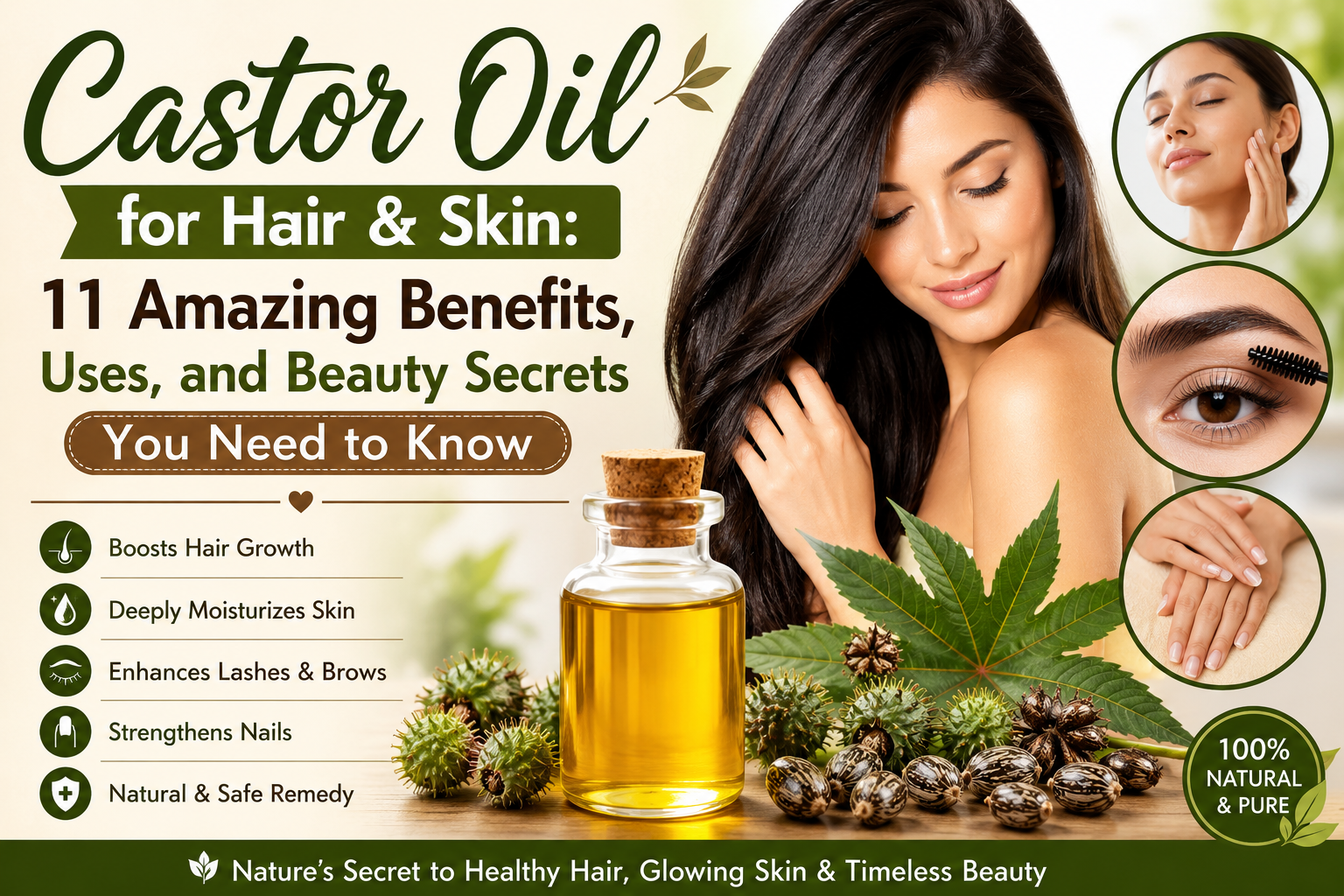
Castor Oil for Hair & Skin: 11 Amazing Benefits, Uses, and Beauty Secrets You Need to Know
Castor oil has been a trusted natural beauty remedy for centuries, and today it continues to earn a place in modern skincare and haircare routines. Extracted from the seeds of the castor plant (Ricinus communis), this thick, nutrient-rich oil is widely recognized for its moisturizing properties and versatility. Whether your goal is to support thick and healthy hair, soothe dry skin, or simplify your beauty routine with a plant-based product, castor oil offers a range of practical uses.
One reason Castor Oil for Hair and Skin remains so popular is its unique composition. It contains a high concentration of ricinoleic acid, along with vitamin E and beneficial fatty acids that help lock in moisture and support the skin’s protective barrier. While many claims about castor oil circulate online, it is important to understand what current evidence supports and where more research is still needed.
In this comprehensive guide from purewelllife.com, you’ll discover the most notable castor oil benefits, the best Castor Oil uses, practical application tips, and realistic expectations for castor oil for hair growth. You’ll also learn important safety precautions, common mistakes to avoid, and answers to frequently asked questions so you can confidently include castor oil in your personal care routine.
What Is Castor Oil?
Castor oil is a vegetable oil extracted from the seeds of the castor bean plant (Ricinus communis). Despite the name “castor bean,” the seeds are not true beans. During commercial production, the oil is carefully processed to remove naturally occurring toxic compounds found in raw seeds, making the finished cosmetic-grade oil safe for external use when used as directed.
The oil is well known for its thick texture, excellent moisturizing ability, and high concentration of ricinoleic acid. These characteristics make it a common ingredient in moisturizers, lip balms, hair serums, soaps, massage oils, and cosmetic formulations worldwide. Because of its ability to reduce moisture loss, castor oil is often recommended for people dealing with dry hair, flaky scalp, rough elbows, cracked heels, and dehydrated skin.
Why Is Castor Oil Popular for Hair and Skin?
The popularity of Castor Oil for Hair and Skin comes from its ability to act as an effective natural moisturizer. Rather than simply sitting on the surface, the oil helps reduce water loss by forming a protective layer over the skin and hair. This makes hair appear shinier and skin feel softer after regular use.
Another reason people choose castor oil is its versatility. It can be applied directly in small amounts, blended with lighter carrier oils, or included in homemade beauty treatments. Although scientific evidence supporting dramatic hair growth remains limited, maintaining a healthier scalp environment and reducing hair breakage may help hair appear fuller over time. When combined with a balanced diet and good haircare habits, castor oil can contribute to healthier-looking hair and skin.
Nutrients Found in Castor Oil
Understanding the nutritional composition of castor oil helps explain why it has remained a popular beauty ingredient for generations. Rather than relying on a single nutrient, castor oil contains several naturally occurring compounds that work together to support hydration and improve the appearance of hair and skin.
| Nutrient | Potential Beauty Role |
| Ricinoleic Acid | Helps retain moisture and supports the skin barrier. |
| Vitamin E | Acts as an antioxidant that protects against environmental stress. |
| Omega-6 Fatty Acids | Help maintain skin hydration. |
| Omega-9 Fatty Acids | Support smoother-looking hair and softer skin. |
| Natural Emollients | Reduce dryness and improve texture. |
Although these nutrients provide moisturizing benefits, they should not be considered medical treatments for skin diseases or hair loss disorders. Individuals experiencing persistent skin or scalp concerns should consult a qualified healthcare professional.
11 Amazing Benefits of Castor Oil for Hair and Skin
1. Deeply Moisturizes Dry Skin
One of the best-known castor oil benefits is its exceptional moisturizing ability. Because it is rich in ricinoleic acid and fatty acids, castor oil helps create a barrier that reduces moisture loss from the skin. This makes it especially useful during cold weather or in dry climates where the skin tends to become rough and flaky.
Applying a small amount after bathing can help seal in hydration and leave the skin feeling softer. Many people also use castor oil on dry areas such as elbows, knees, heels, and hands. Since it has a thick consistency, mixing it with lighter oils like jojoba or sweet almond oil may improve spreadability while maintaining its moisturizing effects.
2. Helps Keep Hair Looking Healthy
Healthy-looking hair depends on moisture, reduced breakage, and proper scalp care. Castor oil coats the hair strands, helping reduce friction and minimizing moisture loss during washing and styling. As a result, hair often appears shinier, smoother, and easier to manage.
While there is no strong scientific evidence proving that castor oil directly accelerates hair growth, reducing breakage allows hair to retain its length over time. This creates the appearance of longer, fuller hair. People with naturally curly, textured, or coarse hair often find castor oil especially beneficial because these hair types typically require additional moisture.
3. Supports a Healthy Scalp
A healthy scalp provides the foundation for healthy hair. Dryness, irritation, and excessive flaking can make hair difficult to manage and affect overall hair quality. Castor oil helps moisturize the scalp and may reduce dryness when used appropriately as part of a balanced haircare routine.
Massaging a small amount into the scalp may also improve the distribution of natural oils while providing a relaxing experience. However, individuals with scalp conditions such as eczema, psoriasis, or persistent dandruff should seek professional advice instead of relying solely on home remedies.
4. May Reduce Hair Breakage
Hair breakage often occurs when strands become dry, brittle, or damaged by heat styling, coloring, or environmental exposure. One of the practical Castor Oil uses is protecting hair from excessive moisture loss, which can improve flexibility and reduce snapping during brushing.
Using castor oil as a pre-shampoo treatment or applying a small amount to hair ends may help reduce split ends and improve overall manageability. Combined with regular trimming, gentle styling, and adequate protein intake, this practice supports stronger-looking hair over time.
5. Leaves Skin Feeling Softer and Smoother
Soft, healthy-looking skin requires consistent hydration and protection against moisture loss. Castor oil functions as an emollient, helping rough patches become smoother with regular use. Many people apply a thin layer before bedtime to areas that frequently become dry, allowing the oil to work overnight.
Because castor oil is highly concentrated, a little goes a long way. Using excessive amounts may leave the skin feeling greasy, so applying a thin layer is generally sufficient. A patch test is also recommended before first use to reduce the risk of irritation.
6. May Help Improve the Appearance of Eyebrows and Eyelashes
Many people use castor oil as part of their eyebrow and eyelash care routine because it helps condition and moisturize the hair. Although there is no high-quality scientific evidence proving that castor oil directly stimulates eyebrow or eyelash growth, regularly conditioning these delicate hairs may reduce dryness and breakage. This can make brows and lashes appear healthier, shinier, and naturally fuller over time.
To use castor oil safely, apply a very small amount with a clean mascara wand or cotton swab before bedtime. Avoid getting the oil into your eyes, as it may cause irritation. If redness, itching, or discomfort develops, discontinue use immediately and rinse thoroughly with clean water.
7. Helps Soothe Dry Lips
Dry, cracked lips are often caused by dehydration, cold weather, or excessive sun exposure. Thanks to its rich fatty acid content, castor oil acts as a natural emollient that helps lock in moisture and soften rough skin. Many commercial lip balms even include castor oil because of its smooth texture and long-lasting hydration.
For best results, apply a tiny amount to clean lips before bed or whenever your lips feel dry. Pairing castor oil with proper hydration and sun protection can help keep lips soft throughout the year. If your lips remain persistently cracked or painful, consult a healthcare professional to rule out underlying conditions.
8. Adds Natural Shine to Hair
Healthy hair reflects light more effectively, giving it a glossy appearance. One of the most appreciated castor oil benefits is its ability to coat the hair shaft, reducing roughness and improving shine without relying on silicone-based products. This makes castor oil a popular natural alternative for people seeking a healthier-looking finish.
Because castor oil is very thick, use only a few drops and distribute them evenly through the mid-lengths and ends of your hair. Applying too much can make hair appear greasy. Mixing castor oil with lighter oils such as argan, coconut, or jojoba oil creates a more balanced hair serum that is easier to apply.
9. Supports a Stronger Skin Barrier
The skin barrier plays an essential role in protecting the body from moisture loss, pollutants, and environmental irritants. When the barrier becomes compromised, skin may feel dry, rough, or sensitive. Castor oil helps reduce transepidermal water loss by forming a protective layer over the skin’s surface.
Maintaining a healthy skin barrier contributes to smoother, more comfortable skin and enhances the effectiveness of your overall skincare routine. While castor oil can support hydration, it should complement—not replace—a complete skincare regimen that includes gentle cleansing, sunscreen, and appropriate moisturizers.
10. Works Well in DIY Beauty Treatments
One reason castor oil remains popular is its versatility. It blends well with many natural ingredients, making it an excellent addition to homemade beauty recipes. Whether you are creating hair masks, facial oil blends, body moisturizers, or cuticle treatments, castor oil provides lasting hydration and helps improve the texture of DIY formulations.
Some popular combinations include:
- Castor oil + coconut oil for deep-conditioning hair masks
- Castor oil + jojoba oil for facial moisture
- Castor oil + aloe vera gel for soothing dry skin
- Castor oil + shea butter for cracked heels
- Castor oil + vitamin E oil for overnight hand care
Always prepare DIY products with clean tools and perform a patch test before applying any new mixture to larger areas of skin.
11. A Budget-Friendly Natural Beauty Product
High-quality skincare and haircare products can become expensive, especially when purchasing multiple specialized treatments. Castor oil offers an affordable, multipurpose alternative that serves several functions within one bottle. From moisturizing dry skin to conditioning hair and nourishing cuticles, it provides excellent value for those who prefer minimalist beauty routines.
Although castor oil should not replace clinically proven treatments for medical skin or hair conditions, it can be a useful addition to everyday personal care. Choosing cold-pressed, hexane-free, cosmetic-grade castor oil helps ensure better quality and a more pleasant user experience.
How to Use Castor Oil Correctly
Using Castor Oil for Hair and Skin correctly helps maximize its benefits while minimizing the chances of irritation or excessive greasiness. Since castor oil has a naturally thick consistency, applying small amounts is usually more effective than using large quantities. Proper application also depends on your hair type, skin type, and intended purpose.
For Hair
- Warm a small amount between your palms.
- Massage gently into the scalp for 3–5 minutes.
- Spread through the mid-lengths and ends.
- Leave on for 30–60 minutes or overnight.
- Shampoo thoroughly to remove residue.
- Repeat 1–2 times per week.
For Skin
- Cleanse your face or body first.
- Apply just 2–3 drops.
- Massage gently until absorbed.
- Use mostly at night because of its thick texture.
- Follow with sunscreen during the day if part of your facial skincare routine.
For Eyebrows
- Apply a tiny amount using a clean spoolie brush.
- Use only at night.
- Avoid eye contact.
- Wash off the next morning if desired.
Consistency matters more than quantity. Using excessive amounts will not increase results and may simply leave hair or skin feeling oily.
Castor Oil for Hair Growth: Does It Really Work?
One of the most searched topics online is castor oil for hair growth. The internet is filled with dramatic before-and-after photos and personal testimonials claiming remarkable hair growth after using castor oil. However, current scientific evidence tells a more balanced story.
There is no strong clinical evidence proving that castor oil directly increases hair growth rate or activates dormant hair follicles. Most dermatologists agree that hair growth is influenced by genetics, hormones, nutrition, age, overall health, and proper scalp care.
That said, castor oil may indirectly support healthier-looking hair by:
- Moisturizing the scalp
- Reducing hair breakage
- Improving hair softness
- Enhancing shine
- Helping retain existing hair length
- Supporting scalp comfort
When hair breaks less often, it naturally appears longer over time. This often explains why many users feel their hair has “grown faster,” even though the actual growth rate remains unchanged.
For individuals experiencing sudden hair loss, thinning patches, or excessive shedding, professional evaluation is recommended to identify the underlying cause rather than relying solely on natural oils.
Castor Oil vs Other Popular Beauty Oils
Different beauty oils offer different advantages. Understanding their strengths helps you choose the right product for your needs.
| Feature | Castor Oil | Coconut Oil | Argan Oil | Jojoba Oil |
| Texture | Very thick | Medium | Light | Very light |
| Best For | Deep moisture | Hair conditioning | Frizz control | Sensitive skin |
| Hair Shine | Excellent | Very good | Excellent | Good |
| Skin Hydration | Excellent | Very good | Good | Excellent |
| Suitable for Oily Skin | Moderate | Moderate | Good | Excellent |
| Rich in Fatty Acids | Yes | Yes | Yes | Yes |
Which One Should You Choose?
If your main concern is severe dryness, castor oil provides one of the richest moisturizing experiences. For lightweight daily facial hydration, jojoba oil may feel more comfortable. Argan oil works well for reducing frizz and adding shine, while coconut oil remains a favorite for intensive hair conditioning. Many people successfully combine two or more oils depending on seasonal needs and personal preferences.
Common Mistakes to Avoid
Although castor oil is simple to use, several common mistakes can reduce its effectiveness or cause unnecessary discomfort. Understanding these pitfalls helps you enjoy the best possible results.
Using Too Much Oil
Because castor oil is extremely thick, more is not always better. Excessive application can make hair difficult to wash and leave the skin feeling greasy.
Skipping a Patch Test
Even natural products may cause allergic reactions. Test a small amount on your inner arm and wait 24 hours before full application.
Expecting Overnight Results
Natural beauty products require patience. Improvements in moisture, softness, and manageability typically develop with consistent use over several weeks.
Applying to Dirty Skin
Applying oil over dirt, makeup, or heavy sunscreen may trap impurities. Always cleanse first for better absorption.
Using Low-Quality Products
Choose cold-pressed, cosmetic-grade castor oil from reputable manufacturers. Avoid products containing unnecessary additives or artificial fragrances if you have sensitive skin.
Safety Tips and Possible Side Effects
Although castor oil is generally considered safe for external cosmetic use, it may not be suitable for everyone. Some individuals can develop irritation, redness, itching, or allergic contact dermatitis. Performing a patch test before first use is strongly recommended.
Additional safety tips include:
- Use only cosmetic-grade or cold-pressed castor oil intended for personal care.
- Avoid applying to broken or infected skin unless advised by a healthcare professional.
- Keep away from the eyes.
- Discontinue use if irritation occurs.
- Store the oil in a cool, dark place with the cap tightly closed.
- Do not ingest castor oil unless specifically directed by a healthcare provider, as oral castor oil has medicinal uses and potential side effects.
Pregnant or breastfeeding individuals and people with chronic skin conditions should consult a qualified healthcare professional before incorporating new products into their routine.
Frequently Asked Questions (FAQs)
1. Can castor oil replace my regular moisturizer?
Castor oil can help lock in moisture, but it may not replace a complete moisturizer for everyone. Many moisturizers contain additional ingredients such as humectants and ceramides that hydrate and strengthen the skin barrier. Using castor oil as the final step in your skincare routine can help seal in moisture, particularly if you have dry skin.
2. Is castor oil safe for sensitive skin?
Some people with sensitive skin tolerate castor oil well, while others may experience irritation. Always perform a patch test on a small area of skin 24 hours before widespread use. If redness, itching, or swelling occurs, discontinue use and consult a healthcare professional if symptoms persist.
3. Should I apply castor oil to wet or dry hair?
Either method can work depending on your routine. Applying castor oil to slightly damp hair may help lock in moisture, while using it on dry hair before shampooing makes it easier to distribute as a conditioning treatment. Avoid applying excessive amounts, regardless of the method.
4. Can I leave castor oil in my hair overnight?
Yes. Many people leave castor oil on overnight as a deep-conditioning treatment. Protect your pillow with a towel or shower cap, then shampoo thoroughly the next morning. If overnight application feels too heavy, leaving it on for 30 to 60 minutes before washing can also be effective.
5. Does castor oil have an expiration date?
Yes. Like most natural oils, castor oil has a shelf life, typically around one to two years depending on storage conditions. Store it in a cool, dark place away from direct sunlight and always check for changes in smell, color, or texture before use.
Key Takeaways
- Castor oil is a versatile natural beauty ingredient rich in ricinoleic acid and beneficial fatty acids.
- It helps moisturize dry skin by reducing moisture loss.
- Regular use can improve hair softness, shine, and manageability.
- Current evidence does not confirm that castor oil directly accelerates hair growth.
- Reducing breakage can help hair appear longer and healthier over time.
- Cosmetic-grade, cold-pressed castor oil is generally the best choice for personal care.
- A patch test is recommended before first use to minimize the risk of irritation.
- Castor oil works well on its own or blended with lighter carrier oils.
- Consistency, proper application, and realistic expectations are key to seeing benefits.
- Castor oil complements—but does not replace—a complete skincare and haircare routine.
Conclusion
Castor Oil for Hair and Skin continues to be one of the most trusted natural beauty products because of its impressive moisturizing properties and versatility. From helping soften dry skin and conditioning hair to reducing breakage and enhancing shine, it offers several practical benefits that fit easily into everyday self-care routines. While many online claims suggest dramatic improvements in hair growth, current scientific evidence supports a more balanced view: castor oil is best understood as a conditioning and moisturizing treatment rather than a proven hair-growth solution.
For the best experience, choose a high-quality cold-pressed cosmetic-grade castor oil, perform a patch test before first use, and apply it consistently in moderate amounts. Pairing castor oil with a healthy diet, proper hydration, sun protection, and good haircare habits will help you achieve the greatest long-term results.
At purewelllife.com, our goal is to provide evidence-informed wellness content that helps you make confident decisions about natural health and beauty. If you found this guide helpful, explore our other articles on skincare, haircare, and natural wellness to build a routine that supports healthier-looking hair and radiant skin.