Top 12 Immunity-Boosting Fruits for Kids
A strong immune system helps children stay healthy and supports their growing bodies. While no single food can prevent illness, a balanced diet rich in fruits, vegetables, whole grains, and protein provides essential vitamins, minerals, and antioxidants that contribute to normal immune function.
Fruits are naturally packed with nutrients such as vitamin C, vitamin A, fiber, and antioxidants, making them an important part of a healthy diet for children.
Why Fruits Are Important for Kids
Fresh fruits provide nutrients that help support:
- Normal immune function
- Healthy growth and development
- Digestion
- Brain development
- Healthy skin
- Strong bones and tissues
- Overall well-being
Offering a variety of colorful fruits helps children receive a wide range of beneficial nutrients.
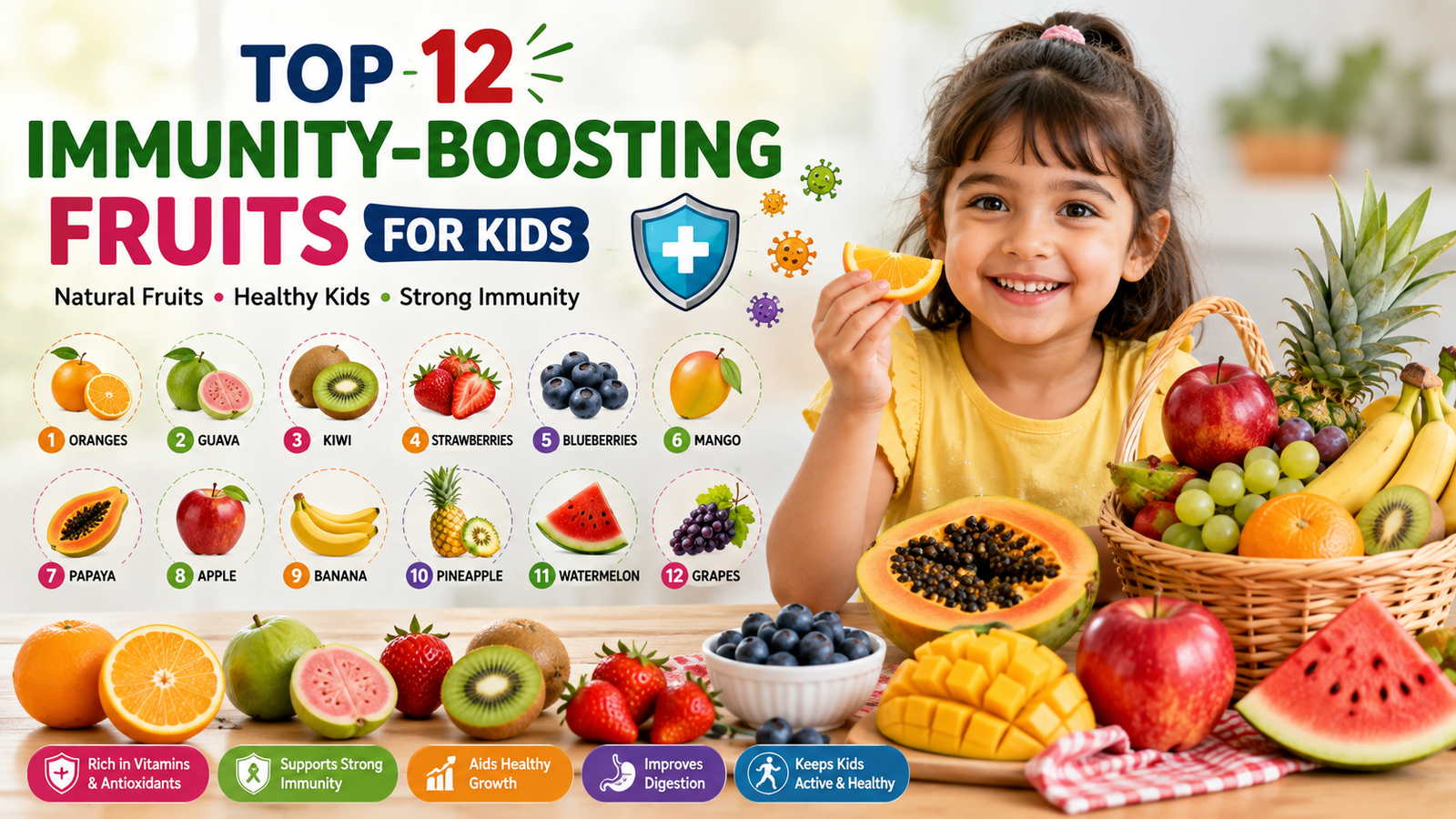
Top 12 Immunity-Boosting Fruits for Kids
1. Oranges
Oranges are one of the best-known sources of vitamin C.
Benefits include:
- Supports normal immune function
- Helps the body absorb iron from plant-based foods
- Provides hydration
2. Guava
Guava contains even more vitamin C than many citrus fruits.
It also provides:
- Fiber
- Vitamin A
- Antioxidants
3. Kiwi
Kiwi is rich in:
- Vitamin C
- Vitamin E
- Potassium
- Fiber
Its naturally sweet taste makes it appealing to many children.
4. Strawberries
Strawberries contain:
- Vitamin C
- Antioxidants
- Fiber
Serve fresh strawberries as a snack or mix them into yogurt.
5. Blueberries
Blueberries are packed with natural antioxidants.
Benefits:
- Supports overall health
- Rich in vitamins
- Easy to add to smoothies and breakfast bowls
6. Mango
Mangoes provide:
- Vitamin A
- Vitamin C
- Fiber
They are naturally sweet and popular with children.
7. Papaya
Papaya contains:
- Vitamin C
- Vitamin A
- Folate
It is soft, easy to digest, and suitable for many children.
8. Apples
Apples are rich in:
- Fiber
- Vitamin C
- Natural plant compounds
Serve sliced apples with nut butter (age-appropriate) or yogurt.
9. Bananas
Bananas provide:
- Potassium
- Vitamin B6
- Fiber
They make an easy and convenient snack.
10. Pineapple
Pineapple contains:
- Vitamin C
- Manganese
Its sweet flavor makes it enjoyable for many children.
11. Watermelon
Watermelon helps keep children hydrated.
It also provides:
- Vitamin A
- Vitamin C
- Water for hydration
It is especially refreshing during hot weather.
12. Grapes
Grapes contain:
- Vitamin C
- Antioxidants
- Water
For younger children, grapes should always be cut into small pieces to reduce the risk of choking.
Tips for Serving More Fruits
Encourage children to enjoy fruits by:
- Making colorful fruit salads
- Adding fruit to yogurt
- Blending smoothies
- Packing fruit in school lunch boxes
- Offering seasonal fruits as snacks
Fresh whole fruits are generally a better choice than fruit juices because they provide fiber and are less concentrated in natural sugars.
Fruits to Serve in Moderation
Fruits are an important part of a healthy diet, but some should be offered in appropriate portions because they contain higher amounts of natural sugars.
Fruit Juice
Whole fruits are generally a better choice than fruit juice because they contain fiber, which supports healthy digestion.
If serving juice:
- Choose 100% fruit juice with no added sugar.
- Offer small portions occasionally rather than daily.
Dried Fruits
Foods such as:
- Raisins
- Dates
- Dried apricots
are nutritious but more concentrated in natural sugars than fresh fruits.
Serve them in moderation and encourage fresh fruit whenever possible.
Healthy Habits That Support a Strong Immune System
Eating fruit is only one part of maintaining good health. These habits also help support a healthy immune system.
Encourage a Balanced Diet
Children should eat foods from all major food groups:
- Fruits
- Vegetables
- Whole grains
- Lean proteins
- Dairy or fortified alternatives
- Healthy fats
A varied diet provides a wide range of essential nutrients.
Keep Children Hydrated
Encourage regular water intake throughout the day to support normal body functions.
Ensure Enough Sleep
Adequate sleep helps support healthy growth and normal immune function.
Children need different amounts of sleep depending on their age.
Encourage Daily Physical Activity
Activities such as:
- Running
- Cycling
- Playing outdoors
- Dancing
- Sports
support overall health and well-being.
Practice Good Hygiene
Teach children to:
- Wash hands regularly
- Cover coughs and sneezes
- Avoid touching their face with unwashed hands
These habits help reduce the spread of germs.
Frequently Asked Questions
Which fruit is best for a child’s immune system?
There is no single “best” fruit. A variety of fruits such as oranges, guava, kiwi, strawberries, mangoes, blueberries, and papaya provide different vitamins and antioxidants that support normal immune function.
How much fruit should children eat each day?
The amount depends on the child’s age and nutritional needs. Offering a variety of fresh fruits as part of a balanced diet is generally recommended.
Can fruit prevent children from getting sick?
No single food can prevent illness. However, a nutritious diet that includes fruits helps support normal immune function and overall health.
Is fresh fruit better than fruit juice?
Yes. Fresh whole fruits contain fiber and are usually a healthier choice than fruit juice.
Should children eat fruit every day?
Yes. Fresh fruits can be included daily as part of a healthy, balanced diet.
Key Takeaways
- Fruits provide vitamins, minerals, fiber, antioxidants, and hydration that support healthy growth and normal immune function.
- Healthy choices include oranges, guava, kiwi, strawberries, blueberries, mangoes, papaya, apples, bananas, pineapple, watermelon, and grapes.
- Whole fruits are generally a better option than fruit juice.
- Combine healthy eating with adequate sleep, physical activity, hydration, and good hygiene.
- A balanced diet supports overall health throughout childhood.
Conclusion
Including a variety of fresh fruits in your child’s daily diet is a simple and delicious way to provide important nutrients that support healthy growth and normal immune function. Each fruit offers a unique combination of vitamins, minerals, fiber, and antioxidants, making variety the key to balanced nutrition. Along with regular physical activity, adequate sleep, good hygiene, and a wholesome diet, fruits contribute to your child’s overall health and well-being.
Remember that healthy eating habits develop over time. Encourage children to enjoy different seasonal fruits and make fruit a regular part of family meals and snacks.