10 Healthy Indian Breakfast Recipes for School-Going Kids
Breakfast is often called the most important meal of the day, especially for school-going children. After a full night’s sleep, children need nutritious foods to refill their energy, support brain function, and stay active throughout the school day.
A healthy Indian breakfast can provide the right balance of carbohydrates, protein, healthy fats, vitamins, and minerals needed for concentration, learning, and physical growth.
Why Breakfast Is Important for School Kids
A nutritious breakfast helps children:
- Stay energetic throughout the morning
- Improve concentration and memory
- Support healthy growth and development
- Maintain stable energy levels
- Reduce unnecessary snacking
- Perform better in school activities
Skipping breakfast may leave children feeling tired or less focused during classes.
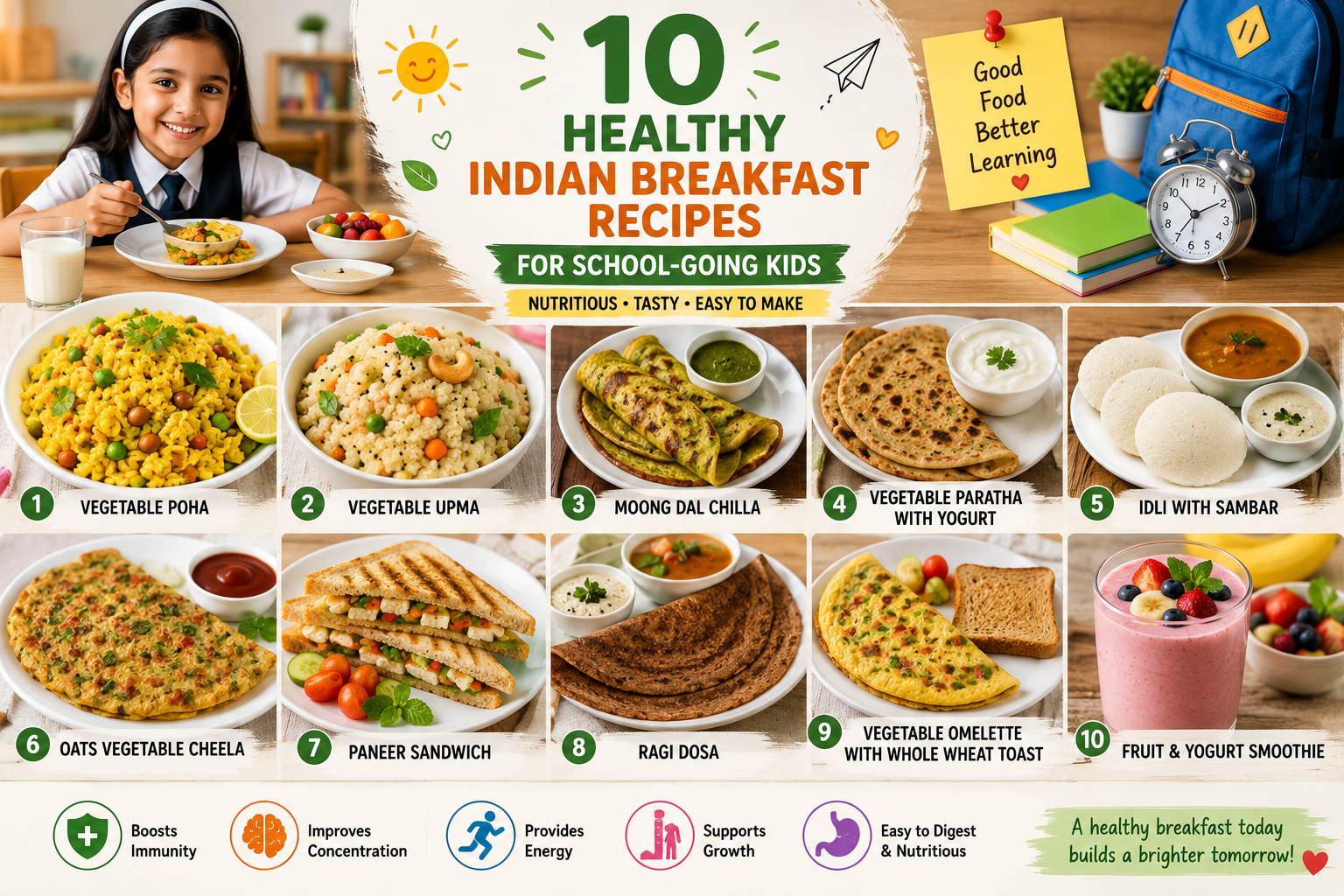
1. Vegetable Poha
Vegetable poha is light, healthy, and easy to prepare.
It contains:
- Flattened rice
- Peas
- Carrots
- Onions
- Peanuts
- Curry leaves
Benefits:
- Rich in carbohydrates for energy
- Contains fiber and vegetables
- Easy to digest
2. Vegetable Upma
Upma made with semolina and vegetables provides balanced nutrition.
Add:
- Carrots
- Beans
- Peas
- Capsicum
Benefits:
- Good source of energy
- Fiber-rich
- Keeps children full for longer
3. Moong Dal Chilla
Moong dal chilla is packed with protein.
Serve with:
- Mint chutney
- Tomato chutney
- Homemade yogurt
Benefits:
- High in protein
- Supports muscle growth
- Filling and nutritious
4. Vegetable Paratha with Yogurt
Whole wheat parathas stuffed with vegetables make an excellent breakfast.
Popular fillings include:
- Potato
- Spinach
- Cauliflower
- Paneer
- Mixed vegetables
Serve with fresh yogurt.
5. Idli with Sambar
Idli is soft, easy to digest, and ideal for children.
Sambar adds:
- Lentils
- Vegetables
- Protein
- Fiber
Benefits:
- Balanced nutrition
- Light on the stomach
- Suitable for school mornings
6. Oats Vegetable Cheela
Combine oats with vegetables for a fiber-rich breakfast.
Add:
- Carrots
- Onions
- Coriander
- Spinach
Benefits:
- Whole grains
- Fiber
- Vitamins and minerals
7. Paneer Sandwich
Whole wheat bread with fresh paneer and vegetables makes a quick breakfast.
Include:
- Tomato
- Cucumber
- Lettuce
- Capsicum
Benefits:
- Protein-rich
- Easy to pack
- Child-friendly
8. Ragi Dosa
Ragi (finger millet) is naturally rich in calcium and fiber.
Serve with:
- Coconut chutney
- Sambar
Benefits:
- Supports healthy bones
- Provides long-lasting energy
9. Vegetable Omelette with Whole Wheat Toast
Eggs provide high-quality protein and important nutrients.
Add vegetables such as:
- Tomatoes
- Spinach
- Onions
- Bell peppers
Serve with whole wheat toast.
10. Fruit and Yogurt Smoothie
Blend:
- Banana
- Berries
- Mango
- Yogurt
- Milk
Benefits:
- Quick breakfast
- Rich in calcium
- Provides vitamins and protein
Tips for Preparing Healthy School Breakfasts
- Prepare ingredients the night before.
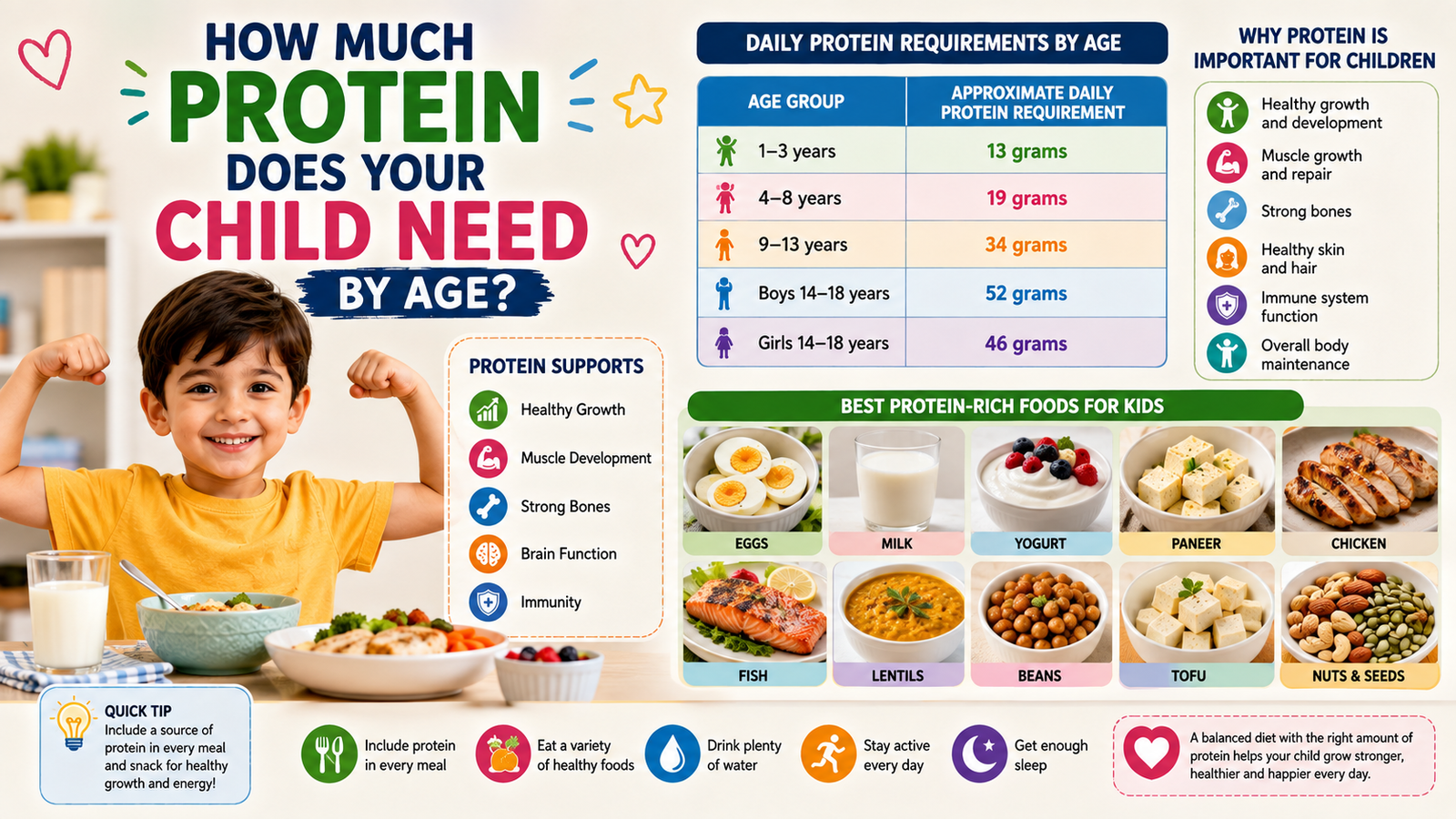
- Include at least one protein-rich food every morning.
- Add fruits or vegetables whenever possible.
- Use whole grains instead of refined grains.
- Avoid excessive sugar in breakfast foods.
- Serve water or milk instead of sugary drinks.
Foods to Avoid at Breakfast
Some breakfast foods may provide quick energy but contain high amounts of added sugar, unhealthy fats, or very little nutritional value. Limiting these foods can help children stay energized and focused throughout the school day.
Sugary Breakfast Cereals
Many packaged cereals contain large amounts of added sugar.
Instead, choose:
- Oats
- Unsweetened whole-grain cereals
- Homemade muesli
Packaged Cakes and Pastries
Foods such as:
- Doughnuts
- Cream-filled cakes
- Sweet pastries
are often high in sugar and unhealthy fats while being low in essential nutrients.
Sugary Drinks
Avoid serving:
- Soft drinks
- Packaged fruit drinks
- Energy drinks
Instead, offer:
- Water
- Plain milk
- Homemade smoothies
- Fresh coconut water (when appropriate)
Fried Fast Foods
Limit breakfast items such as:
- French fries
- Deep-fried snacks
- Highly processed frozen foods
These foods may leave children feeling sluggish later in the day.
Healthy Breakfast Tips for Busy Parents
Plan Ahead
Prepare ingredients the night before to save time during busy school mornings.
Examples:
- Chop vegetables
- Prepare dosa or chilla batter
- Boil eggs
- Cut fruits
Include Protein
Protein helps children stay full and supports growth.
Good choices include:
- Eggs
- Paneer
- Yogurt
- Milk
- Moong dal
- Chickpeas
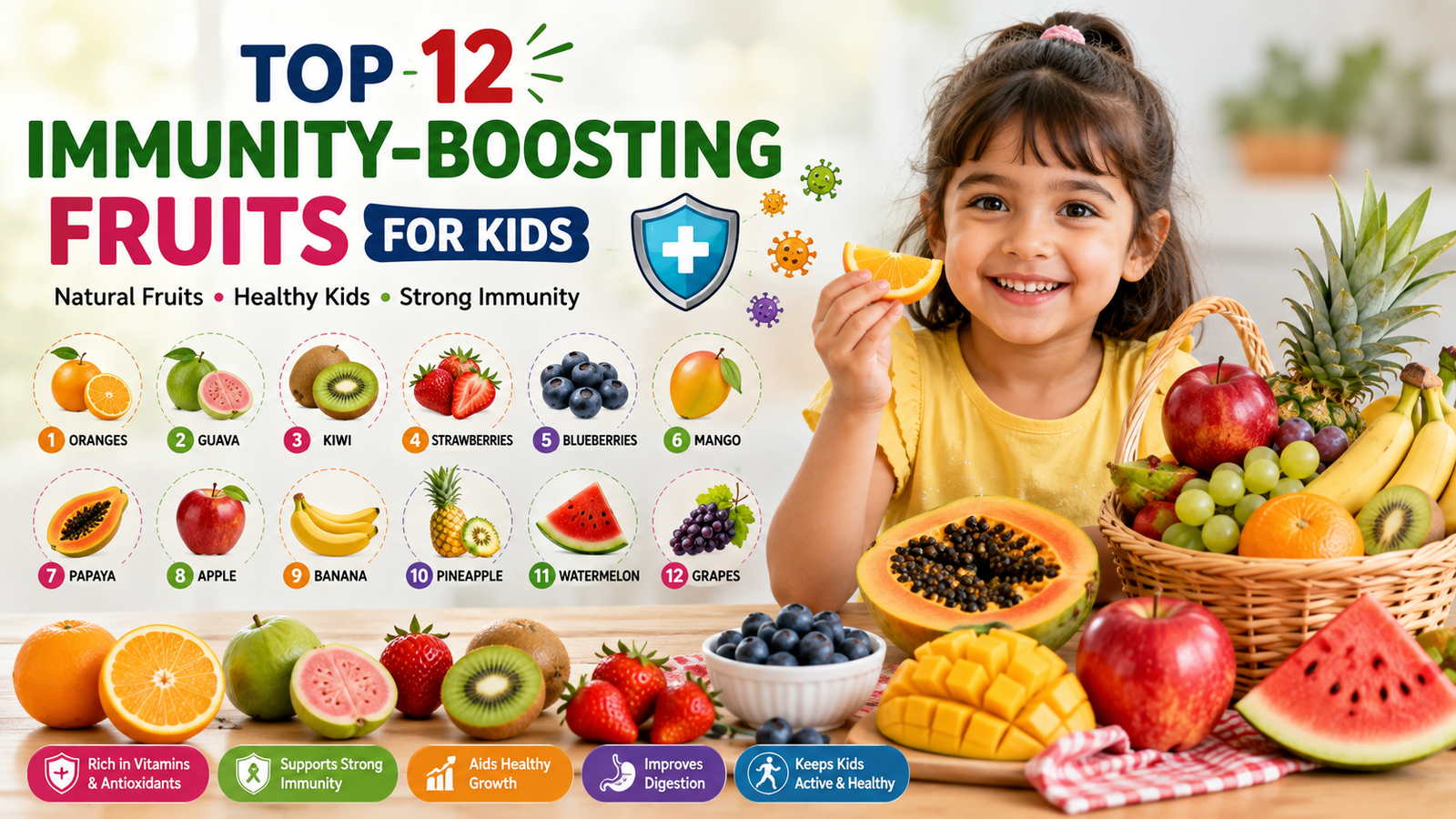
Add Fruits Every Day
Fresh fruits provide:
- Vitamins
- Fiber
- Natural sweetness
Rotate seasonal fruits to add variety.
Keep Breakfast Simple
A healthy breakfast doesn’t need to be complicated.
Even simple combinations like:
- Milk with fruit
- Vegetable sandwich
- Yogurt with fruit
- Poha with peanuts
can provide balanced nutrition.
Frequently Asked Questions
What is the healthiest Indian breakfast for kids?
Healthy options include vegetable poha, idli with sambar, moong dal chilla, vegetable upma, paneer sandwiches, and ragi dosa. These meals provide a balance of carbohydrates, protein, vitamins, and minerals.
Should children eat breakfast before school?
Yes. Eating breakfast before school provides energy for learning, supports concentration, and helps children stay active throughout the morning.
Can breakfast improve school performance?
A balanced breakfast supports normal brain function and helps children maintain energy and focus during school. Good nutrition works best alongside adequate sleep and healthy study habits.
Is milk enough for breakfast?
Milk is nutritious and provides calcium and protein, but it is best paired with other healthy foods such as fruits, whole grains, or protein-rich options for a more balanced meal.
How long should breakfast take?
A healthy breakfast does not need to take much time. Many nutritious meals can be prepared in 10–20 minutes with a little planning.
Key Takeaways
- Breakfast provides energy for learning, play, and healthy growth.
- Include protein, whole grains, fruits, vegetables, and dairy or fortified alternatives.
- Healthy Indian breakfasts include poha, upma, idli, dosa, paratha, paneer sandwiches, and moong dal chilla.
- Limit sugary cereals, pastries, sugary drinks, and fried foods.
- Planning simple, balanced breakfasts helps children develop lifelong healthy eating habits.
Conclusion
A nutritious breakfast is one of the best ways to help school-going children start their day with energy and focus. Meals that combine whole grains, protein, fruits, vegetables, and dairy or fortified alternatives provide the nutrients needed to support learning, physical activity, and healthy growth. By choosing wholesome Indian breakfast recipes and limiting highly processed foods, parents can encourage healthy eating habits that benefit children both inside and outside the classroom.
Remember that every child has different tastes and nutritional needs. Offering a variety of healthy breakfast options and maintaining a consistent morning routine can make breakfast enjoyable while supporting long-term health and development.