Foods That Improve Eyesight
Healthy eyesight depends on many factors, including age, genetics, lifestyle, regular eye checkups, and good nutrition. While no food can completely prevent eye diseases or restore lost vision, eating a balanced diet rich in vitamins, minerals, and antioxidants can help support normal eye health and reduce the risk of certain age-related eye conditions.
Including a variety of colorful fruits, vegetables, healthy fats, and protein-rich foods in your daily diet provides important nutrients that help keep your eyes healthy.
Why Nutrition Is Important for Eye Health
Your eyes require essential nutrients to function properly.
A healthy diet may help support:
- Normal vision
- Healthy retina function
- Eye tissue health
- Protection against oxidative stress
- Overall eye wellness
Good nutrition should be combined with regular eye examinations and healthy lifestyle habits.
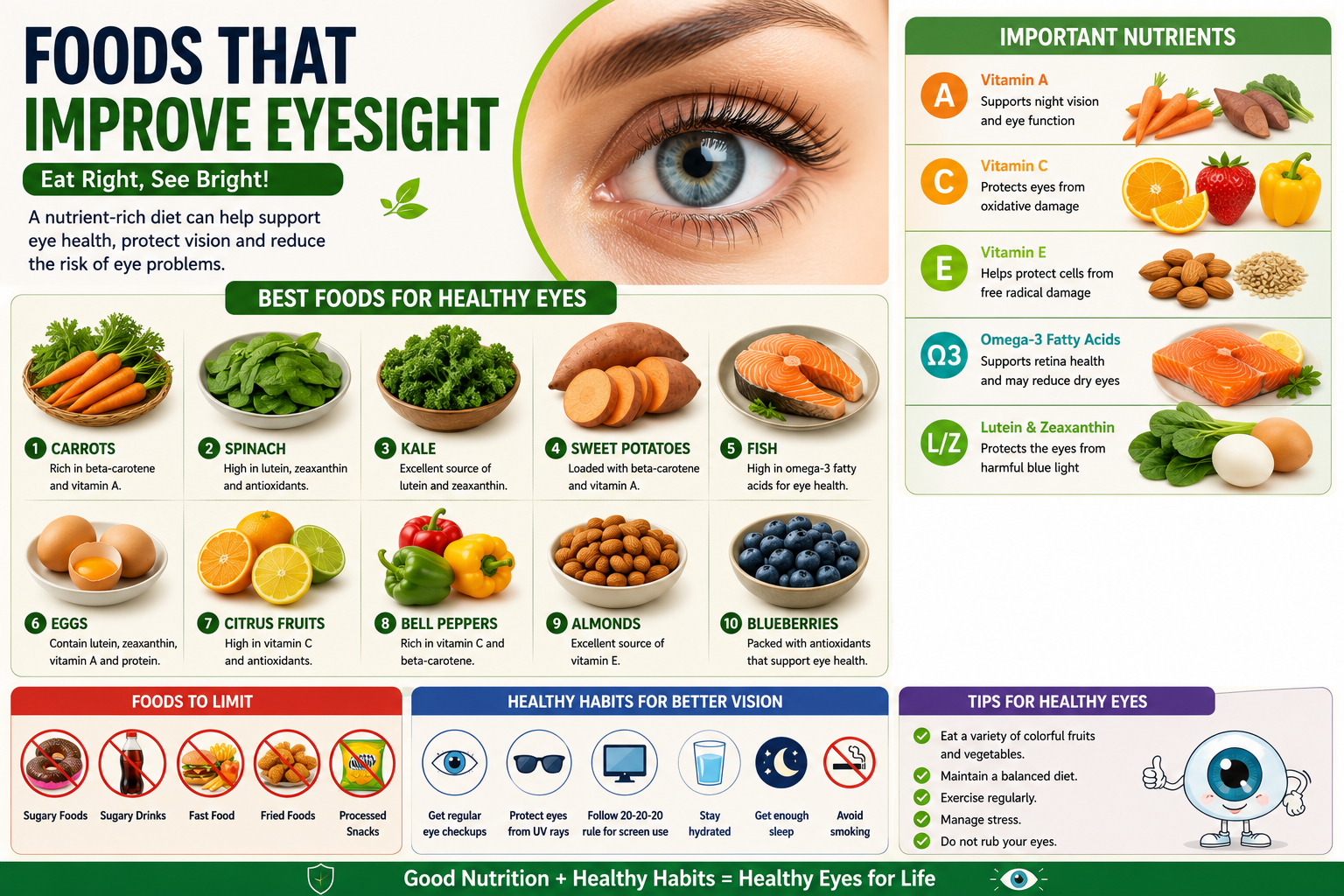
Best Foods That Improve Eyesight
1. Carrots
Carrots are one of the most well-known foods for eye health.
They are rich in:
- Beta-carotene
- Vitamin A
Vitamin A helps maintain normal vision, especially in low-light conditions.
2. Spinach
Spinach contains:
- Lutein
- Zeaxanthin
- Vitamin C
These antioxidants help protect the eyes from oxidative damage.
3. Kale
Kale is another leafy green rich in:
- Lutein
- Zeaxanthin
- Vitamin K
- Vitamin C
It is considered one of the most nutrient-dense vegetables.
4. Sweet Potatoes
Sweet potatoes provide:
- Beta-carotene
- Fiber
- Vitamin C
They are an excellent source of vitamin A precursors.
5. Fish
Fatty fish such as:
- Salmon
- Sardines
- Mackerel
Contain omega-3 fatty acids, which support normal eye function and overall health.
6. Eggs
Eggs provide several nutrients that support eye health, including:
- Lutein
- Zeaxanthin
- Vitamin A
- Protein
Egg yolks are particularly rich in these nutrients.
7. Citrus Fruits
Healthy options include:
- Oranges
- Lemons
- Grapefruit
These fruits provide vitamin C, an antioxidant that supports healthy body tissues, including the eyes.
8. Bell Peppers
Bell peppers are rich in:
- Vitamin C
- Beta-carotene
Red and yellow peppers contain particularly high levels of antioxidants.
9. Almonds
Almonds provide:
- Vitamin E
- Healthy fats
Vitamin E helps protect cells from oxidative stress.
Enjoy almonds in moderate portions as part of a balanced diet.
10. Blueberries
Blueberries contain antioxidants that support overall health.
They make a healthy snack and can be added to:
- Yogurt
- Oatmeal
- Smoothies
Important Nutrients for Healthy Eyes
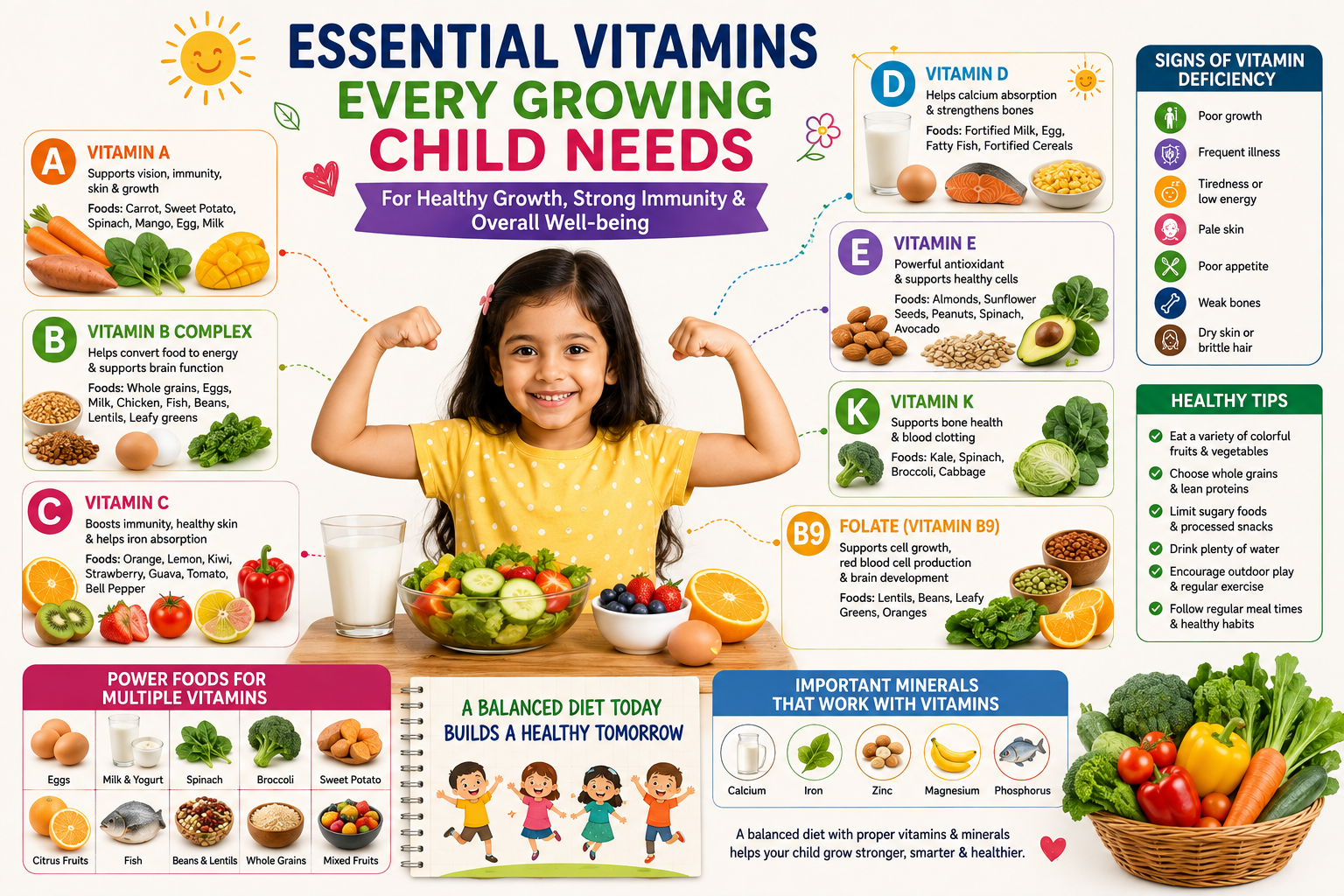
Vitamin A
Supports:
- Normal vision
- Eye surface health
Food sources:
- Carrots
- Sweet potatoes
- Eggs
- Liver
Vitamin C
Supports healthy body tissues and acts as an antioxidant.
Sources include:
- Citrus fruits
- Strawberries
- Kiwi
- Bell peppers
Vitamin E
Acts as an antioxidant.
Sources include:
- Almonds
- Sunflower seeds
- Peanuts
Omega-3 Fatty Acids
Found in:
- Salmon
- Sardines
- Mackerel
- Walnuts
- Flaxseeds
Lutein and Zeaxanthin
These plant compounds are found in:
- Spinach
- Kale
- Broccoli
- Eggs
They help support normal eye health.
Foods to Limit for Better Eye Health
A healthy diet is not only about what you eat but also about limiting foods that may negatively affect overall health.
Sugary Foods
Eating too many foods high in added sugar may contribute to health conditions such as obesity and type 2 diabetes, which can increase the risk of diabetes-related eye problems.
Limit:
- Candy
- Cakes
- Cookies
- Sugary cereals
- Sweet desserts
Sugary Drinks
Reduce the intake of:
- Soft drinks
- Sweetened fruit drinks
- Energy drinks
Choose water or unsweetened beverages instead.
Highly Processed Foods
Packaged foods that are high in salt, unhealthy fats, and refined carbohydrates may not support long-term eye and overall health.
Examples include:
- Chips
- Instant noodles
- Fast food
- Processed snacks
Excessive Fried Foods
Fried foods are often high in unhealthy fats and should be eaten only occasionally as part of a balanced diet.
Healthy Habits for Better Eyesight
Good nutrition works best when combined with healthy lifestyle habits.
Get Regular Eye Checkups
Routine eye examinations help detect vision problems and eye diseases early, even before symptoms appear.
Protect Your Eyes from UV Rays
When outdoors:
- Wear sunglasses that block UV rays.
- Use a wide-brimmed hat on sunny days.
Follow the 20-20-20 Rule
If you spend long hours using a computer or mobile device:
- Every 20 minutes, look at something 20 feet away for 20 seconds.
This may help reduce digital eye strain.
Stay Hydrated
Drinking enough water supports overall body function and helps maintain normal tear production.
Get Enough Sleep
Adequate sleep allows your eyes to rest and recover after a long day.
Adults generally need 7–9 hours of sleep, while children and teenagers require more depending on their age.
Avoid Smoking
Smoking is associated with an increased risk of several serious eye diseases. Avoiding tobacco supports both eye health and overall well-being.
Frequently Asked Questions
Can food improve eyesight naturally?
A nutritious diet helps support normal eye health and may reduce the risk of certain eye conditions, but no food can permanently improve eyesight or replace prescribed glasses or medical treatment.
Are carrots the best food for eyesight?
Carrots are an excellent source of beta-carotene, which the body converts into vitamin A. However, a variety of foods—including leafy green vegetables, fish, eggs, citrus fruits, and nuts—are also important for maintaining healthy eyes.
Which vitamin is most important for eye health?
Several nutrients support healthy vision, including:
- Vitamin A
- Vitamin C
- Vitamin E
- Omega-3 fatty acids
- Lutein
- Zeaxanthin
A balanced diet provides these nutrients naturally.
Does drinking water help eyesight?
Staying hydrated supports overall eye comfort and helps maintain normal tear production, but water alone does not improve eyesight.
Can children benefit from eye-healthy foods?
Yes. Children need a balanced diet rich in fruits, vegetables, whole grains, protein, and healthy fats to support healthy vision and normal development.
Key Takeaways
- A balanced diet supports healthy eyesight and overall eye function.
- Include foods such as carrots, spinach, kale, fish, eggs, citrus fruits, almonds, blueberries, and sweet potatoes.
- Important nutrients include vitamin A, vitamin C, vitamin E, omega-3 fatty acids, lutein, and zeaxanthin.
- Limit sugary foods, sugary drinks, highly processed foods, and excessive fried foods.
- Combine healthy eating with regular eye checkups, UV protection, good sleep, hydration, and reduced screen strain.
Conclusion
Maintaining healthy eyesight requires more than just one “superfood.” A balanced diet filled with colorful fruits, vegetables, healthy fats, lean proteins, and whole grains provides the essential nutrients your eyes need to function properly. Combined with regular eye examinations, proper hydration, adequate sleep, and healthy lifestyle habits, good nutrition plays an important role in protecting your vision throughout life.
While healthy foods support normal eye health, they cannot replace professional medical care or correct existing vision problems. If you notice changes in your eyesight, persistent eye discomfort, or any vision concerns, consult an eye care professional promptly for a proper evaluation.